










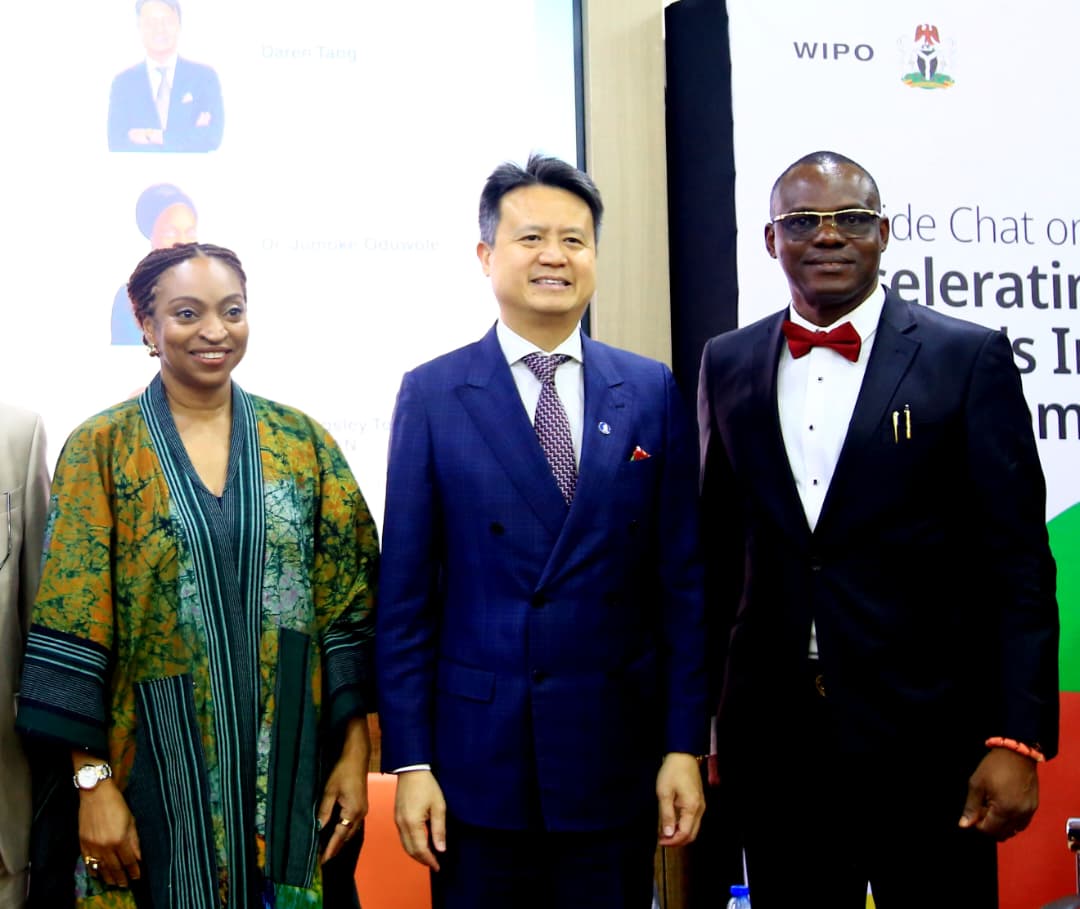
Our anchorman, Abba-Eku Onyeka, takes a look at the opening of the World Intellectual Property Organization, WIPO, Nigeria Office in Abuja. The new office, the first in Sub-Saharan Africa, signals what government and global IP leaders call a turning point for Nigeria’s innovation journey. Excerpts from the launch event and roundtable follow._
Nigeria has recorded a significant milestone in its innovation journey with the launch of the World Intellectual Property Organization, WIPO, Nigeria Office in Abuja. According to a press release from Obilor-Duru Augustina Okechi, Head of Press & Public Relations on Tuesday, June 2, 2026, this is the first WIPO office established in Sub-Saharan Africa.
The landmark event was held at the United Nations House in Abuja. It was followed by a high-level roundtable discussion focused on accelerating Nigeria’s innovation ecosystem and strengthening the role of intellectual property, IP, in national development.
Speaking at the event, the Honourable Minister of Industry, Trade and Investment, Dr. Jumoke Oduwole, reaffirmed the Federal Government’s commitment to leveraging intellectual property, innovation, and commercialization as key drivers of economic growth, job creation, and global competitiveness.
Dr. Oduwole highlighted ongoing efforts to implement Nigeria’s National Intellectual Property Policy and Strategy. She noted that the country has moved beyond policy formulation to practical action through strategic collaborations with government institutions, the private sector, and international partners.
According to the Minister, WIPO’s decision to establish its first Sub-Saharan African office in Nigeria reflects growing international confidence in the country’s vibrant creative, technology, manufacturing, and innovation sectors. She said the office will create new opportunities for capacity building, financing, training, and stronger IP protection for Nigerian innovators and businesses.
WIPO Director General Mr. Daren Tang described Nigeria as one of the world’s fastest-rising centres of creativity and innovation. He cited the country’s globally recognised music and film industries, alongside a rapidly expanding ecosystem of over 3,000 technology startups.
Mr. Tang emphasized that intellectual property has become one of the most valuable assets in today’s knowledge-driven economy. He said IP enables ideas, brands, creativity, and innovation to generate economic value and wealth.
The WIPO boss outlined six strategic opportunities for Nigeria. These include leveraging IP as a financial asset, commercializing research and university innovations, strengthening the national innovation ecosystem, supporting creative industries through stronger copyright frameworks, equipping young people with innovation and entrepreneurship skills, and helping small and medium-sized enterprises protect and monetize their innovations.
Also speaking, the Permanent Secretary of the Federal Ministry of Industry, Trade and Investment, Dr. Chris Osa Isokpunwu, stressed the importance of building an inclusive innovation ecosystem. He said such an ecosystem must be capable of attracting investment, creating jobs, and driving sustainable economic growth.
The United Nations Resident Coordinator in Nigeria, Mr. Mohamed Malick Fall, described the establishment of the WIPO Nigeria Office as timely. He noted that robust intellectual property systems are essential to unlocking Africa’s vast creative and innovation potential, particularly among young people and women.
Discussants at the roundtable agreed that effective intellectual property protection must be complemented by strong commercialization frameworks. They argued this is necessary to enable innovators, entrepreneurs, researchers, and creators to transform ideas into globally competitive products and services.
Participants noted that Nigeria’s creative economy, from Nollywood to Afrobeats to fintech, already competes globally. The challenge now is to ensure that creators and inventors can secure rights, access funding, and scale their work with proper IP support.
The launch of the WIPO Nigeria Office is expected to usher in a new era of innovation-led growth. Stakeholders say it will position intellectual property as a powerful tool for wealth creation, investment attraction, and national development.
With the office now operational in Abuja, the Federal Government says Nigeria is ready to move from policy to practice. For innovators, artists, researchers, and MSMEs across the country, the WIPO presence offers a new bridge between ideas and markets, and between local creativity and global competitiveness.