









For years, Nigeria’s climate conversation has been dominated by donor grants and foreign carbon buyers. Now the Federal Government is changing course. At a workshop in Abuja this week, officials declared that the future of Nigeria’s carbon market will not be decided in Geneva or London, but in Lagos, Abuja and Port Harcourt. The pitch is simple: unlock domestic finance, treat carbon credits like real assets, and let Nigerian banks, pension funds and insurers fund the transition. It is a shift from waiting on the world to backing projects at home, Ekuson Nw’Ogbunka Our Managing Editor takes a critical look at the development. Excerpts.
The Federal Government says unlocking domestic finance is key to scaling Nigeria’s carbon market. Officials stressed that communities cannot wait years for international validation to fund climate projects.
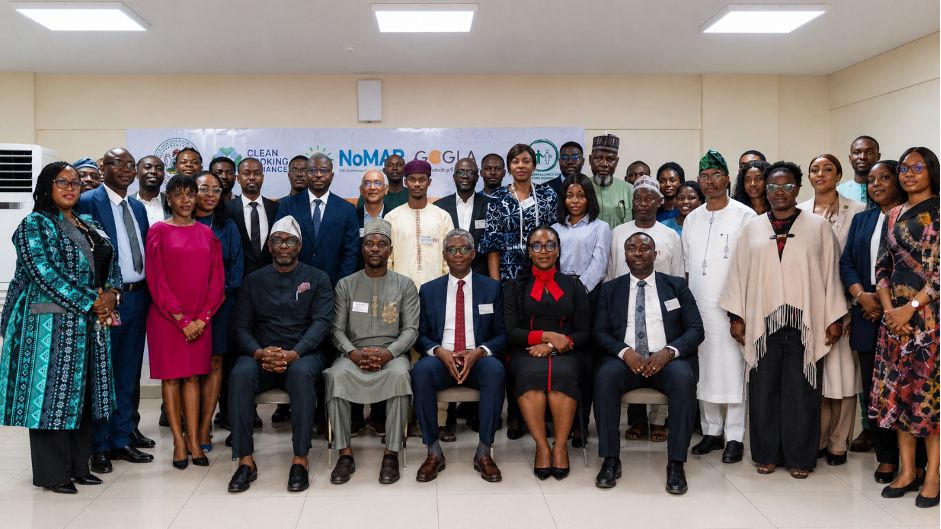
The position was stated at a stakeholders’ workshop convened under the Policy and Regulatory Innovations for Scaling Markets (PRISM) Nigeria Initiative. PRISM Nigeria is a policy and regulatory engagement programme implemented by the Clean Cooking Alliance (CCA).
It is being delivered in partnership with the Nigeria Off-Grid Market Acceleration Programme (NoMAP) and the Global Off-Grid Solar Association (GOGLA). The programme also has the backing of the Office of the Senior Special Assistant to the President on Climate Finance and Stakeholder Engagement and the Nigerian Alliance for Clean Cookstoves.
The initiative seeks to integrate carbon markets into Nigeria’s domestic financial system. The aim is for carbon-linked revenues to be recognised as a credible, investable asset class. The goal is to unlock local capital for three priority areas: clean cooking, Distributed Renewable Energy (DRE), and nature-based projects.
Delivering the keynote address, Mr. Ibrahim Shelleng, Senior Special Assistant to the President on Climate Finance and Stakeholder Engagement, called the workshop strategic and timely. He said Nigeria must now move from years of policy development into implementation. “Domestic finance brings ownership, and it brings speed,” Shelleng said, adding: “Our communities cannot wait two to three years for international validation processes, we must look inward to raise the finance our climate projects need.”
Shelleng also corrected a common misconception. He said climate finance was often mistaken for only international funding, whereas it refers to any funding, domestic or international, directed at mitigation and adaptation.
Mr. Michael Ivenso, Director of Energy, Transportation and Infrastructure at the National Council on Climate Change (NCCC), spoke on the market opportunity. He said carbon markets present a significant opportunity to finance Nigeria’s clean cooking transition, with potential to impact about 45 million people by 2030.
Ivenso noted that for carbon credits to attract investment, they must be structured as recognised tradable financial instruments, even as he called for stronger participation from domestic financial institutions, adding that development finance institutions have a critical role in growing the market.
He disclosed a key milestone. Since May, Nigeria has issued 25 Letters of Authorisation (LoA), a sovereign instrument that enables the monetisation of carbon assets. On integrity, Ivenso said a credible and transparent monitoring, reporting, and verification (MRV) system will be essential. “Every tonne of emissions reduced must be accurately measured and verified,” he added.
The reforms are already mapped. Through research, regulatory mapping across Kenya and Nigeria, and extensive consultation, PRISM has identified 15 priority regulatory interventions for Nigeria.
The reforms target key financial regulators including the Central Bank of Nigeria (CBN), the Securities and Exchange Commission (SEC), the National Insurance Commission (NAICOM), and the National Pension Commission (PenCom).
PRISM Nigeria builds on a successful first phase in Kenya, where engagement with financial regulators opened dialogue on recognising carbon revenues within banking, capital market, pensions, and insurance frameworks.
The Nigeria phase now seeks to replicate and scale that model.