










In this piece, our Correspondent, Nwamulunamma Ogbunka writes that in a country where misinformation spreads faster than facts and where women remain underrepresented in tech and security conversations, a new alliance is taking shape in Abuja. The National Information Technology Development Agency is opening its doors to the Nigeria Association of Women Journalists, with a promise to co-build digital skills, fight disinformation, and put women at the center of Nigeria’s cybersecurity future. The vehicle for this is the Women in Security Summit 2026. The question is whether this pledge will translate into lasting impact beyond conference halls.
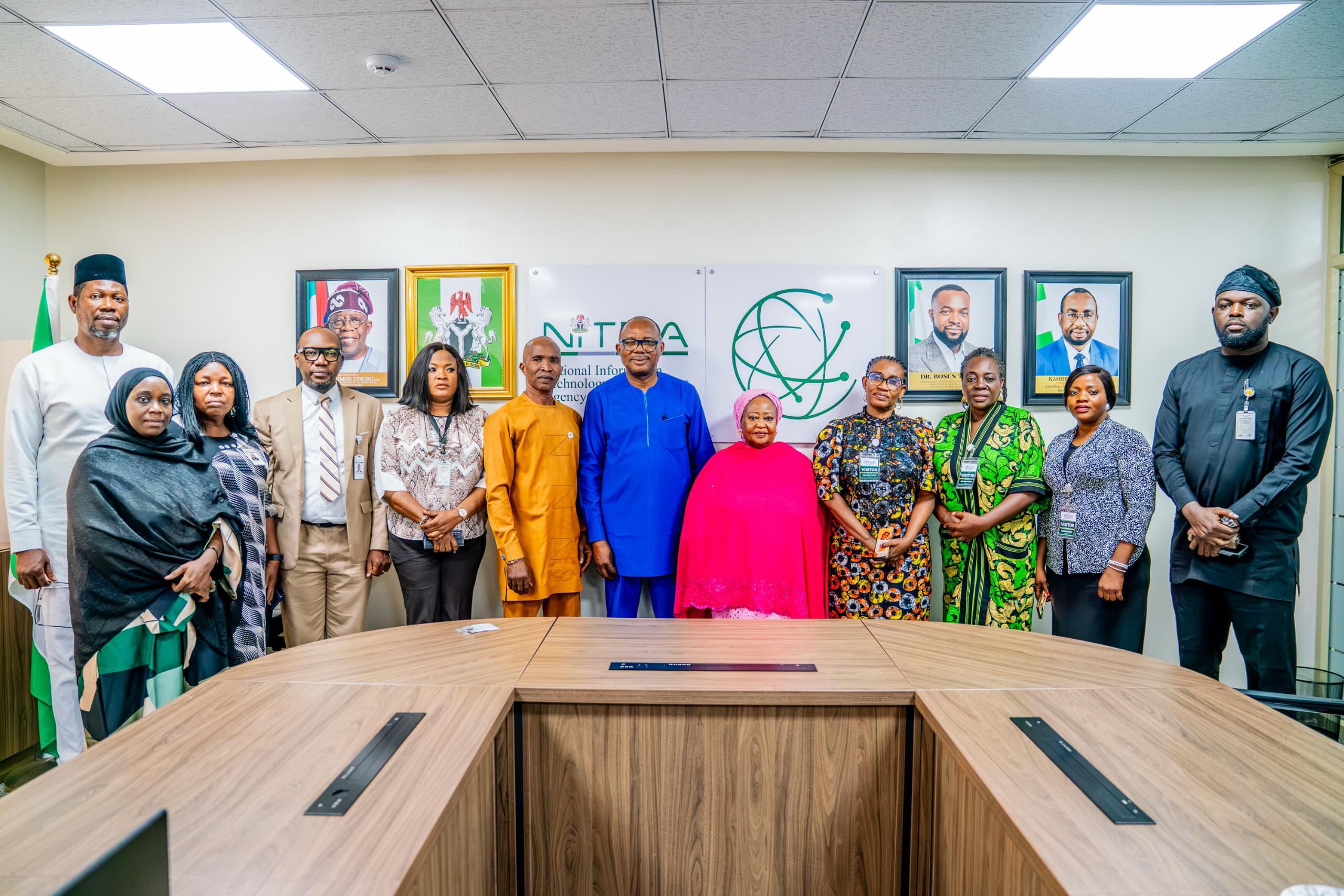
On July 23, 2026, the National Information Technology Development Agency (NITDA) pledged its full support for NAWOJ and for the forthcoming Women in Security (WINSEC) Summit & Awards 2026. The commitment was made when NAWOJ’s National Chairperson, Comrade Aisha Ibrahim, led a delegation on a courtesy visit to NITDA’s headquarters in Abuja.
The Director-General (DG), Kashifu Inuwa Abdullahi, was represented by Dr. Aristotle Onumo, Director of Stakeholders Management and Partnership. Receiving the delegation, Dr. Onumo described partnership as a central pillar of NITDA’s Strategic Roadmap and Action Plan.
“Our vision is to make Nigeria a digitally enabled nation fostering inclusive economic development through technological innovation,” he said, adding, “what NAWOJ has proposed aligns with our vision and we are ready to work together.”
At the heart of the discussion was gender inclusion. Dr. Onumo revealed that 40 percent of NITDA’s programmes are deliberately designed to promote gender inclusion, saying that it is anchored on the Agency’s National Gender Inclusion Strategy, which seeks to ensure women and other underserved groups benefit meaningfully from Nigeria’s digital transformation.
NITDA also unveiled an ambitious national target: 70 percent digital literacy by 2027. The plan involves partnerships with NYSC, the Federal Ministry of Education, universities, and the Office of the Head of Civil Service. Arguing that NAWOJ presents a unique channel to achieve that, Dr Onumo said: “If we succeed in partnering with NAWOJ, women journalists will acquire digital skills and become ambassadors to take digital literacy to women in communities across Nigeria.”
Beyond literacy, the partnership will focus on artificial intelligence, cybersecurity awareness, and fact-checking, three areas now critical to the survival of credible journalism.
NITDA’s Deputy Director of Cybersecurity, Dr. Ayo Bakare, warned that AI-driven misinformation and disinformation have become major threats to both journalism and national security. “Digital literacy, cybersecurity awareness and fact-checking skills are increasingly essential for media professionals,” Dr. Bakare stated. He assured NAWOJ of NITDA’s readiness to provide the tools to tackle these threats.
For NAWOJ, the engagement is strategic. Comrade Ibrahim commended NITDA’s leadership in AI, cybersecurity, innovation and digital inclusion, even as she said the Association is seeking to strengthen the digital capacity of women journalists while promoting responsible technology reporting and public awareness.
Comrade Ibrahim described the summit as a national platform to convene government, security agencies, tech experts, academia, CSOs and the media.
She requested NITDA’s support through technical expertise, institutional collaboration, sponsorship, and participation in a strategic session on technology and security.
NITDA responded by proposing a Memorandum of Understanding to formalize the partnership and by inviting NAWOJ to the Digital Nigeria International Conference 2026, the country’s largest government-backed tech event.
Both parties left the meeting optimistic. If followed through, the NITDA-NAWOJ alliance could do more than host a summit. It could create a pipeline of women journalists equipped to report technology responsibly, challenge disinformation, and help close Nigeria’s gender gap in the digital economy.