









At an airport or land border, the first Nigerian you meet is often an Immigration officer. For years, that encounter was about stamps and scrutiny. Now, with Dutch support and new equipment, the Nigeria Immigration Service is trying to change the story to one of welcome. It’s called Host-manship, writes Ekuson Nw’Ogbunka Our Managing Editor on Tuesday.
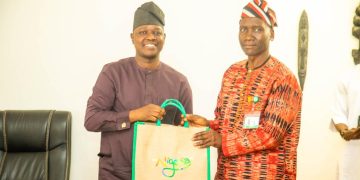
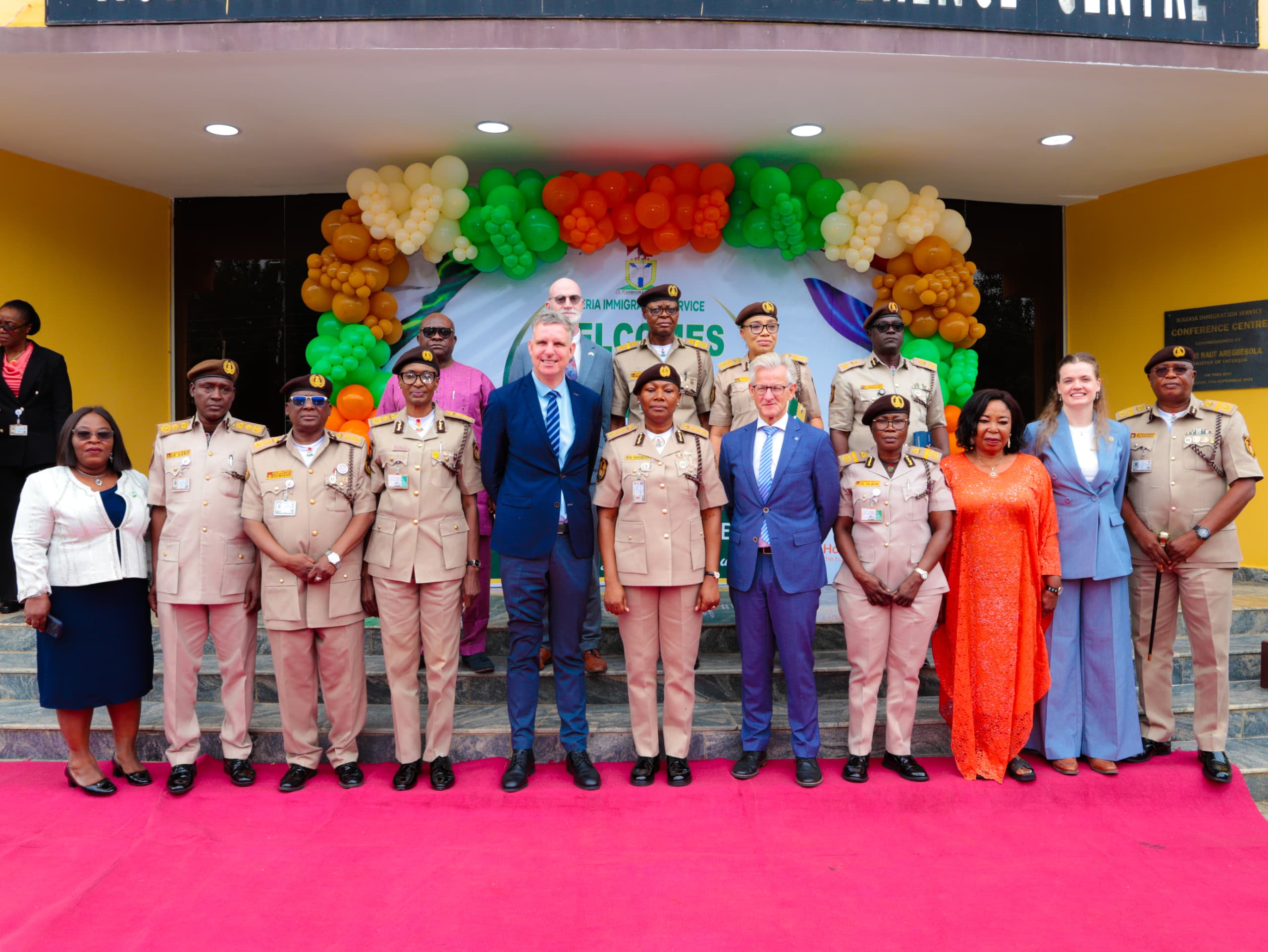
The ceremony was brief. On Monday, 27th July, 2026, at NIS Headquarters in Abuja, boxes of specialised equipment were handed over.
The donors: the Repatriation and Departure Service of the Kingdom of the Netherlands. The recipients: the NIS Hostmanship Unit.
To an outsider, it looked like another donor event. To the Service, it was the latest chapter in a 20-year relationship.
Comptroller-General KN Nandap received the equipment. She did not talk about patrols or raids. She talked about courtesy.
She described the donation as an investment in professionalism and in a culture where officers make people “feel welcomed, respected, and valued.”
That phrase — welcomed, respected, valued — is the core of Hostmanship. It is the idea that service delivery is also national image.
The Netherlands gets it. Mr. Ronald Sonnemans, the Chargé d’Affaires, called the partnership a model of sustained cooperation.
He said his country remains committed to supporting migration management and institutional capacity in Nigeria.
The results so far are visible. Hundreds of officers trained. A whole unit dedicated to Hostmanship. Training programs running under the EU-funded CBR Project.
CBR stands for Capacity Building and Relationship Management. It has been the backbone of this reform.
The new equipment is expected to boost training simulations, role play, and service delivery drills for officers.
Imagine an officer at MMIA greeting a returning Nigerian with a smile, or guiding a confused traveler with patience. That is the goal.
This is not to say enforcement will disappear. Borders must still be secure. But the tone of engagement is changing.
Globally, immigration agencies are learning that how you treat people matters as much as what documents you check.
For Nigeria, with one of the busiest travel populations in Africa, that lesson is critical.
The risk, as always, is in implementation. Will the equipment be used? Will officers adopt the culture? Will it survive beyond donor funding?
The NIS says yes. In its statement, the Service pledged judicious use and a continued commitment to Hostmanship ideals.
If it works, the next time you land in Abuja or Lagos, the first face of Nigeria you see may not just check your passport. They may make you feel at home.