



By Ekuson Nw’Ogbunka in Abuja
With 18 months to the 2027 general elections, Nigeria’s fragmented opposition appears to be closing ranks. A coalition of concerned citizens has brought together key political heavyweights for what could be the most consequential unity talks in a decade.
The coalition, G100, disclosed on Monday that it has concluded the first round of consultations with leaders of six major opposition parties as part of efforts to build a credible alternative to the ruling party.
In a statement signed by Salihu Moh. Lukman, the G100 said the parties engaged include the African Democratic Congress, ADC, Nigeria Democratic Congress, NDC, Allied Peoples Movement, APM, Peoples Democratic Party, PDP, Peoples Redemption Party, PRP, and Social Democratic Party, SDP.
The consultations were not ceremonial. According to the group, national chairmen, presidential candidates and running mates were involved, and the discussions were “frank, constructive and encouraging.”
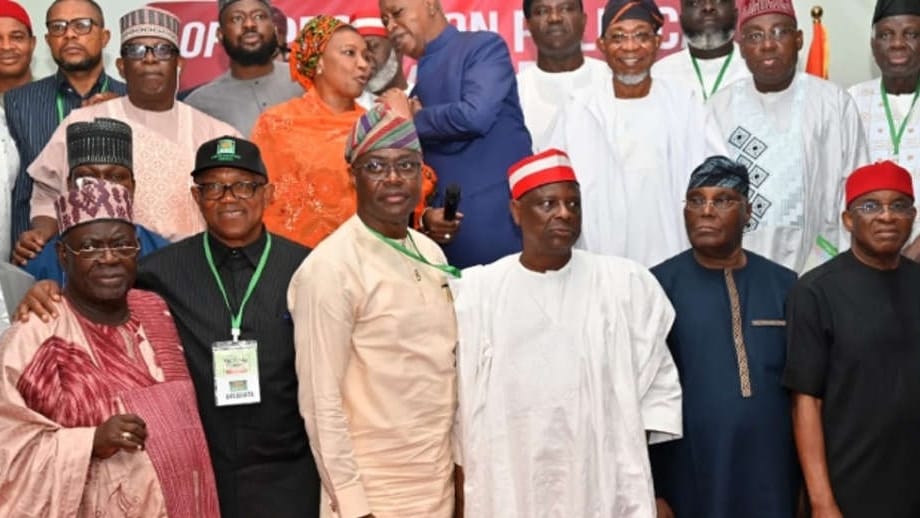
At the centre of the talks are four of the most influential opposition figures ahead of 2027: former Vice President Atiku Abubakar of the ADC, Labour Party’s 2023 flagbearer Peter Obi, former Kano Governor Rabiu Kwankwaso of the NDC, and Oyo State Governor Seyi Makinde, represented through the APM.
The engagements followed an Open Letter issued by the G100 on August 2, 2026, addressed to opposition leaders, leaders of thought, civil society organisations and Nigerians of good conscience.
That letter introduced what the group called the “Doctrine of Necessary Democratic Opposition” — a thesis that Nigeria’s democracy can only thrive when there is a viable, united opposition capable of contesting power.
Conscious of past failures where ego and leaks derailed alliance talks, the G100 deliberately kept the first round away from the media.
“We have deliberately kept these consultations away from the glare of the media, in recognition of the sensitivity of many of the discussions and the need to allow party leaders to engage frankly and constructively without the pressure of premature public commentary,” the statement said.
The group added: “We believe that, at this stage, protecting the integrity of the process is more important than publicising every meeting.”
What emerged from those closed-door meetings is telling. The G100 reported a broad recognition among the parties that closer cooperation is no longer optional if the opposition hopes to compete meaningfully in 2027.
More importantly, the leaders acknowledged that any credible front will demand sacrifice and compromise. That means putting national interest above narrow partisan and personal ambitions — a hurdle that has collapsed similar efforts in the past.
To move from talk to structure, the G100 has announced a Summit of Opposition Parties for Tuesday, August 18, 2026, in Abuja.
The summit is expected to provide a structured platform for the parties to debate modalities: whether to pursue a merger, an electoral alliance, or a coordinated campaign framework.
The coalition was careful to manage expectations. “The G100 does not presume to dictate the outcome of these conversations. Our role is to facilitate dialogue, build confidence and help create the conditions in which the participating political parties can openly consider the difficult questions of cooperation, sacrifice, accommodation and collective action.”
The group stressed that any framework must protect the legitimate interests of all participating parties while keeping the interests of Nigerians paramount. That balancing act will define whether the talks survive beyond Abuja.
“The central argument of the Doctrine of Necessary Democratic Opposition remains that Nigeria’s democracy is strengthened when citizens are presented with a credible alternative capable of competing effectively for their mandate,” the statement noted.
The G100 warned that continued fragmentation would serve neither the parties nor the electorate. “The consultations of the past week represent only the beginning. The task ahead will require patience, courage and, above all, sacrifice.”
For now, the August 18 meeting will be watched as a litmus test. If Atiku, Obi, Kwankwaso and Makinde can sit at the same table and agree on ground rules, the 2027 race may no longer be a walkover. If not, the opposition risks repeating the divisions that cost it in 2023.