






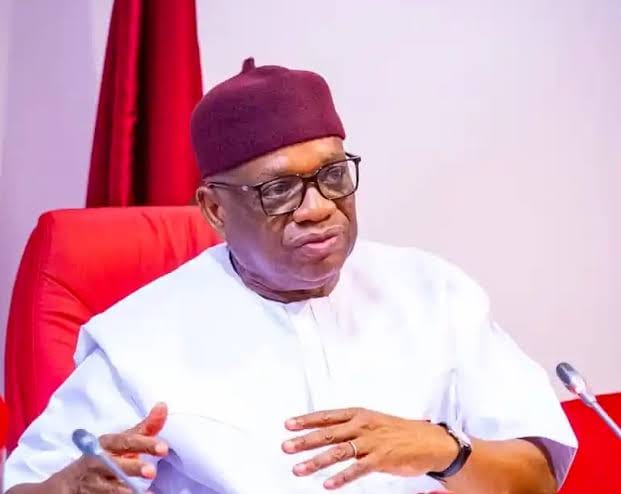
Here Ekuson Nw’Ogbunka Our Managing Editor writes that as Governor Ademola Adeleke cruises to re-election, Senator Orji Uzor Kalu is telling APC to look past the loss. His argument: Osun’s result is not a referendum on Tinubu, but a signal to rebuild. Can the President’s camp turn defeat into a 2027 advantage?
Governor Ademola Adeleke’s re-election in Osun was decisive. 511,067 votes to APC’s 444,815. 19 LGAs to 11.
For many in the APC, it felt like a blow. For Senator Orji Uzor Kalu, it was “democracy in play.”
Kalu’s message on Sunday was deliberate: congratulate the winner, sympathize with the party, and reframe the narrative.
His core point: the loss of Osun governorship does not equal the loss of Osun for President Tinubu in 2027.
That is a political gamble, but not without precedent. Governorship and presidential elections in Nigeria often split.
Kalu argues the result should trigger introspection, not panic. “Reassess strategies, strengthen grassroots structures, deepen engagement.”
It is classic post-election language, but in Osun it carries weight because the state has swung before.
In 2018, APC won the governorship. In 2022, PDP’s Adeleke won it. In 2023, Tinubu won Osun in the presidential election. Now Accord has it under Adeleke.
That volatility is what Kalu is banking on. He believes alliances can transcend party lines.
He specifically mentioned that support for Tinubu “could extend beyond the APC to stakeholders and members of other political parties, including the Accord Party.”
That is significant. Adeleke himself won on the PDP platform in 2022, but there were talks of cross-party support. Kalu is suggesting Tinubu can replicate that model.
He also praised Gboyega Oyetola, the Minister and former governor. That was not accidental. Oyetola remains APC’s biggest structure in Osun.
By commending him, Kalu is telling APC members: the foundation is still there, don’t burn it down.
The numbers back up the need for work. Adeleke won by a margin of 66,252 votes. Voter accreditation was 1,010,684. That is a mobilizable electorate.
Kalu’s optimism rests on two things: presidential incumbency and the ability to build new alliances ahead of 2027.
Presidents in Nigeria have historically improved their state numbers in re-election bids, using federal projects and patronage.
But Osun is different. It is Adeleke’s home base, and he just got a fresh mandate. His “Imole” brand is strong.
Kalu’s advice to “accept the outcome and focus on strengthening democracy” is also strategic. It positions APC as democrats, not sore losers.
The bigger test will be whether APC can hold its 11 LGAs and flip some of Adeleke’s 19.
That requires money, messaging, and men on the ground. Kalu’s call for “renewed engagement and strategic mobilisation” is code for that.
Finally, Kalu is speaking as a southern APC chieftain. His endorsement matters to Tinubu’s South-East and South-South outreach.
If APC can argue that even in a PDP state, the President’s future is “very bright,” it buys time and morale.
Osun 2026 is over. The real contest Kalu is talking about starts now: 2027. And he believes it is still winnable for Tinubu.