










By News Maker
The Federal Government is intensifying efforts to make Nigeria’s Expatriate Quota system more than a regulatory mechanism, with the Ministry of Interior positioning it as a pathway for knowledge transfer, indigenous expertise and improved service delivery.
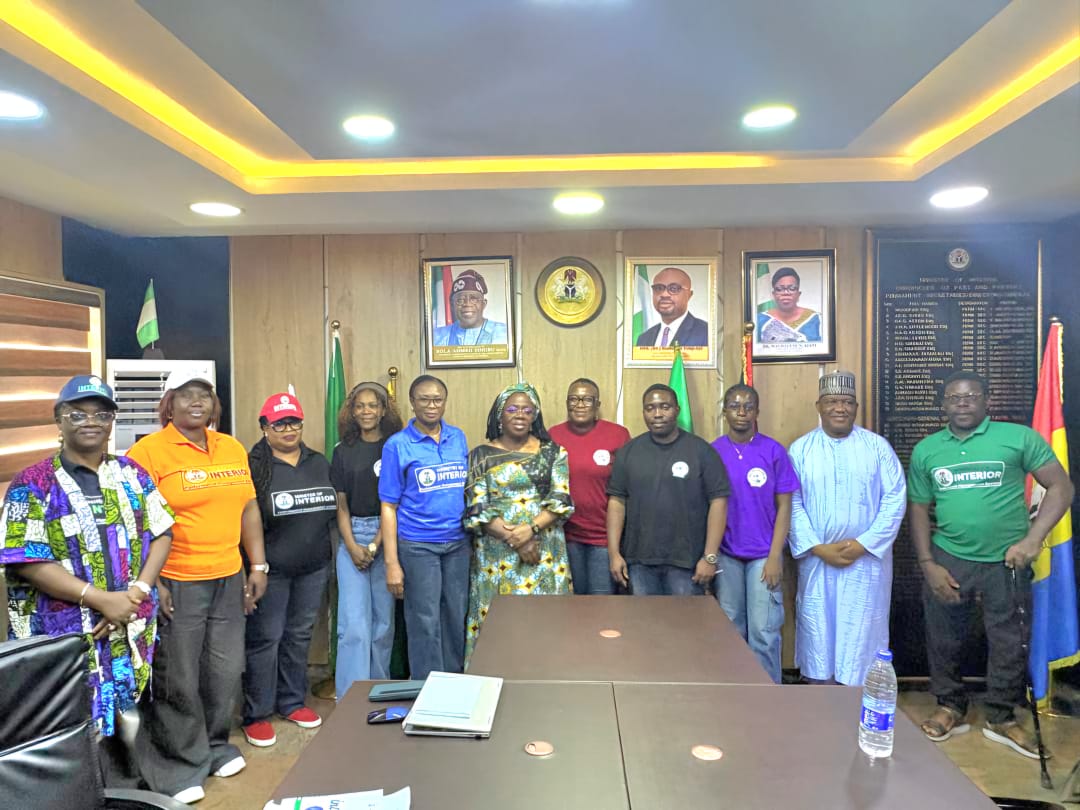
Permanent Secretary of the Ministry of Interior, Dr. Magdalene Ajani, made this known in Abuja when she received a delegation from THELISH Eye Centre, led by Dr. Amaka Etuk, on a courtesy visit to the Ministry.
Ajani congratulated THELISH on its 30th anniversary and praised the organisation for its contribution to specialised eye care and the development of professional expertise in Nigeria.
According to her, the Ministry’s Expatriate Quota policy is structured to regulate the engagement of foreign professionals while ensuring that their presence contributes to the development of Nigerian manpower through knowledge transfer and capacity building.
She explained that the objective was to ensure that expatriate expertise does not remain permanently dependent on foreign personnel but is progressively transferred to qualified Nigerians who can take responsibility for specialised services.
Ajani also drew attention to the Ministry’s digital transformation of its Citizenship and Business Department, saying businesses can now process expatriate quota and related applications through online platforms.
She said the digital reforms were designed to reduce unnecessary physical visits, minimise dependence on intermediaries and enhance transparency and efficiency in the administration of expatriate quota and business permit services.
The Permanent Secretary therefore encouraged companies and organisations to appoint competent in-house officers who can directly interact with the Ministry’s online platforms. She said this would help businesses handle routine processes more efficiently while reducing unnecessary reliance on agents.
Responding, Dr. Amaka Etuk commended the Ministry for what she described as the positive impact of its Expatriate Quota and understudy policy on THELISH. She said the policy had enabled the hospital to develop a formidable team of Nigerian eye-care professionals.
Etuk disclosed that THELISH at one point had more than 80 expatriates working with the organisation, but sustained knowledge transfer had enabled Nigerian specialists to acquire the expertise to perform procedures previously handled by expatriate professionals.
“Today, we are smiling. THELISH is happy because all the expatriates are gone. Nigerians have become the experts by virtue of the Ministry of Interior’s policy,” she said, noting that the development had also contributed to the hospital’s expansion and the establishment of a new centre in Abuja.
She further commended the Ministry’s digital reforms, particularly the online processing of expatriate quota applications. Etuk said a recent quota renewal by THELISH was completed online without intermediaries, physical visits to the Ministry or unofficial payments.
The THELISH delegation subsequently invited the Minister and Permanent Secretary to its 30th anniversary celebration, describing the event as an opportunity to celebrate three decades of service and the transformation of specialised eye care in Nigeria. Ajani thanked the delegation for the invitation and commendation and confirmed that the Ministry would be represented at the anniversary. She reaffirmed that the Ministry would continue to strengthen transparent, efficient and accessible services while ensuring that the Expatriate Quota system contributes meaningfully to Nigerian capacity development and technology transfer.