




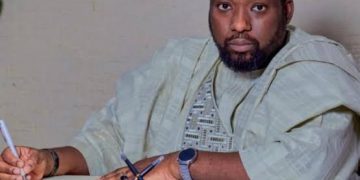
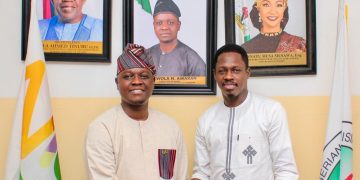





For decades, the Nigerian university degree has been regarded as a passport to a better life. Yet for a growing number of young Nigerians, that passport appears to lead not to employment but to years of frustration, job hunting and dependence. Against this backdrop, retired FCT High Court Judge, Justice Nwada Balami, has challenged Nigeria to rethink what its tertiary education system should produce: not merely graduates with certificates, but citizens with practical skills, entrepreneurial capacity and the ability to create livelihoods, writes Ekuson Nw’Ogbunka, Our Managing Editor, on Monday, in Abuja, Nigeria’s centre of unity .
Balami made the submission at the weekend in Gwagwalada, Abuja, while receiving the leadership of the United Nigeria Chaplaincy (UNC) Corps, led by its Commandant-General, Prof. Jidejisos Josiah Ejie, on a courtesy visit.
For the retired jurist, the challenge confronting Nigeria’s tertiary education system goes beyond the number of universities or the volume of degrees awarded every year. The more fundamental question, he suggested, is whether graduates are being prepared for the realities of the economy they will enter.
He expressed concern that many young Nigerians spend several years in university only to emerge and spend additional years searching for scarce white-collar employment.
His proposed solution is a major shift in the philosophy of tertiary education: universities should incorporate technical and vocational education into their curricula.
Such a move, Balami argued, could give students practical skills that would enable them to establish businesses, provide services and become economically self-reliant rather than waiting indefinitely for government or corporate employment.
The proposal touches one of Nigeria’s most persistent socioeconomic challenges. In an economy where the demand for formal employment frequently outstrips available opportunities, education that combines academic knowledge with practical competence could offer graduates alternative pathways into the world of work.
But Balami’s intervention went beyond education.
He used the occasion to speak about the responsibilities of organisations and leaders in building public confidence. He urged the UNC leadership to embrace transparency and accountability, warning that poor communication and a lack of openness could breed suspicion and unnecessary conflict.
His criticism of the short notice given to him ahead of the visit was therefore presented as more than a personal complaint. For Balami, it reflected a wider principle of institutional governance: organisations must communicate properly with their stakeholders and respect the rules governing their operations.
As Chairman of the UNC Board of Trustees, he said he had been working to ensure that the organisation, which he described as constitutionally registered in Nigeria, obtains the necessary recognition from relevant government authorities.
He also challenged the organisation to remain focused on its larger mission of promoting peace and national cohesion.
In a country where ethnic, religious and political identities can sometimes dominate public discourse, Balami warned against allowing such sentiments to define the operations of the organisation.
He called for an organisation in which members could work together irrespective of tribe, religion, political affiliation or gender.
His argument for national cohesion extended to the country’s constitutional structure. Balami advocated the removal of state-of-origin, local-government and geopolitical-zone considerations from the Constitution, contending that such classifications have reinforced divisions instead of fostering a stronger Nigerian identity.
His judicial experience, he suggested, had exposed him to the complexity of accommodating Nigeria’s diverse convictions.
He recalled a case in which a man declined to swear by either the Quran or the Bible because he identified as a traditionalist and wanted to swear by a stone. Balami said he granted the request, illustrating what he described as the need to respect individual convictions within the boundaries of the law.
The same principle of collective responsibility, according to him, should apply to the fight against insecurity.
Balami urged Nigerians to provide security agencies with credible and timely information about criminal activities, arguing that government cannot effectively confront insecurity without cooperation from citizens.
At the same time, he called for improved welfare for security personnel, including serving and retired officers and their families, in recognition of the sacrifices made in protecting the nation.
For Balami, the battle for a better Nigeria also requires a stronger war against corruption.
He advocated tougher punishment for public officials who divert public resources, stressing that anyone entrusted with government funds must be accountable for their use.
His message was unequivocal: public office should be an opportunity to serve citizens, not a route to personal enrichment.
The UNC leadership, for its part, used the engagement to reinforce its appeal for institutional support.
Deputy Commandant-General in charge of Muslim Affairs, Hamisi Gambo, said the meeting would help develop modalities for peaceful coexistence among Nigerians despite their political and religious differences.
He urged citizens to embrace peace, unity, responsible leadership and political tolerance.
The Commandant-General, Prof. Jide Josiah Ejie, meanwhile, appealed to President Bola Ahmed Tinubu and the National Assembly to facilitate the passage of the organisation’s Bills, which he said had been before the National Assembly since 2012.