









As Ikechukwu Chukwunyere challenges parliamentary journalists to follow the money, verify projects and make the 2027 budget a test of accountability, the annual presentation and passage of Nigeria’s national budget has increasingly become a familiar ritual.
Government presents its spending plan, lawmakers debate it, headlines are written, figures dominate the news cycle and, in many cases, public attention moves on, analyses Ekuson Nw’Ogbunka, Our Managing Editor.
But what happens after the applause, controversy and headlines?
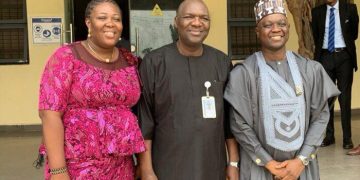
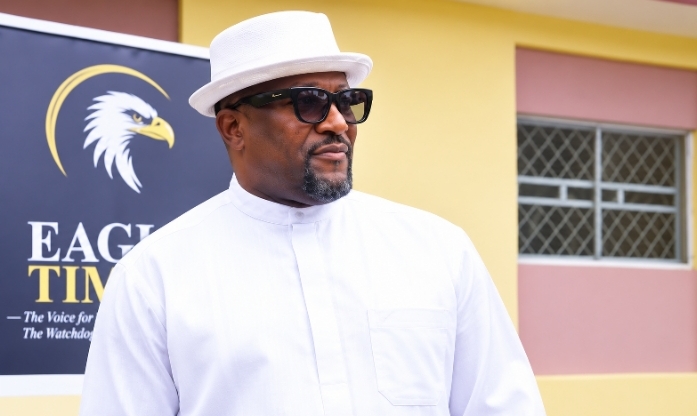
That question lies at the heart of a compelling challenge thrown at Nigerian journalists by Mr. Ikechukwu Chukwunyere, Managing Director/Publisher of The Eagle Times Newspaper, Abuja, during the 2026 Capacity Building Workshop, with the theme: “Leveraging Legislative Oversight and Media Collaboration to Safeguard the National Budget from Unlawful Insertions,” organised by the Senate Press Corps in Abuja recently.
Speaking on the theme of the paper he presented at the event: “Making the Eagle Eye of the Media Sharper at Yearly Budget Scrutinies,” Chukwunyere argued that budget reporting must move beyond merely reproducing what government officials and lawmakers say. For him, the media’s responsibility begins where routine reporting ends: with scrutiny, verification, comparison, investigation and follow-up.
His argument raises a fundamental question about the state of parliamentary journalism in Nigeria: Are journalists adequately equipped and sufficiently independent to interrogate where public money comes from, where it goes and what Nigerians eventually receive in return?
The budget is more than a collection of figures
One of the strongest arguments in the presentation is that the national budget should not be treated merely as an accounting document. Chukwunyere describes it as a social contract, a moral document and a political instrument. In practical terms, the budget represents government priorities. What receives substantial funding is given prominence; what receives little or no funding may reveal a different set of priorities.
That makes budget journalism more consequential than simply reporting the total size of expenditure. A reporter who writes that the government has proposed a multi-trillion-naira budget without examining its assumptions, allocations, projects, beneficiaries and implementation risks may have reported a figure without explaining its meaning.
The critical issue, therefore, is not simply “How much?”
It is also: For what? Where? Why? Who benefits? Who implements it? How much has been released? How much has been spent? And what has actually changed?
Revenue deserves as much scrutiny as expenditure. Another important dimension of Chukwunyere’s argument is the tendency of journalists to concentrate heavily on expenditure while paying less attention to revenue.
Yet the credibility of any budget depends partly on the assumptions behind its revenue projections. Oil prices, production estimates, taxation, borrowing, customs revenue and other sources determine the resources available to government. If revenue assumptions change significantly, the entire fiscal picture can change with them.
Therefore, a journalist who examines only the expenditure side risks seeing only half of the budget story. The sharper approach is to examine both legs: where government expects the money to come from and how it proposes to spend it.
From stenography to scrutiny
Perhaps the most uncomfortable criticism in the presentation is the description of some budget journalism as little more than stenography. A journalist who merely reports what a minister, senator or agency chief says may produce an accurate quotation without necessarily producing accountability journalism.
If a lawmaker alleges that a project is wasteful, that claim requires verification.
If an agency says it has achieved 90 per cent implementation, the journalist should ask for evidence. If an official declares a project completed, the reporter should determine whether the physical evidence supports the claim. The media’s role, therefore, should not be to become the loudspeaker of either the executive or legislature.
Its primary allegiance should be to facts and the public interest.
The power of comparative journalism
Chukwunyere’s proposed “Last Year Question” provides one of the most practical tools for budget correspondents. Whenever an agency appears before a parliamentary committee, the journalist should have its previous budget performance available.
If an agency received a particular allocation last year and is requesting substantially more this year, the journalist should ask why.
If a project supposedly completed in one budget year reappears in another budget, that deserves scrutiny. If an allocation rises dramatically while physical progress remains marginal, the figures themselves become a lead.
This is the strength of comparative journalism. A budget figure standing alone may tell little. The same figure placed beside the previous two or three years can reveal a pattern.
The field must meet the file
Perhaps the greatest weakness in budget reporting is the distance between Abuja and the projects being reported. A journalist sitting in the National Assembly can neither establish solely from a hearing that a rural road has been completed, nor a press statement conclusively establish that a hospital has been equipped.
The field remains the final test
Chukwunyere therefore challenges journalists to visit project sites, speak to beneficiaries, contractors and community leaders, examine project signboards and compare physical reality with official claims. This approach changes the journalist from a recorder of government activity into an independent verifier of government claims.
Data should become a newsroom weapon
Budget documents can be intimidating, particularly when they contain thousands of pages and technical terminology.
But the answer, as the speaker suggests, is not to avoid the documents.
It is to develop the skills necessary to interrogate them.
Searchable documents, spreadsheets, databases, project trackers, document comparison tools, mapping technology and other digital resources can help journalists identify patterns that might otherwise remain invisible.
A project appearing under several agencies, a contractor repeatedly receiving contracts or a supposedly completed project receiving another allocation may not immediately make news.
But they can become leads for deeper investigation
Technology, however, should remain a tool rather than a substitute for journalism. Artificial intelligence may help identify patterns in large documents, but the journalist must independently verify what the technology reveals.
Duplication: where the Eagle Eye must look twice
Budget duplication is another area requiring careful attention. The same or substantially similar project could potentially appear under different budget lines, programmes or institutions.
That makes it necessary for reporters to search not only by project title but also by location, implementing agency, contractor, constituency and other identifying details. A sophisticated budget newsroom should therefore have a systematic duplication checklist.
The question should always be:
Is this genuinely a new project, or is an existing project receiving another allocation under another description?
Follow the money, and then follow the outcome
At the centre of Chukwunyere’s presentation is a simple but powerful accountability formula: Allocation → Release → Expenditure → Output → Impact. That formula deserves to become a central principle of budget journalism. An allocation is only a promise. A release indicates that money has been made available.
Expenditure shows that money has been spent.
Output shows what was produced.
Impact shows whether Nigerians actually benefited.
The distinction is crucial
A government can spend money without achieving the intended result. A project can be physically completed without delivering the expected public value.
The journalist’s task is therefore not complete when money leaves government accounts.
The missing link: follow-up
Nigeria’s news cycle often rewards the immediate headline. A committee summons an agency and it becomes news. The agency appears before the committee and it becomes another story.
Then the matter disappears
Chukwunyere argues that this culture must change. The journalist should return months later and ask what happened to the committee’s recommendation. Was the project funded? Was the contract executed?
Was the recommendation implemented?
Did the government respond? Did the public benefit?
This creates a chain of accountability:
Hearing → Recommendation → Government Response → Implementation → Verification → Outcome. Without the final stages, parliamentary journalism risks becoming an archive of promises rather than an instrument of accountability.
The independence question
There is also a delicate ethical issue embedded in the presentation.
Budget reporting can attract pressure from politicians, government agencies, contractors and communities seeking projects.
Each may have an interest in how a journalist frames a budget allocation.
The reporter must therefore resist becoming an advocate for any interested party. The role is neither to defend government nor to oppose it.
It is to establish what the evidence shows
That principle becomes particularly important when parliamentary reporting involves competing claims between lawmakers, government agencies, contractors and citizens.
The human being behind the budget
The strongest budget story may ultimately have little to do with the size of the figure. Behind every appropriation is a human consequence.
Money allocated to healthcare can mean medicines, equipment, maternal care and functioning hospitals. Road funding can determine whether farmers reach markets, children reach schools and businesses move goods. Education spending can determine whether classrooms have teachers, furniture and learning materials.
This is why the journalist must translate complicated budget figures into consequences that ordinary Nigerians can understand. The public does not live inside budget spreadsheets.
It lives with the results, or failures—of those spreadsheets.
The challenge for the Senate Press Corps
Chukwunyere’s presentation ultimately amounts to a challenge to parliamentary journalists to convert access into public value.
The Senate Press Corps has proximity to lawmakers, committees, ministers, agency officials and legislative proceedings. But access alone does not guarantee accountability.
The real test is what journalists do with that access. The proposed establishment of a dedicated Budget Accountability Reporting Desk or collaborative budget-monitoring platform could provide one practical way forward.
Reporters could specialise in sectors such as health, education, defence, infrastructure, agriculture, power and transport, pooling their findings to produce deeper and more sustained budget investigations.
Conclusion: The Eagle must see beyond the spectacle
The real challenge of budget journalism is not the absence of information. It is the ability to interrogate, connect and verify information.
A sharp journalistic eye should not stop at the budget presentation. It should: follow the money. It should compare the figures; Interrogate the assumptions.
It should visit the projects; examine audit findings; and track implementation.
And, above all, it should ask what Nigerians received for the money appropriated in their name. That is the difference between reporting the budget and scrutinising the budget.
If the media is truly to serve as an accountability institution, the 2027 budget cycle offers an opportunity to move from headline-driven coverage to evidence-driven journalism.
The Eagle Eye must not merely see the figures.
It must see what lies behind them.