




•NDC campaign spokesperson demands explanation
By Ekuson Nw’Ogbunka, Abuja
President Bola Tinubu’s request for approval to borrow $20.52 billion and €1.045 billion has raised urgent questions about Nigeria’s debt burden and the future being mortgaged for the next generation.
This was contained in an article written and signed by Dr. Chiogo Constance Ikokwu, Spokesperson of the NDC National Presidential Campaign Council.
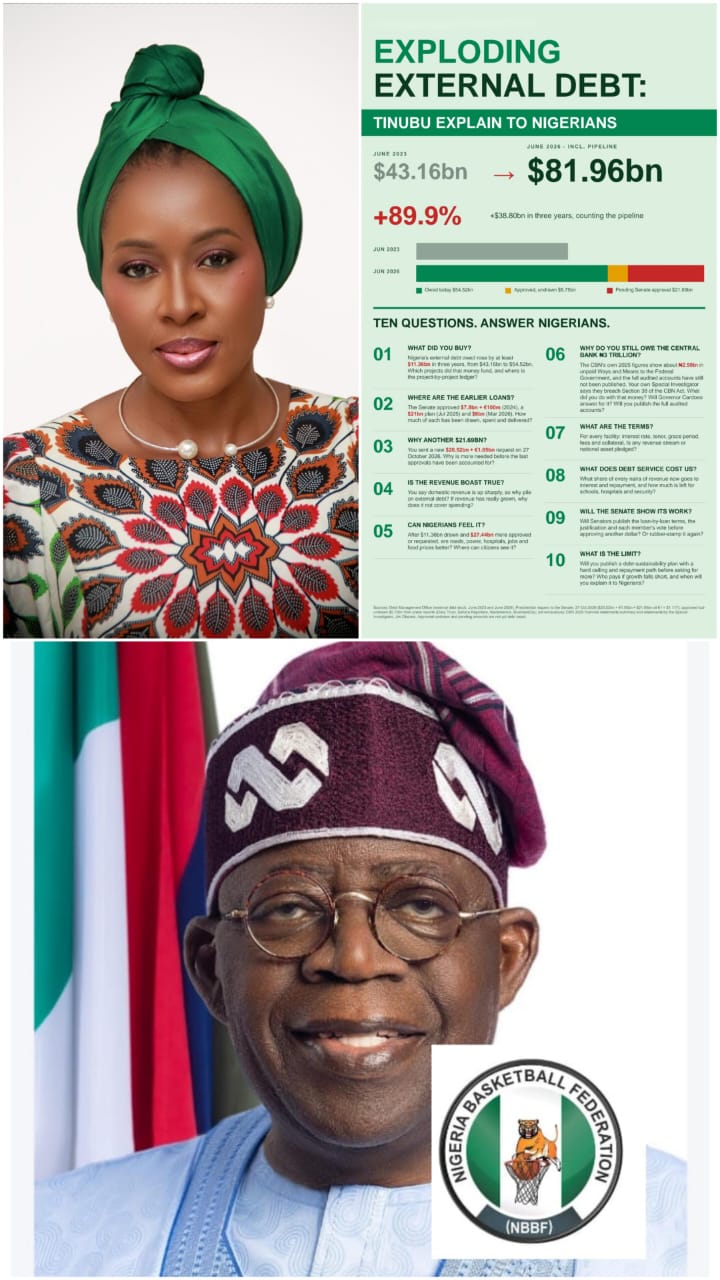
According to the article, Nigeria’s external debt rose from $43.16 billion in June 2023 to $54.52 billion in June 2026, an increase of $11.36 billion or 26.3 percent. Total public debt also rose from N87.38 trillion to N166.79 trillion over the same period, an increase of approximately 90.9 percent.
Dr. Ikokwu noted that adding the latest loan request and previously approved but undrawn financing suggests potential external debt exposure of about $81.96 billion, assuming no overlap and that all financing is eventually drawn, describing it as an illustrative estimate, not official debt outstanding.
She said while government says the new loans will fund critical development projects, Nigerians deserve to know precisely what these loans will deliver.
The NDC spokesperson asked: Which roads have been completed? Which hospitals are operational? Which power projects have increased electricity supply? Where are the measurable benefits for businesses and households struggling with the cost of living?
She also questioned why the need for additional borrowing remains so substantial if government revenues are increasing, and why seek more loans when lawmakers have raised concerns about inadequate capital releases to MDAs under previous budgets.
Dr. Ikokwu called on the President and the National Assembly to demand full transparency before approving further borrowing, including publishing a project-by-project register of external loans since May 2023 with amounts borrowed and disbursed, loan terms, locations, implementation status and independently verified outcomes.
She said Nigerians also deserve a clear assessment of future debt-service obligations and the risks posed by exchange-rate movements.
According to her, borrowing can support national development, but only when investments deliver measurable benefits and repayment remains sustainable, adding that the question is not simply how much Nigeria can borrow, but what Nigerians are getting in return.
She urged the National Assembly to subject the requests to rigorous scrutiny and ensure the public receives clear answers before the country assumes further obligations.