







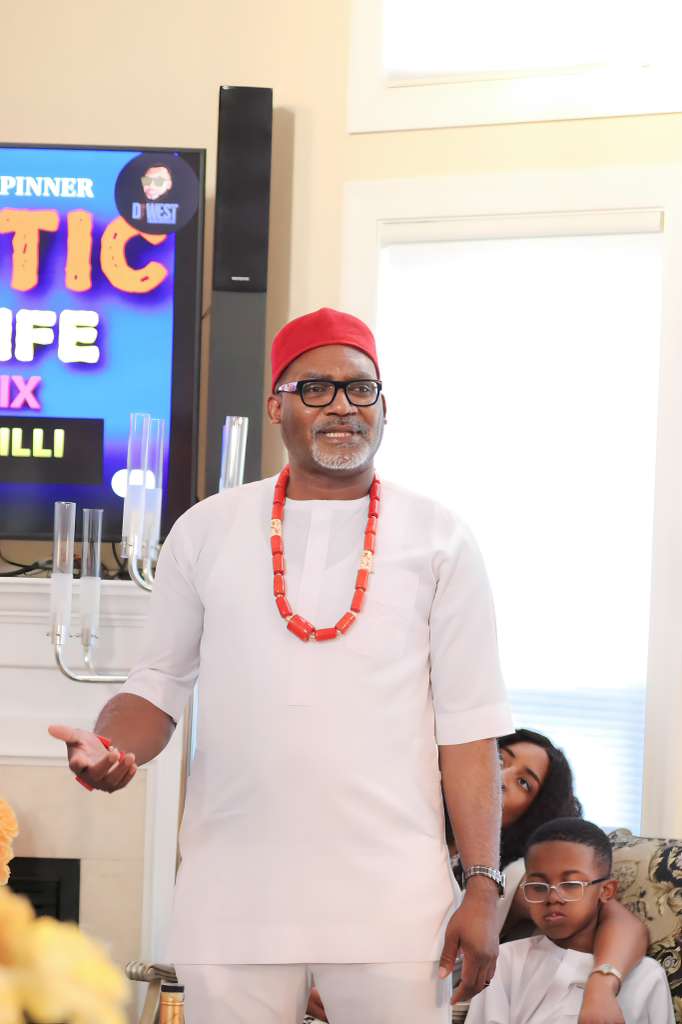
Dr. Okwudili Ezeike, a United States-based Attorney with a PhD in Nursing Science, currently serves as Regulatory Counsel with the United States Food & Drug Administration and works per diem as a Registered Nurse in hospitals in the Greater Baltimore Area. In this press interview, with Ekuson Nw’Ogbunka he he speaks on his aspiration to represent Aguata Federal Constituency of Anambra State at the National Assembly in 2027. Excerpts:
What is driving your ambition to contest for the House of Representatives?
To provide adequate representation for my people, ensure that government programs are impactful in their lives and to make sure that legislations passed are tailored to meet the needs of the constituents.
If elected, what are your top three legislative priorities for your constituency?
My top three priorities are healthcare, security, and erosion control. These are the most urgent issues affecting the daily lives and livelihoods of the 14 towns in Aguata Federal Constituency.
How would you assess your name recognition and grassroots support in the constituency today?
The ‘Ezeike’ surname is very popular in Aguata and environs. My late father, Michael Ezeike, was a Headmaster Grade 1 who taught in many towns in Aguata. My mother, Lady Cecilia Ezeike, also a retired schoolteacher, served in high positions in the Catholic Women Organization in both Awka and present-day Ekwulobia Dioceses. Since my secondary school days, I have been a grassroots person. I was the youngest secretary general of the Ekwulobia Students Union. At the University of Nigeria, Nsukka, I served as the Hall Chairman of ‘D Block’ Zik’s Flat Halls. My Foundation, Ikeakachi, has undertaken many grassroots-based activities across the constituency, including scholarships to indigent students, payment of WAEC registration fees, and healthcare outreach programs. Until I left Nigeria, I lived basically in my hometown of Ekwulobia, and I have many friends and acquaintances in all 14 towns.
Voter trust is low due to unfulfilled promises by politicians. What makes you different, and what track record can you point to?
I belong to a school of thought that sees politics as holding power in trust for the people. Under this principle, elected persons act as fiduciaries exercising power on behalf of the public for common good instead of personal gain. Voter mistrust arises when politicians fail to perform the fiduciary duties owed to their constituents. When there is a decline in trust, people feel their voices are not heard. My goal is to repair this break in public trust through transparency and integrity. As an attorney and public health expert in the US, I have held many public trust positions. I served creditably well as the president of Ekwulobia Community USA-Canada for 4 years.
Why did you choose the ADC as your political platform over the major parties?
First of all, ADC is the major party. And as an Obidient, I align myself with Peter Obi. In fact, I followed him from the Labour Party to ADC. I see him as the singular opportunity for Nigeria to get its act together. However, to accomplish this transformation, Peter Obi needs individuals with integrity to help with the dismantling of the current criminal enterprise. We cannot continue to leave politics in the hands of criminals and shady individuals and expect different outcomes.
What specific problem in your constituency keeps you up at night, and how will you address it in your first 100 days?
The erosion menace ravaging many towns in the constituency is what keeps me up at night. I intend to, in the first 100 days, organize a stakeholders’ public forum to highlight the problem facing these communities. To be invited to the forum will be colleagues, international NGOs, the UN, and ecological experts. My goal is to work with anyone to minimize this growing menace.
How will your dual background in law and nursing shape your work in the National Assembly?
My training as a PhD in Nursing Science and my practice as a Registered Nurse give me firsthand understanding of healthcare gaps — from primary care to health policy. As Regulatory Counsel with the US FDA, I understand how laws and regulations affect public safety and service delivery. That combination means I won’t just sponsor bills; I’ll know how to craft legislation that works and ensure oversight so agencies actually implement them for Aguata.
Many diaspora aspirants are accused of disconnect from local realities. How often are you on ground in Aguata?
Until I left the shores of Nigeria, I lived basically in my hometown of Ekwulobia. My Ikeakachi Foundation is active on ground, not run by proxies. We’ve paid WAEC fees, run health outreaches, and awarded scholarships across the 14 towns. I maintain daily contact with community leaders, town unions, and youth groups. Distance doesn’t mean disconnect when you have roots, structures, and accountability.
What should constituents expect from you in terms of transparency and accountability?
You should expect quarterly town halls, published constituency project reports, and open accounting of my office’s allocations. As a fiduciary, I will treat my mandate as a trust. In the US, I operate under strict ethics rules at FDA and as an attorney. I’ll bring that same standard to Abuja — no secrecy, no diversion. If a road or clinic is approved for Aguata, you’ll know the cost, contractor, and timeline.
What is your message to Aguata voters ahead of the 2027 elections?
My people deserve representation that understands both the law and the pain of a mother who can’t access a hospital or a farmer whose land is washed away by erosion. I’m not coming to learn on the job. I’m bringing global exposure, professional competence, and grassroots compassion. Give me your trust, and I’ll give you service. It’s time we send people to Abuja who see politics as service, not enterprise.