








By Ekuson Nw’Ogbunka in Abuja
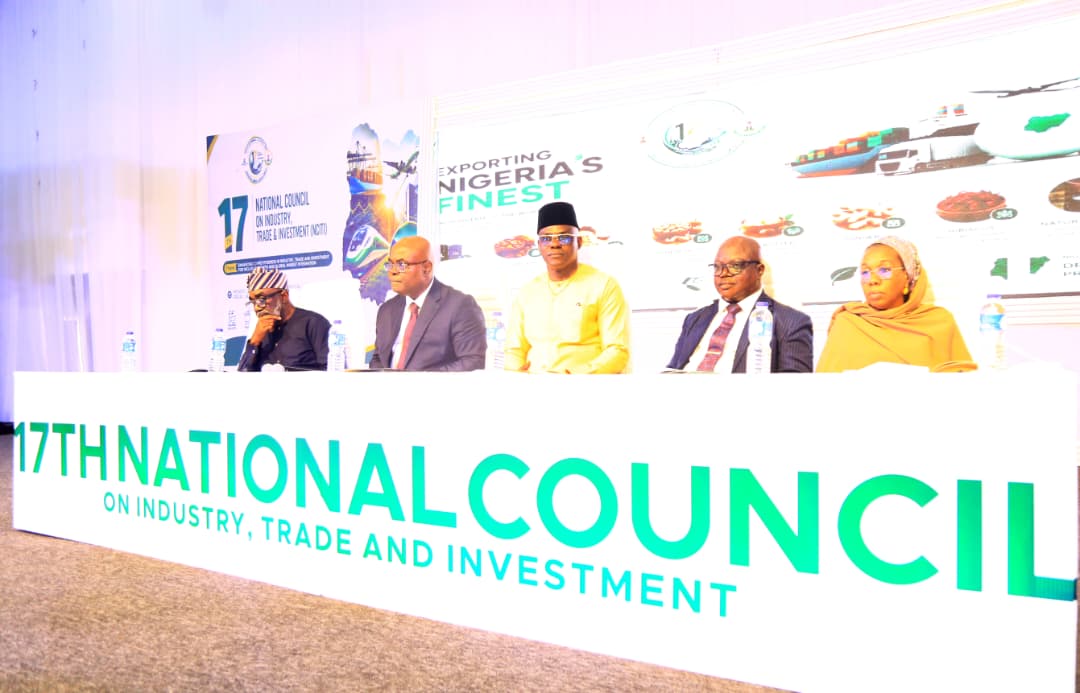
At the 17th National Council on Industry, Trade and Investment in Enugu, the Federal Government (FG) announced headline figures that sound like a turning point: over US$24.1 billion in capital importation, more than US$6.1 billion in non-oil exports, and support for 115,000 MSMEs. According to a press release from Obilor-Duru Augustina Okechi, Head Press and PR, FMITI, the numbers project momentum. But in a $1 trillion economy conversation, the real test is not what was announced, it is what converts to jobs, factories, and cheaper goods for Nigerians.
The figures were unveiled on Monday, July 20, 2026, at the opening of the technical session held at Hotel Presidential, Enugu. It was presented as proof that the Renewed Hope Agenda is gaining traction.
Dr. Chris Osa Isokpunwu, Permanent Secretary of the Federal Ministry of Industry, Trade and Investment (FMIRI), framed the session as the “engine room” where policy memoranda are tested. That is where intentions meet implementation.
The 2026 theme, “Enhancing Competitiveness in Industry, Trade and Investment for Inclusive Growth and Global Market Integration” is ambitious. It commits government to industrialization, productivity, and export expansion.
But ambition must be matched with outcomes. A $24.1bn capital importation figure is significant, yet Nigeria needs to know the sectoral breakdown. How much went to manufacturing versus portfolio flows that can exit quickly?
Similarly, $6.1bn in non-oil exports is progress. However, it remains a fraction of what peer economies earn from agriculture and manufacturing. The question is value addition, not just volume.
The Ministry reported onboarding over 40,000 exporters onto the NEPC digital platform. That is a structural gain. Digital trade facilitation reduces bottlenecks, but only if ports, logistics and FX access keep pace.
The operationalisation of the National Single Window and AfCFTA implementation were also highlighted. These are the right levers. Yet businesses continue to complain about multiple taxation and regulatory overlap at state level.
On MSMEs, the announcement of a planned ₦350 billion Development Fund is welcome. With over 115,000 MSMEs already supported, the challenge now is disbursement speed, single-digit interest, and monitoring to avoid leakages.
Enugu State’s showcase of Executive Order 007 and its investor-friendly push is instructive. Sub-nationals that cut red tape are winning investments. The FG must replicate that urgency across all 36 states.
The Director of PPR&S, Mrs. Iya Gamawa, noted progress on 22 resolutions from the 16th NCITI. That continuity matters. Policy inconsistency has been Nigeria’s biggest investment risk.
Expanded Special Economic Zones and stronger regulatory systems were cited as business environment improvements. Investors, however, still rank power, security and forex stability higher than incentives on paper.
2026 marks year one of the Nigeria Industrial Policy 2025–2035. A 10-year policy is good, but only if it survives political transitions and is backed by budgetary allocation.
The emphasis on strategic value chains and digital transformation is correct. Nigeria cannot industrialize by importing inputs. We must move from exporting raw cocoa to chocolate, from crude to petrochemicals.
The risk is that these gains become press statements. For the $1 trillion economy target to be real, the FG must publish quarterly dashboards: capital deployed, factories completed, export earnings retained, and jobs created.
Collaboration with the private sector and development partners was urged at the session. That partnership must be institutionalized, not event-based. Investors want predictability more than applause.
In sum, the Enugu meeting gives the Renewed Hope Agenda numbers to defend. $24.1bn and $6.1bn are credible signals. But signals must become factories, exports must become earnings, and policies must become prosperity. That is the benchmark for the next NCITI.