









Continuation and conclusion of the Question: Aduda Is He the Expected Messiah in the FCT?
The Messiah Question: What Exactly Is the FCT Waiting for?
The word Messiah is frequently invoked in political conversations when voters become frustrated with the pace of development or begin searching for a leader capable of changing their circumstances. But the metaphor can also be misleading.
No senator, however experienced or politically connected, can single-handedly resolve every challenge facing the FCT. Development requires cooperation among federal institutions, the FCT Administration, area councils, relevant agencies and community stakeholders. It also requires effective budgeting, oversight, implementation and accountability.
The FCT needs representation that can raise pressing issues, scrutinise public spending, advocate for neglected communities and pursue legislation that improves residents’ lives.
It needs a senator who can explain what has been achieved, what remains unfinished and what measurable objectives should guide the next four years.
Aduda’s experience may provide a useful foundation for such responsibilities. But the claim that he is the expected answer to the FCT’s problems must be demonstrated rather than assumed.
If his candidacy is built primarily around his years in office and his political connections, it risks presenting experience as a substitute for a forward-looking agenda. If, however, he can produce a transparent record of achievements, acknowledge shortcomings and present realistic commitments, he will have a stronger case to make.
The distinction is important: the FCT does not need a political saviour so much as an effective, accessible and accountable representative.
Kingibe and the Challenge of Incumbency
Aduda’s principal electoral challenge is not simply to persuade voters that he is experienced. He must also contend with the fact that the current senator, Ireti Kingibe, has occupied the seat since defeating him in 2023.
Kingibe’s incumbency gives voters another record against which to assess representation. The 2027 contest will therefore invite comparisons between the candidates’ legislative activities, constituency engagement, policy priorities and responses to the needs of residents. A balanced assessment should apply the same standards to both contenders.
Has the incumbent delivered on the expectations that accompanied her election? Has Aduda demonstrated that his previous years in office justify another opportunity? What are the candidates proposing for the communities and groups whose needs have not been adequately addressed?
These questions should be settled through verifiable records and public debate rather than partisan declarations. Aduda’s supporters have an opportunity to make a compelling case for his return, but that case becomes stronger when it acknowledges the electorate’s right to compare alternatives and demand evidence.
Beyond Political Mobilisation: The Test of a Credible Agenda
For Aduda, the road to 2027 will require more than a successful party nomination, established political relationships and the enthusiasm of loyal supporters.
A credible campaign should set out clear priorities for the FCT and explain how those priorities would be pursued through the Senate. These might include improved federal attention to infrastructure in the satellite towns, stronger advocacy for education and healthcare, employment opportunities for young people, improved access to public services and more transparent constituency project monitoring.
Such proposals must be specific enough for voters to assess. Where possible, they should identify the intended beneficiaries, implementation mechanisms, funding pathways and measurable targets.
Aduda should also be prepared to explain the lessons drawn from his previous tenure and the changes he would introduce if elected again. A willingness to answer difficult questions would not weaken his candidacy. It could instead demonstrate confidence in his record and respect for the people whose votes he seeks.
Conclusion: The Verdict Belongs to the Voters
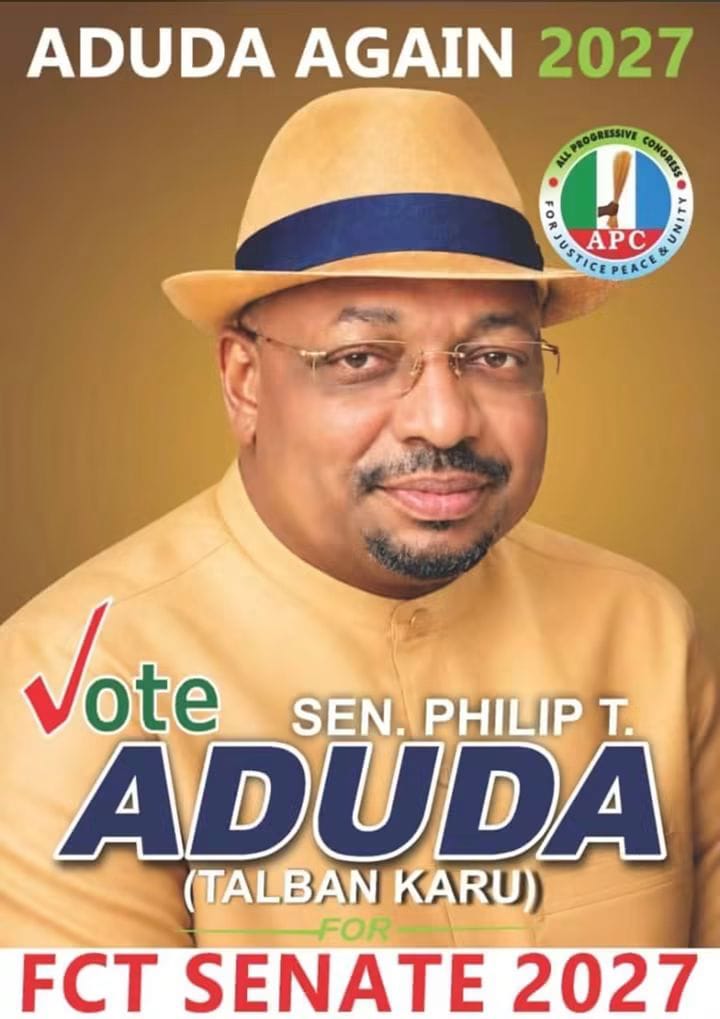
Is Philip Aduda the expected Messiah in 2027? The answer cannot be determined by political endorsements, party affiliation or the length of his career alone. His record offers genuine grounds for examining the value of legislative experience, and the constituency projects associated with his previous tenure deserve assessment. At the same time, his 2023 defeat, his political realignment and the electorate’s continuing development concerns make scrutiny essential.
Aduda enters the race with advantages that many aspirants may not possess: familiarity with the National Assembly, a history of representing the FCT and experience in legislative leadership. But these advantages also carry a responsibility to demonstrate what he would do differently and how his return would serve residents more effectively.
The 2027 election should not become a contest between those who regard Aduda as indispensable and those who believe the territory needs an entirely new political direction. It should be an opportunity to examine records, test proposals and demand accountability from every candidate.
The real question is not whether Aduda can be presented as a Messiah. It is whether he can convince a discerning electorate that his experience, if renewed, would produce tangible benefits for the FCT.
In the final analysis, the people of the FCT must decide whether his political past provides sufficient grounds for another mandate, or whether the future they envision requires a different choice. In 2027, experience will be part of the argument. Performance, credibility and public trust must decide the verdict.