




Here, Ekuson Nw’Ogbunka, Our Managing Editor writes that on October 1, 1960, the Union Jack was lowered and Nigeria assumed responsibility for its own affairs. Sixty-six years later, the country’s Independence Anniversary offers another opportunity to ask a difficult question: what has Nigeria become, and what happened to the promise of independence?
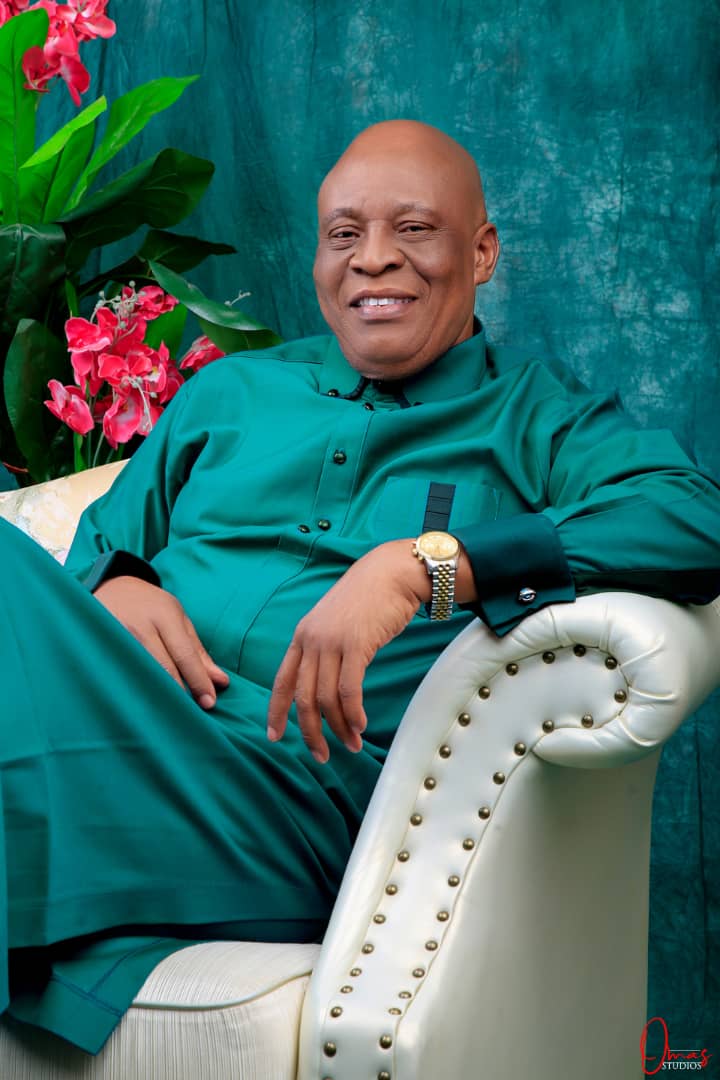
For Amobi Nzelu, Esq., Principal Partner at Chinenye Chambers and a lawyer with decades of legal practice, the answer is uncomfortable.
In a wide-ranging Independence Day interview with journalists, Nzelu spoke not as a detached observer but as someone who has lived through several phases of Nigeria’s political history. Born in 1953, he recalled his experiences as a young worker, university student and lawyer and contrasted the Nigeria of his youth with the country of today.
His recollections of university life in the 1970s were particularly striking. He remembered a period when school fees and daily feeding were comparatively affordable and when government-backed student loans could assist students whose parents could not afford their education.
Against that memory, he placed today’s Nigeria, where the cost of education, food, accommodation and other necessities has become a major concern for many families.
From three regions to 36 states
Nzelu’s argument begins with Nigeria’s political structure.
At independence, Nigeria operated a federal parliamentary system consisting principally of the Northern, Western and Eastern regions, each with substantial self-government. The country’s constitutional history confirms that the regions possessed significant autonomy and that the centre was considerably less dominant than it is today.
For Nzelu, this history matters because he believes Nigeria’s present system has concentrated too much power and resources in Abuja.
The constitutional journey, however, has been complex. The Mid-West Region was created in 1963, followed by decades of state creation and military intervention before Nigeria arrived at today’s 36-state structure.
The lawyer’s call for a fundamental rethink of the federation therefore joins a long-running national debate about restructuring, devolution of powers and fiscal federalism.
The burden of borrowing
Nzelu is equally troubled by Nigeria’s debt profile. His argument is that a resource-rich country should be able to deploy its resources more effectively rather than repeatedly borrowing to finance its needs.
The official position is more nuanced. Nigeria’s Debt Management Office says its medium-term debt strategy is designed to meet government financing needs while managing the cost and risk associated with public debt.
But the scale of borrowing makes transparency important. The Senate’s approval of the 2026–2028 fiscal framework included a new borrowing plan of ₦17.88 trillion.
For Nzelu, the fundamental issue is accountability: if government borrows money, Nigerians should be able to see precisely what the money is intended to finance and what results are achieved.
His challenge to the Senate
The 10th Senate receives some of Nzelu’s sharpest criticism.
He particularly objects to what he calls the “take a bow and leave” approach to the screening of certain nominees.
That practice is not imaginary. During the 2023 ministerial screening, several nominees with previous experience in government were allowed to take a bow and leave after brief appearances. The Senate leadership explained that the procedure did not constitute confirmation by itself.
But the controversy remains relevant because the Senate’s constitutional responsibility includes scrutinising presidential nominations.
The issue, therefore, is not necessarily whether every nominee must be treated identically, but whether the screening process is sufficiently rigorous to give Nigerians confidence that competence, integrity and suitability have been properly examined.
“Give us leadership with a human face”
When the conversation turns to President Bola Tinubu, Nzelu’s message becomes personal.
He urges the President to examine his cabinet, governing structures and approach to national problems and to place Nigerians ahead of what he calls selfish interests.
His larger complaint is about the widening distance between those who exercise political power and ordinary citizens struggling with the cost of living.
Nzelu paints a picture of a society in which the traditional middle class is under severe pressure, while a small affluent segment appears increasingly detached from the hardship experienced by the majority.
Whether one accepts every element of that assessment or not, the central issue is difficult to dismiss: economic indicators and government programmes must ultimately be judged by their effects on households, businesses, workers, students and vulnerable citizens.
Is Nigeria really independent?
For Nzelu, independence must go beyond the lowering of a colonial flag.
He questions whether Nigeria has achieved sufficient economic independence when its economy remains deeply integrated into global financial systems dominated by foreign currencies.
That argument touches on a broader African challenge. Political sovereignty does not automatically produce monetary or economic autonomy. African countries continue to conduct much international trade within a global financial architecture in which the dollar and other major currencies occupy dominant positions.
A message of hope
Despite his criticism, Nzelu does not end his Independence Day message in despair.
His final appeal is to conscience.
He argues that public officials should ask themselves whether their actions are morally right before God and before the people they serve.
For him, Nigeria’s problem is not a lack of natural resources. It is a question of leadership, priorities, accountability and the willingness to say no to corruption and waste.
His message at 66 is therefore both an indictment and a prayer: that Nigeria will produce leadership capable of restoring public confidence, strengthening institutions and ensuring that the country’s resources translate into a better quality of life.
Sixty-six years after independence, the flag remains the same symbol of sovereignty. The challenge, as Nzelu’s reflections suggest, is to make the meaning of that sovereignty tangible in the lives of ordinary Nigerians.