









By Ekuson Nw’Ogbunka in Abuja
The controversy surrounding the reported blockade of the presidential candidate of the Nigeria Democratic Congress (NDC), Peter Obi, in Benue State has deepened, with a faction of the All Progressives Congress (APC) demanding an apology from Governor Hyacinth Alia to Obi, President Bola Tinubu, the people of the state and the party.
The APC faction, led by the state publicity secretary, Daniel Ihomun, condemned the incident, describing the reported obstruction of Obi’s movement to Makurdi as an embarrassment capable of damaging the image of the ruling party and further heating up the political atmosphere ahead of the 2027 elections.
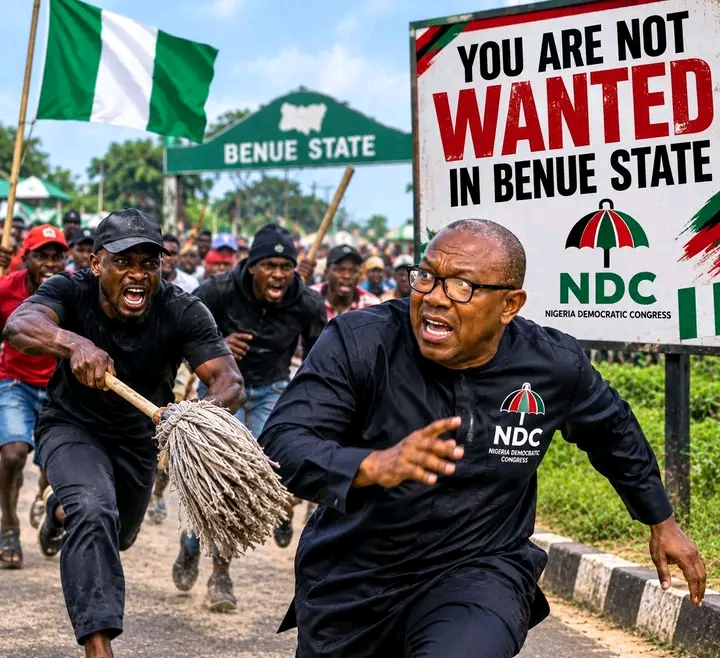
Obi had travelled to Benue to sympathise with families and communities affected by the 2025 Yelwata killings, one of the deadliest attacks in the state in recent years. However, his convoy was reportedly stopped by youths along the Makurdi–Gboko road before he could proceed to his destination.
Obi later said the youths blocked his convoy and shouted, “Peter Obi, go back.” According to him, he decided against forcing his way through, apparently out of concern that doing so could trigger a confrontation and endanger lives.
The incident has since generated competing accounts, with the NDC alleging that the action was politically motivated, while the Benue State Government denied organising or sponsoring the youths who blocked the former Anambra State governor’s convoy.
The state government also said it was not aware of Obi’s planned visit. Commissioner for Information and Orientation, Solomon Iorpev, faulted the absence of prior notification to the government, while the governor’s Chief Press Secretary, Kula Tersoo, had earlier expressed doubts about the planned visit and maintained that Alia did not patronise thugs.
The police, however, confirmed that Obi’s convoy was blocked and said circumstances surrounding the incident were being investigated. The development has therefore raised fresh questions over who mobilised the youths, what prompted the confrontation and whether there was a communication breakdown between Obi’s team and state authorities.
The controversy became more significant after the APC faction in Benue publicly distanced itself from the incident, insisting that political disagreement should not translate into violence, intimidation or the denial of a citizen’s freedom of movement.
According to the faction, Benue has historically been known for its hospitality and peaceful disposition, arguing that the treatment allegedly meted out to Obi was inconsistent with the culture of the people and the democratic values the state ought to uphold.
The APC group further appealed to members of the Igbo community in Benue not to interpret the incident as a reflection of the entire party or use it as a basis for their political choices in the 2027 elections.
It argued that the alleged resurgence of political thuggery in the state should be rejected, maintaining that the APC should not be associated with intimidation or violence as a means of securing political advantage.
The faction also declared that the party would seek victory in 2027 through its structures, persuasion and the ballot box rather than through the deployment of thugs or intimidation of political opponents.
But the most striking aspect of the statement was its demand that Governor Alia personally apologise to Obi, President Tinubu, the people of Benue and the APC over the incident.
“Political differences are legitimate, political violence is not,” the faction declared, stressing that the governor should accept responsibility for conduct that it said had the potential to bring the party into disrepute.
The demand has introduced a new political dimension to an already contentious episode, particularly as the state approaches another election cycle in which rival political camps are expected to intensify their mobilisation and campaigns.
Beyond the partisan arguments, however, the incident has raised a broader question about the health of Nigeria’s democracy: whether political candidates and citizens should be able to travel, campaign and express their political preferences without intimidation, regardless of their party affiliation.
For now, questions remain unanswered about who organised the youths, whether Obi’s team properly notified the relevant authorities, and whether the confrontation could have been prevented. Until those questions are conclusively addressed, the Benue episode is likely to remain a major talking point in the emerging political contest ahead of 2027.