










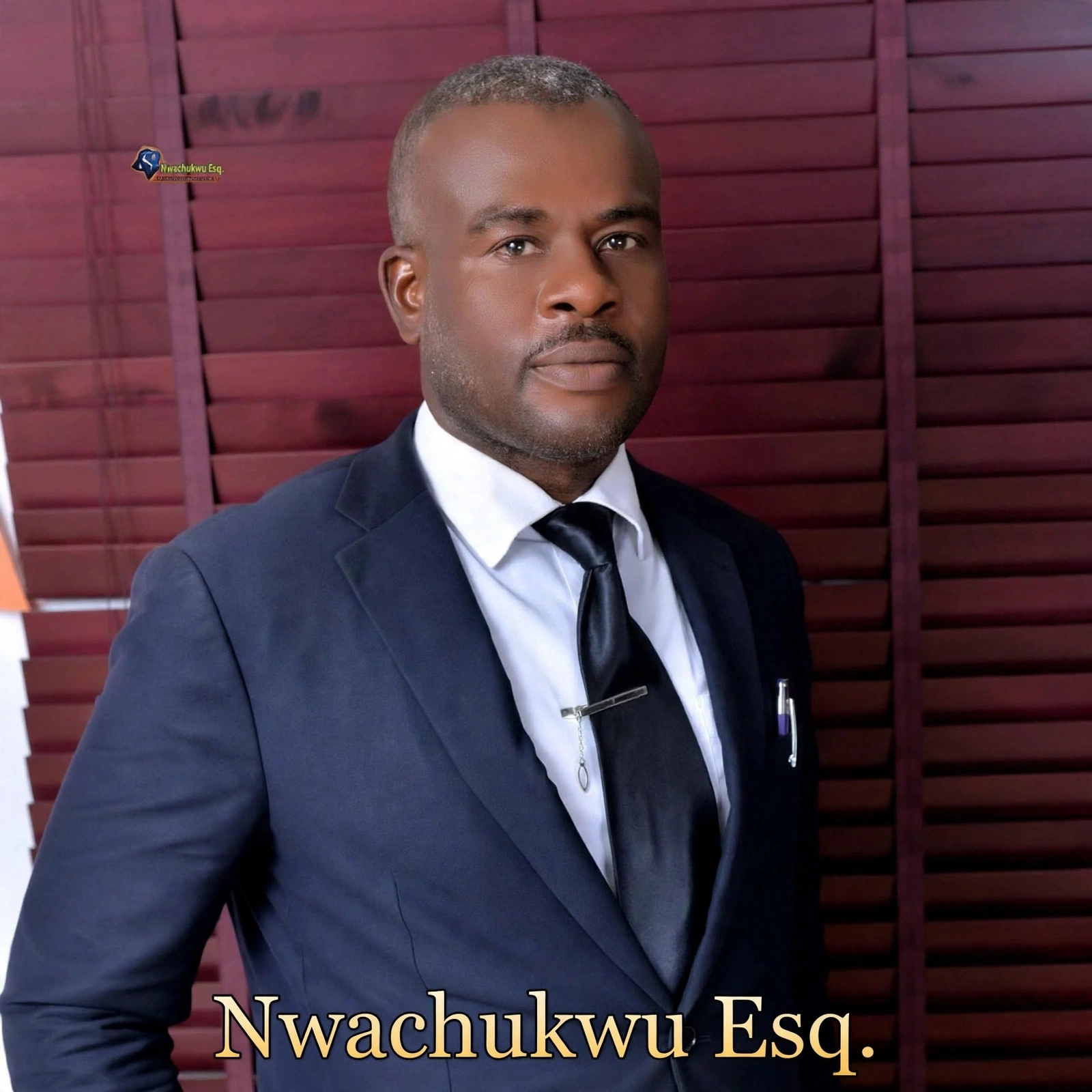
Inno Nwachukwu Eaq. is an Abuja-based legal practitioner and an indigene of Obiagu, Uruagu Nnewi, and a regular traveller on the roads of Nnewi North. In this interview, with Ekuson Nw’Ogbunka, Our Managing Editor on Friday in Abuja, he speaks on the Mayor’s directive restricting commercial motorcycles from 7:00 p.m. to 6:00 a.m., why he believes the poor will suffer most, and what the local government should do instead. Excerpts.
Sir, the Mayor of Nnewi North has restricted Okada from 7:00 p.m. to 6:00 a.m. Why did you decide to speak out?
Because while I appreciate the Mayor’s duty to protect lives and property, a policy introduced in the name of security should not impose unbearable hardship on innocent citizens. This directive does that.
What is your fundamental worry about the directive?
My fundamental question is simple. How are ordinary residents of Nnewi North, particularly those who do not own private motorcycles or cars, expected to move around between 7:00 p.m. and 6:00 a.m.? That question deserves serious consideration before implementation.
But does Nnewi North not have taxis and buses as alternatives?
Unlike many urban centres, Nnewi North does not have a functional and organised alternative public transportation system. The road network in several parts is also far from satisfactory. In these circumstances, Okada is not luxury for many people, it is their only means of getting home, attending to emergencies, or returning from work.
What about Nnewi indigenes who live outside Nnewi and return home at night?
That is another major concern. People travel from Lagos, Abuja, Port Harcourt, Onitsha, Awka and other parts of the country. Some arrive after 7:00 p.m. due to the nature of their journeys. How are they expected to get home, especially those whose residences are in areas where taxis and buses are unavailable, like my village, Obiagu Uruagu Nnewi?
Are you saying they will be stranded?
Yes. Are they expected to sleep at motor parks until 6:00 a.m.? Are they expected to trek several kilometres, irrespective of age, health, luggage or personal safety? Or should they simply abandon their journeys if they may arrive after 7:00 p.m.? Government must answer these practical questions.
Do you dispute that insecurity is a serious problem in Nnewi North?
Nobody disputes that. If criminal elements are using commercial motorcycles to perpetrate robbery, kidnapping or other crimes, government has every right to introduce reasonable measures. My quarrel is not with security, it is with the method.
What is wrong with restricting Okada if criminals use it?
The existence of criminals within a particular means of transportation should not automatically translate into restriction of every legitimate user. The fact that armed robbery sometimes occurs in or around commercial aircraft does not mean the Federal Government should prohibit airline operations. Rather, you strengthen security, improve intelligence, identify criminals and prosecute offenders.
Who will bear the greatest burden of this ban?
The poor. Not everybody owns a private vehicle or motorcycle. Artisans, apprentices, traders, market women, security guards, restaurant workers, young people, civil servants and other low-income earners depend on affordable transportation. For some, buying a private motorcycle is financially impossible.
Can you give practical examples?
What happens to a mother whose child suddenly requires medical attention at 10:00 p.m.? What happens to a worker whose duty ends at 9:00 p.m. and who has no car or private motorbike? What happens to a resident who receives an emergency call from a relative in another part of Nnewi? Should such people become stranded simply because government has restricted Okada?
What should government do instead?
Security and transportation must go hand in hand. Government should consider proper registration and identification of operators, identifiable jackets, numbers and motorcycle permits, improved monitoring, collaboration with the police and other security agencies, designated motorcycle parks, and strengthening community-based security.
Would you support a total ban if there was an alternative transport system?
If there was a reliable alternative transportation system before imposing restrictions on night movement, that would be different. You cannot remove the only available means and leave people with nothing. Provide the alternative first.
Was there consultation before this directive?
That is part of my concern. The people of Nnewi North deserve to be consulted on policies that directly affect their daily lives. A policy may be well-intentioned, but its implementation should take into account the economic realities, geographical circumstances and transportation challenges of the people.
Who should the Mayor consult?
Community leaders, residents, transport operators, traders, youth organisations and other stakeholders. Broad consultation would have revealed the gaps in this directive before enforcement.
Are you calling for total cancellation of the directive?
I am appealing for reconsideration. At the very least, initiate broad consultations. But if the restriction must remain, then there should be a corresponding arrangement to ensure residents are not left stranded without reasonable and affordable transportation alternatives.
What is your final message to the Mayor?
Mr Chairman Sir, the people need security, but they equally need accessible roads, affordable transportation and freedom to move for legitimate purposes. Security and human welfare should complement each other, not compete. A policy that seeks to protect lives must also consider how those lives are sustained. Nnewi deserves security, but Nnewi also deserves a functional transportation system. Let us not solve one problem by creating another.