









Ekuson Nw’Ogbunka, Our Managing Editor examines the fiery exchange that shook the Red Chambe recently, as Senate President Godswill Akpabio and Senator Adams Oshiomhole clashed over the controversial amendment to the Senate Standing Orders. The new rule barring first-term senators from presiding offices has set the stage for a deeper battle over experience, power, and the future of legislative leadership.
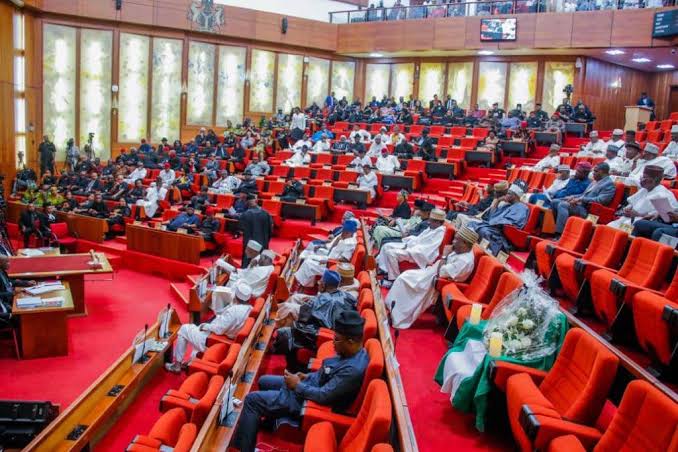
The Red Chamber was thrown into a rare state of disorder recently, as a heated exchange erupted between Senate President Godswill Obot Akpabio, representing Akwa Ibom North West, and Senator Adams Aliyu Eric Oshiomhole of Edo North. The confrontation, which played out live on the Senate floor, laid bare the political fault lines created by a fresh amendment to the Senate’s rules.
Less than 24 hours after the upper chamber concluded a nearly three-hour closed-door session, senators approved changes to the Standing Orders. The revision now restricts key leadership positions to lawmakers who have served at least two consecutive terms, effectively eight years of uninterrupted service. The new rule immediately disqualifies Oshiomhole, who is serving his first term, from contesting any presiding office in the current National Assembly.
Tension began to build during plenary when Akpabio called for the adoption of the Votes and Proceedings from the previous legislative sitting. Seizing the moment, Oshiomhole attempted to raise a point of order. Despite repeatedly seeking recognition, the Edo North senator was ignored by the Senate President, who pressed ahead with the day’s business.
Unwilling to back down, Oshiomhole continued to shout “point of order” even after his microphone was muted. His persistent interruptions created palpable tension in the chamber, with other lawmakers watching the unfolding drama between the presiding officer and the former Edo governor.
Efforts to restore calm were led by Senate Chief Whip, Mohammed Monguno, who invoked his authority to rein in the unruly member. “I am now invoking the powers conferred on me as the chief whip of the senate for you to return to your seat. Be guided,” Monguno said. The plea did little to temper Oshiomhole’s defiance as he kept raising his voice.
Akpabio then stepped in with a firm reminder of the rules governing conduct within the Senate. He stressed that the rules extend beyond the chamber to its corridors and passages. “The rules and laws governing the Senate Chamber, including its corridors and passages, are clearly defined,” he stated, signaling that decorum would be enforced without exception.
The Senate President went further to outline his constitutional powers as presiding officer. He noted that he is empowered to sign warrants, subpoenas, resolutions, and other official documents issued by order of the Senate. He also emphasized his responsibility for ensuring adherence to the rules of debate.
Reading directly from the orders, Akpabio explained that the Senate President is tasked with maintaining order during debates and giving rulings on points of constitutional order when raised. He added that the presiding officer has a casting vote in the event of a tie but does not vote in any other circumstance.
“Most importantly, he has the authority to interpret the rules—this is clearly stated,” Akpabio said, directly addressing Oshiomhole. The remark underscored the Senate President’s discretion in procedural matters, a power that became central to the day’s dispute.
Akpabio then issued what he termed a “final warning” to the Edo North senator. “So, senator, we should not come into this chamber, especially on matters as serious as contested elections, without a proper understanding of the rules. Let me emphasize once again, Senator Oshiomhole, if any member becomes unruly in the senate, such a member will be asked to leave,” he declared.
The confrontation momentarily shifted when Senator Patrick Ndubueze raised a separate concern about the Votes and Proceedings. Ndubueze argued that one of the resolutions listed in Tuesday’s document had neither been debated nor adopted by the Senate, pointing to a procedural omission.
Akpabio, however, overruled the objection and proceeded with the business of the day. He subsequently put the Votes and Proceedings to a voice vote and declared the “ayes” victorious, despite loud “nays” from senators who objected to the ruling.
The drama came on the heels of the amendment that now limits eligibility for Senate President, Deputy Senate President, and certain principal positions to only those with two consecutive terms. The change was approved after a closed-door session that lasted nearly three hours, suggesting intense deliberations behind the scenes.
Political observers say the amendment has already generated significant interest ahead of 2027. With the new threshold in place, attention has shifted to former governors like Hope Uzodimma, Ifeanyi Okowa, and Ovie Omo-Age, who could seek a return to the Senate to position themselves for the contest for Senate presidency.
In the end, that day’s showdown was more than a clash of personalities. It exposed how procedural rules are being reshaped to influence future leadership contests, and how Akpabio is asserting control over the interpretation of those rules. For Oshiomhole and other first-term senators, the message was clear: experience now carries a higher premium in the race for power in the Red Chamber.