









By News Maker
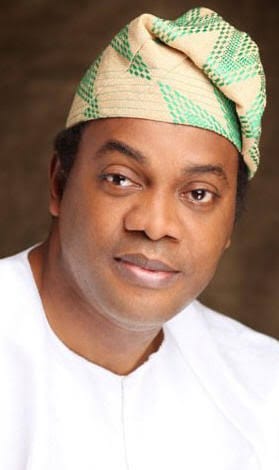
The possibility of Nigeria’s opposition parties supporting a single presidential candidate in the 2027 election is increasingly becoming a major issue, as parties and political actors explore ways of building a united platform against the ruling All Progressives Congress (APC). Former Cross River State governor and Peoples Redemption Party (PRP) presidential candidate, Donald Duke, has offered his support for such an arrangement.
Duke said the opposition should be ready to support whichever candidate eventually emerges from the ongoing coalition discussions, arguing that the larger objective should be to provide a strong alternative to the ruling party. His position reflects the growing argument that opposition votes could have greater impact if concentrated behind one candidate.
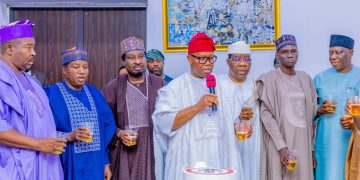
Speaking at the G-100 Summit of Nigeria’s Opposition Political Parties in Abuja, Duke indicated that he would remain committed to the opposition unity process regardless of the outcome of negotiations. His statement suggests a willingness to place the broader coalition ahead of his individual presidential ambition.
The position is significant because one of the biggest challenges facing any proposed opposition coalition will be persuading presidential aspirants to accept a common candidate. While leaders may agree on the need for cooperation, the more difficult question will be determining who gets the ticket and whether others will genuinely support that person.
The summit brought together representatives of several opposition parties, including the African Democratic Congress (ADC), Allied Peoples Movement (APM), Nigeria Democratic Congress (NDC), Peoples Democratic Party (PDP), PRP and Social Democratic Party (SDP). Their participation indicates that discussions about opposition cooperation are extending beyond individual parties.
At the summit, G100 representative Salihu Moh. Lukman argued that opposition parties could have performed differently in the 2023 presidential election if their support had not been divided among several candidates. He pointed to the combined votes received by opposition candidates as evidence of the potential strength of a more coordinated political arrangement.
However, the argument that opposition votes can simply be combined should be treated with caution. Voters do not necessarily transfer their support automatically from one candidate to another merely because their preferred parties form an alliance. Regional interests, candidate popularity, party structures, ideology and individual voter preferences could significantly influence the outcome.
The 2015 presidential election has also been cited as an example of successful opposition cooperation. The lesson from that period, according to Lukman, was that the parties first established rules for cooperation before negotiating individual interests and positions. This suggests that a successful 2027 arrangement would require more than political declarations.
Duke’s willingness to support an eventual consensus candidate could therefore be important in building confidence among other aspirants. If other presidential contenders adopt a similar position, it could make negotiations easier and reduce the fear that losing the nomination would automatically end their political relevance.
Nevertheless, significant obstacles remain. Opposition parties have different political histories, structures and interests, while individual aspirants have their own ambitions and supporters. Reaching agreement on zoning, candidate selection, power-sharing and the leadership of a possible coalition could prove more difficult than agreeing in principle to work together.
The G100 has proposed structures, including a Central Leadership Committee, a Publicity and Communication Committee and a Legal Committee, to help coordinate the process. It has also proposed working groups to develop plans for democratic renewal, opposition unity, national reforms and the process of producing a common presidential candidate.
The proposed coalition is also being linked to a “Government of National Competence” and a four-year National Reset Programme. However, these ideas remain largely at the framework stage, and questions about their implementation, legal foundation and enforceability would need clearer answers before they can command broad public confidence.
Ultimately, the opposition’s ability to support one candidate will depend on whether its leaders can build a transparent and credible selection process. A candidate imposed by a few powerful interests could create fresh divisions, while a process accepted by participating parties could strengthen the legitimacy of the eventual flag bearer.
Duke’s declaration therefore represents an important political commitment, but it should not be interpreted as proof that the opposition has already solved its internal challenges. The real test will come when individual ambitions, party interests and competing demands have to give way to a collective decision. If the opposition succeeds in establishing rules that all parties trust and persuading its members to honour the final outcome, the possibility of a united presidential challenge in 2027 could become more realistic.