










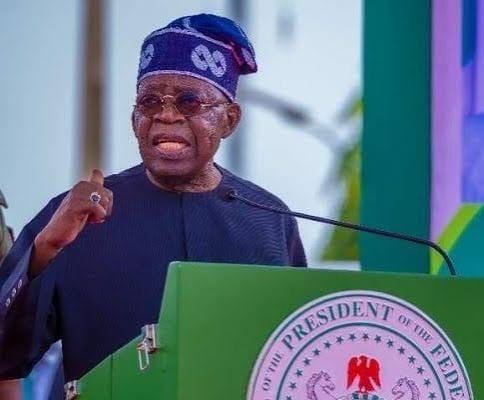
After 25 years of controversy, court battles, and accusations of overreach, President Bola Ahmed Tinubu has pulled the plug. With immediate effect, the Presidential Implementation Committee on the Alienation of Federal Government Properties, PIC, has been dissolved. The decision marks more than the end of a committee, it signals a deliberate attempt by the Tinubu administration to clean up a monetization policy process that has generated more litigation than revenue, analyzes Ekuson Nw’Ogbunka, Our Managing Editor on Thursday in Abuja.
The announcement came on Thursday in a statement by the Special Adviser to the President on Information and Strategy, Bayo Onanuga. It was short, decisive, and retroactive in effect: all outstanding matters of the PIC will now be handled by the Attorney-General of the Federation and Minister of Justice, Lateef Fagbemi.
The timing is significant. The directive takes effect from November 5, 2025, and includes a specific order for the committee’s former secretary, B.S. Dutsin-Ma, to cease acting or representing the Federal Government in any matter relating to the dissolved body.
For context, the PIC was born in 2000 under President Olusegun Obasanjo. Its mandate was simple on paper: oversee the privatization, sale, and lease of Federal Government landed assets under the monetization policy. The idea was to convert idle government properties into cash and reduce maintenance costs.
The committee’s structure reflected its weight. Chaired by the then Minister of Housing, it had representatives from Transportation, Justice, Health, Agriculture, and the Nigeria Police Force. Prof. P.T. Ahire, then a deputy director in OSGF, served as pioneer secretary, with other members drawn from both public and private sectors.
To give it legal backing, the Federal Executive Council on March 22, 2001 approved a panel of inquiry to produce a White Paper that would guide implementation. That panel worked for 21 months before submitting its report. What followed, however, was decades of dispute over how that report was applied.
The Presidency’s reason for scrapping the PIC is blunt: “activities…had extended beyond its original mandate, resulting in multiple litigations across the country, and the continued existence of the Committee is no longer justified.”
That single sentence captures the core problem. What began as a policy implementation team morphed into a quasi-judicial body, allocating, revoking, and re-allocating federal properties. In the process, it stepped on toes — ministries, agencies, private buyers, and original allottees all ended up in court.
Legal experts have long argued that the PIC lacked the capacity to adjudicate disputes. By acting as investigator, prosecutor, and judge on property matters, it created a parallel structure that conflicted with the courts, the AGF’s office, and even relevant ministries.
Moving the function to the AGF’s office is therefore both administrative and strategic. As the Chief Law Officer, Fagbemi now inherits a massive docket of pending cases, petitions, and unfinished sales. Centralizing this under the Ministry of Justice should, in theory, bring legal coherence and reduce forum shopping.
It also aligns with Tinubu’s broader governance posture: streamline duplicative agencies, cut committees that have outlived their usefulness, and place sensitive legal matters directly under constitutional offices. The PIC had become an anachronism in a system now focused on asset optimization, not fire sales.
Politically, the dissolution closes a chapter that began with Obasanjo’s reforms. The monetization policy was meant to professionalize government housing and raise funds. But without clear title documentation, valuation standards, and transparent bidding, it bred allegations of cronyism and backdoor deals.
The order to B.S. Dutsin-Ma to stop acting is equally telling. It prevents a vacuum where a sacked committee continues to issue letters, demand payments, or negotiate settlements. That has been a recurring problem in Nigeria’s public sector — committees that are dissolved on paper but alive in practice.
For buyers and litigants, the shift means one address for all PIC-related matters going forward: the Federal Ministry of Justice. This should reduce confusion, but it also puts enormous pressure on the AGF to audit, reconcile, and possibly settle years of claims.
The bigger question is what happens to the properties themselves. Many FG assets across Abuja, Lagos, and state capitals remain in limbo — partly sold, partly occupied, partly disputed. Without a clear policy framework to replace the PIC, the risk is that the files will simply gather dust in the AGF’s office.
Tinubu’s government will need to follow this dissolution with a new policy directive: one that defines who manages federal landed assets, how they are valued, and how proceeds are tracked. Otherwise, dissolving the PIC solves the institutional problem but not the asset management problem.
In the end, the scrapping of the PIC is a reset, not an end. It acknowledges that a 2000-era committee cannot manage 2025-era governance challenges. By returning the mandate to the Attorney-General, Tinubu is betting that law, not ad-hoc committees, should determine what happens to the people’s property. Whether that bet pays off will depend on how quickly the Ministry of Justice brings order to 25 years of unresolved business.