








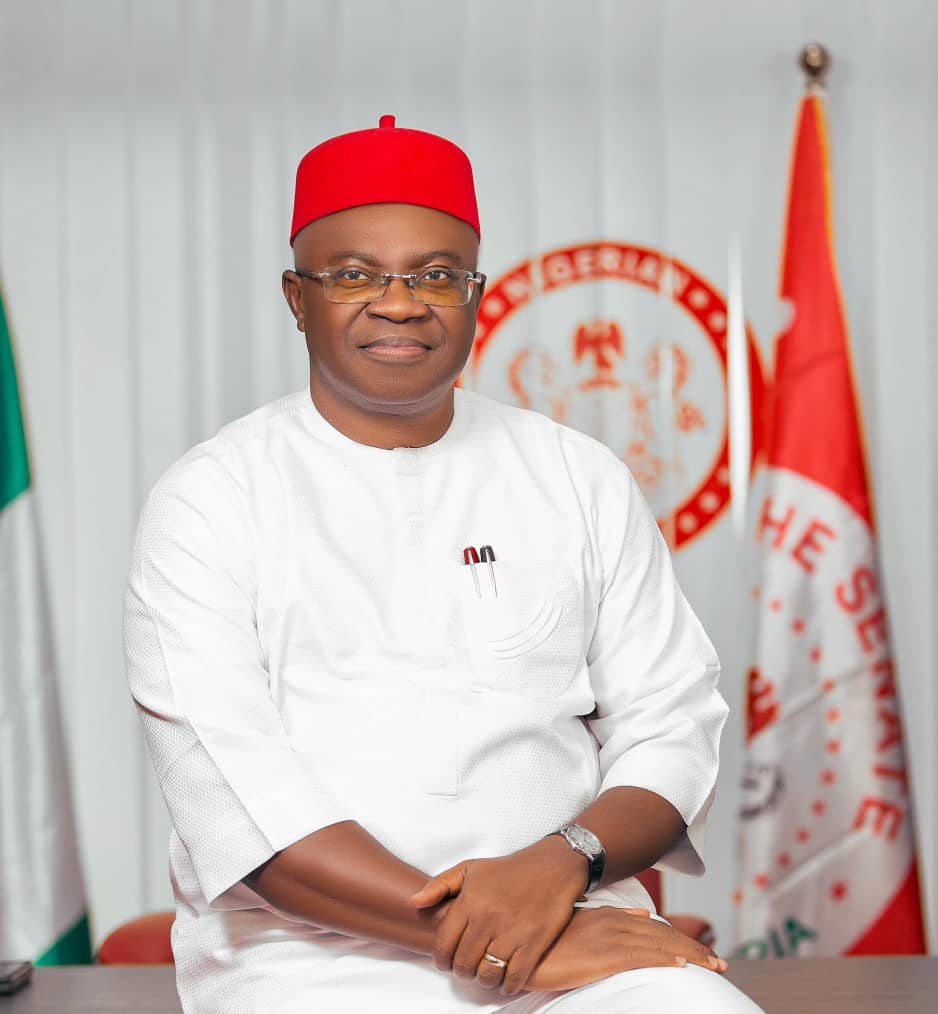
One year after taking his seat in the Senate, Senator Emmanuel C. Nwachukwu of Anambra South is being measured not by campaign rhetoric, but by projects, access, and outcomes. The question now is whether his representation is translating into tangible results for a district long defined by its economic potential and infrastructure gaps, analyses Ekuson Nw’Ogbunka, Our Managing Editor, in Abuja the Federal Capital Territory (FCT).
Representation, by its basic definition, is not about making promises. It is about making a difference. That has become the central yardstick with which constituents in Anambra South are assessing their senator.
Senator Nwachukwu entered the National Assembly with a stated vision: to give Anambra South “a strong, responsible, and effective voice.” A year later, that vision is being tested against the realities of federal bureaucracy, budget cycles, and constituent expectations.
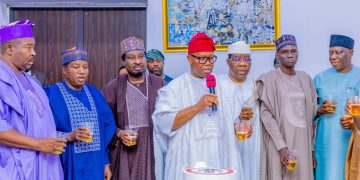
His approach, according to those close to his office, has prioritized listening and stakeholder engagement. Town halls, meetings with traditional rulers, and consultations with professional groups have become a regular feature of his outreach.
On infrastructure, the most visible push has been on federal roads. The senator has championed the rehabilitation of critical roads linking Nnewi, Ekwusigo, and Ihiala, arguing that poor road networks remain the biggest drag on commerce in the district.
Another key area is power. Nwachukwu has facilitated progress on the Nnewi Injection Substation, a project stakeholders say could stabilize electricity for businesses and homes, if completed and properly managed. For a district known as an industrial hub, improved power is both an economic and political issue.
Beyond bricks and cables, his legislative priorities have touched on youth empowerment, education, healthcare, and economic growth. The argument from his camp is that development must be broad-based, not limited to a few capital projects.
Supporters point to this spread as evidence of intent. Critics, however, ask for metrics. How many youths have been trained and placed in jobs? Which schools and health centers have seen direct intervention? Those are the questions that will define the next phase of assessment.
What stands out in Nwachukwu’s public messaging is the framing of representation as a “sacred trust.” He emphasizes integrity and accessibility, maintaining an open-door policy at his constituency office and online platforms.
That accessibility has helped manage expectations. In a district with decades of uncompleted projects, constituents appear willing to give him time, but not indefinitely. The pressure to convert engagements into deliverables is mounting.
The political context also matters. Anambra South is competitive, with high expectations from both urban entrepreneurs in Nnewi, rural communities in Orumba, Aguata, Ihiala, among others. Balancing those interests requires both federal lobbying and state-level collaboration.
So far, the senator has avoided partisan grandstanding, choosing instead to work across party lines on issues like road rehabilitation and power. That strategy may yield results, but it also makes it harder to claim sole credit when projects materialize.
The injection substation and road projects will be the litmus test. If they are completed and functional within this term, they will serve as concrete evidence of “representation that delivers.” If they stall, the narrative risks shifting to “representation that desires.”
For now, the journey continues. Nwachukwu’s office insists “every voice matters” and is mobilizing support under the “Oganiru Anambra South” banner, a call for collective progress rather than individual acclaim.
The verdict is still in progress. What is clear is that Anambra South has a senator who is present, engaged, and pushing a development agenda. Whether that agenda fully meets the district’s needs will depend on execution, funding, and the ability to turn plans on paper into services in communities.