







•For NDC candidate Abba Hassan Grema, effective representation begins with listening to the people
In an electoral environment where political promises often dominate public discourse, the question of what happens after the ballot remains central to the relationship between elected representatives and their constituents. For Abba Hassan Grema, the Nigerian Democratic Congress candidate for AMAC/Bwari Federal Constituency, the answer lies in sustained engagement with the people, writes Ekuson Nw’Ogbunka, Our Managing Editor.
Making his plans known to the constituents
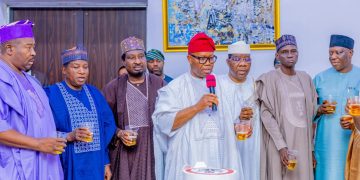
Speaking to journalists in Abuja after addressing members of the Anambra State Towns People Association during the inauguration of its women’s wing, Grema presented his emerging political message around three broad ideas: quality representation, consultation with constituents and attention to human development.
“Representation is all about representing the general people at the parliament,” he said, arguing that residents of AMAC/Bwari deserve effective representation.
His emphasis on engagement reflects the argument that constituency representation cannot be separated from an understanding of the people being represented.
AMAC/Bwari is a diverse federal constituency with residents whose needs may vary considerably from community to community. For a legislator, therefore, identifying priorities requires more than relying on assumptions.
Grema says his approach would involve going directly to the people. “It is an engagement process. We have to engage the people of AMAC/Bwari to know what they need most,” he said.
Putting the people at the centre
The most prominent element of Grema’s message is his emphasis on the ordinary citizen.
He spoke against the background of the economic difficulties confronting Nigerians and identified human development as an area requiring attention.
Reflection of his position
His position reflects a broader understanding of representation in which a legislator is expected not only to participate in parliamentary proceedings but also to communicate the concerns of constituents within the wider national policy process.
Grema insists that his proposed approach would not be “business as usual”.
The statement is significant because it establishes a contrast between the type of representation he says he wants to provide and approaches he considers insufficient.
However, the effectiveness of such a promise would ultimately depend on how consultation is organised, how priorities are translated into legislative action and how constituents can measure the performance of their representative.
From promises to measurable representation
For voters, the central issue may therefore extend beyond campaign declarations.
If elected, Grema’s proposed people-centred approach could be assessed through the frequency and quality of constituency engagement, the issues he raises at the National Assembly, his accessibility to constituents and the extent to which identified local concerns receive sustained attention.
His emphasis on human development also raises questions about the specific interventions he would pursue in areas such as education, employment, infrastructure, healthcare and economic opportunity.
For now, Grema’s message is clear: he wants the people of AMAC/Bwari to have a greater role in determining the priorities of their representative.
As the 2027 electoral contest develops, voters will have the opportunity to examine this proposition alongside the programmes and records presented by other candidates seeking their mandate.