









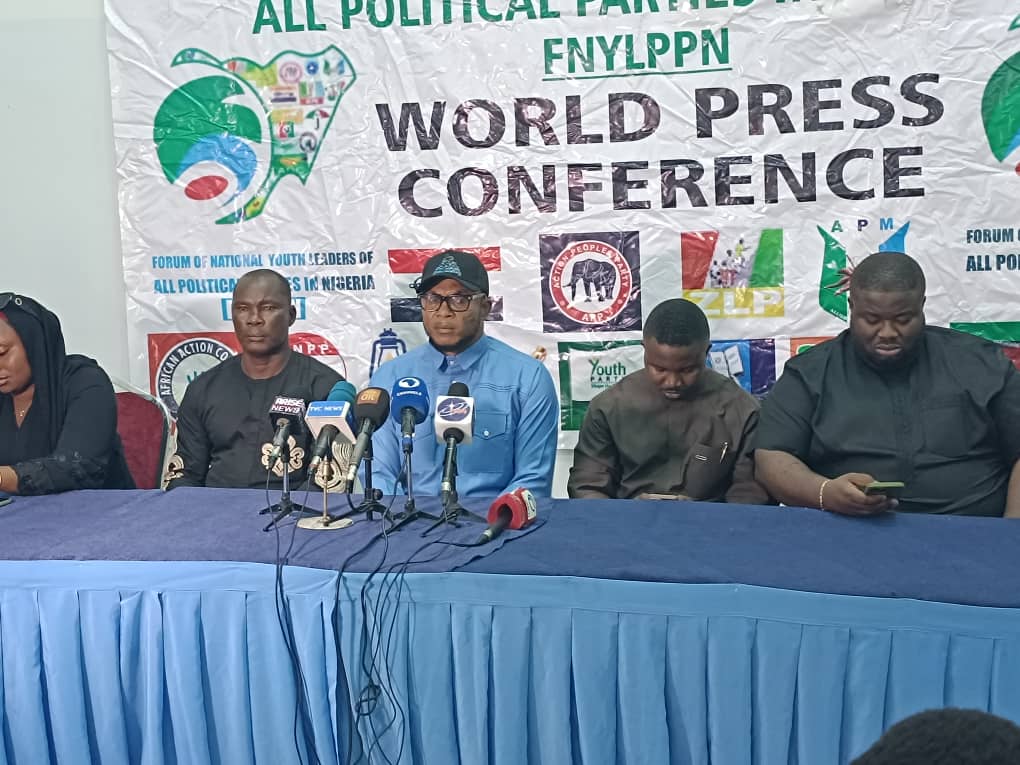
The xenophobic attacks on Nigerians in South Africa have reignited old wounds and fresh anger among Nigeria’s youth political class. Speaking for the Forum of National Youth Leaders of all Political Parties (FNYLPP), APGA’s National Youth Leader, Hon. Eze Onyebuchi Chukwu, says what is unfolding is not random violence, but a betrayal of a history in which Nigeria bankrolled South Africa’s freedom. With a July 2026 ultimatum now on the table, the youth leaders are drawing a hard line: African solidarity must be reciprocal, or it ends reports Ekuson Nw’Ogbunka Our Consulting Editor from Abuja.
We have watched with utter disappointment how the Government of South Africa played down on this visible affront on African unity and solidarity,” Chukwu stated in a press release on behalf of the FNYLPP. The forum, which brings together youth leaders across party lines in Nigeria, said the silence in Pretoria has only deepened the crisis.
The group rejected the “xenophobia” label entirely. “What is happening in South Africa today is not Xenophobia but Afrophobia. Africans attacking fellow Africans on African soil,” Chukwu declared, framing the attacks as an intra-continental crisis of identity and loyalty.
Central to their argument is history. Chukwu reminded South Africans that Nigeria stood with them during apartheid more than any other African nation. From diplomatic pressure to financial sacrifice, Nigeria, he said, made South Africa’s liberation a core foreign policy objective.
He cited October 1960, just after Nigeria’s independence, when the country joined the anti-apartheid movement. By October 1961, Foreign Affairs Minister Jaja Ndubuisi Wachukwu was already condemning apartheid at the United Nations. For decades, he noted, Nigeria kept the issue at the center of its international posture.
The sacrifices went beyond speeches. Nigeria established the Southern Africa Relief Fund and deducted from workers’ salaries through what many called the “Mandela Tax.” Chukwu described it as evidence of how deeply Nigerians invested in South Africa’s freedom.
That history, the youth leaders argue, makes the current treatment of Nigerians more painful. “Today, what we get is ‘Go back home, leave our countiriii’,” the release said, referencing the threats, humiliation, and looting of Nigerian-owned businesses and property.
The forum painted a grim picture of the present: Nigerians given short notice to leave, harassed in their shops, and targeted for violence while their livelihoods are destroyed. For Chukwu, it is a direct affront to the sacrifices of the past.
Yet the youth leaders insisted they remain “peaceful and law abiding.” The statement, however, shifted tone with a warning. “Nobody is a custodian of madness,” Chukwu said, signaling that restraint has limits.
The ultimatum followed. “We are therefore giving South Africans living in Nigeria from today to the end of July 2026 to leave Nigeria to their country, or else they will see in Nigeria what Nigerians saw in South Africa. Enough is enough.” It is the first time a coalition of party youth leaders has issued a collective quit notice.
The FNYLPP’s message is clear: African solidarity cannot be one-sided. By invoking history, sacrifice, and now retaliation, Nigeria’s youth political leaders are warning that the bond forged in the anti-apartheid era will not survive continued attacks on Nigerians.