










By Abba -Eku Onyeka
Abuja
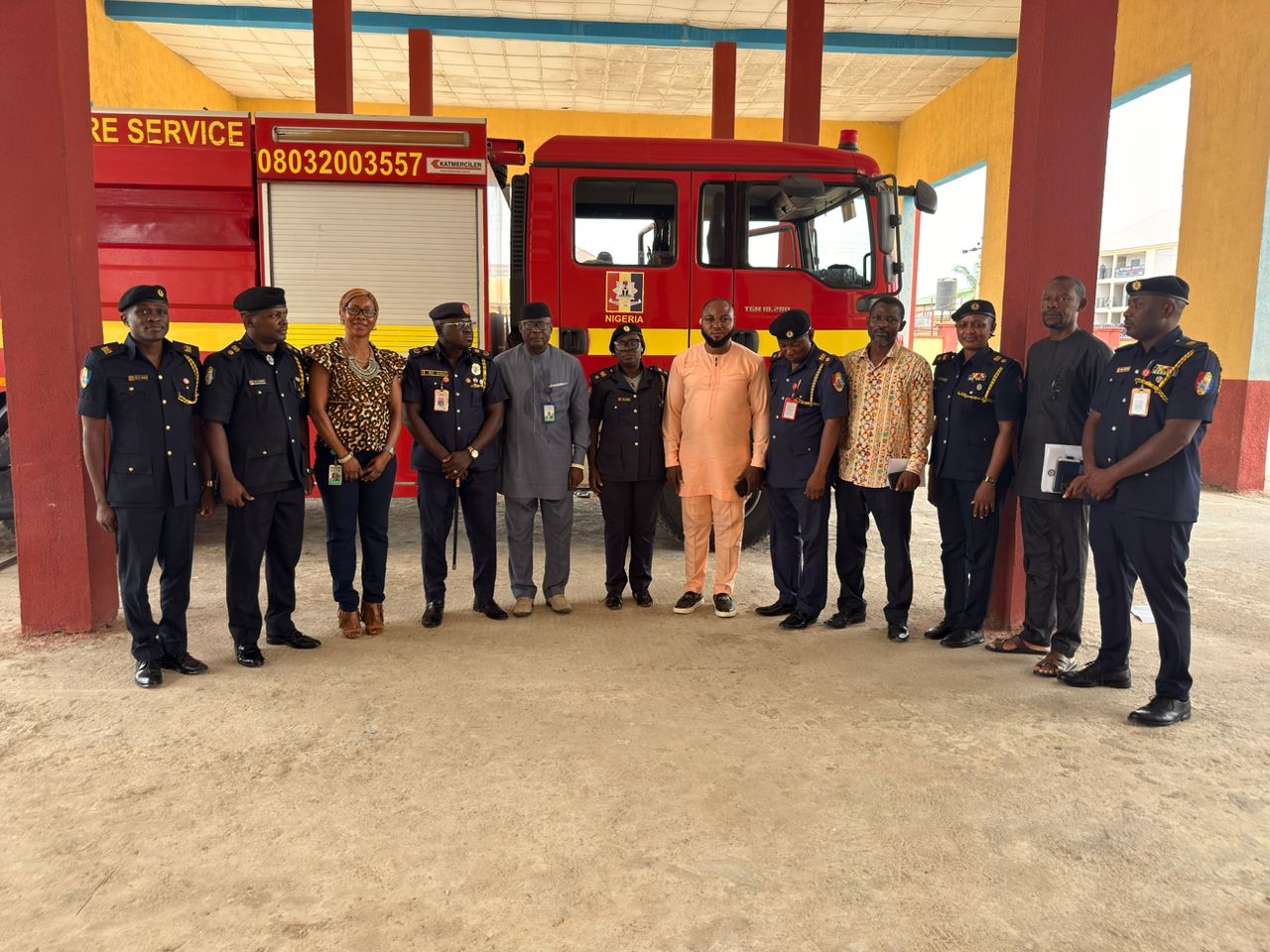
The Controller of the Federal Fire Service, FCT Command, CF Muhammed S. Anas, on Monday assured residents of the Federal Capital Territory of the Command’s readiness to tackle petrol-related fire incidents. He gave the assurance while receiving members of the Petroleum Products Retail Outlet Owners Association of Nigeria (PETROAN) during a courtesy visit to the Command’s headquarters in Kubwa.
Speaking during the meeting, CF Anas said the Command is well-equipped in both personnel and equipment to respond to all categories of emergencies. He stressed that sustained efforts are ongoing to prevent petroleum-related fires through continuous public sensitization, strict enforcement of safety standards, and collaboration with key stakeholders in the sector.
The Controller attributed most fire outbreaks and explosions to preventable lapses in safety practices and negligence. He warned that careless handling of petroleum products remains a major trigger of incidents, and urged operators to adhere strictly to established safety standards. “Fire prevention is better than fire fighting,” Anas stated, calling on all operators to prioritize preventive measures at all times.
On enforcement, he highlighted the mandate of the Command’s Inspectorate and Enforcement (IIE) unit to ensure compliance with fire safety regulations across facilities. He assured stakeholders that officers and men of the Command remain “ever ready, equipped, and committed to protecting lives and property,” and thanked PETROAN for its visit and commitment to safety in the petroleum retail sector.
Earlier, Engr. Okpani, who led the PETROAN delegation, said the association recognises its role as a critical “last-mile” player in the petroleum supply chain. He reiterated PETROAN’s commitment to promoting safety and operational discipline across retail outlets, noting that the purpose of the visit was to strengthen cooperation with the Fire Service.
Both parties agreed to deepen collaboration through joint safety audits, specialised training programmes for station personnel, and improved communication channels for swift emergency response. Key issues discussed included continuous staff training, strict compliance with Standard Operating Procedures (SOPs), proper maintenance of firefighting equipment, improved emergency alertness, and the display of emergency information at service stations.