

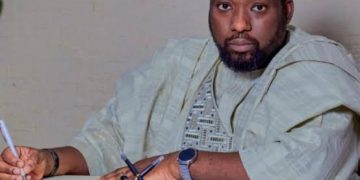





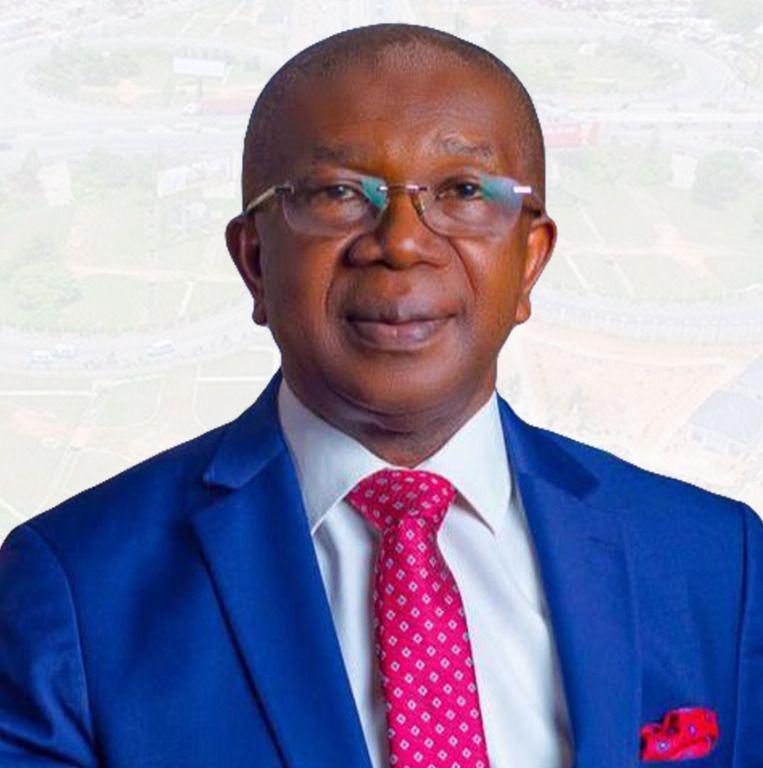
Rev. Goddy Okonkwor knows a thing or two about public service and the cost of integrity in Nigerian politics. A retired accountant who rose to management level at the Nigerian National Petroleum Corporation, Okonkwor now serves as an Anglican priest. Years ago, he tested the political waters himself, contesting for governor of Anambra State under the All Progressives Congress. Today, he is throwing his weight behind another aspirant: Dr. Okwudili Ezeike, who is seeking to represent Aguata Federal Constituency in the House of Representatives, under the platform of the Nigerian Democratic Congress (NDC),reports Ekuson Nw’Ogbunka, Our Managing Editor
Okonkwor’s endorsement is not casual. He says it is rooted in what he knows of Ezeike’s education, discipline, and track record of philanthropy. According to him, Ezeike is a trained lawyer with a PhD, a nurse by profession, and someone who has maintained ties with the community both at home and in the diaspora. “He has been leading our people in the US and Canada,” Okonkwor notes, adding that such acceptance among educated groups does not come without principles.
The retired NNPC accountant describes Ezeike as strong-minded and difficult to manipulate. In his view, the aspirant is not the type to compromise for personal gain. “He is not a stomach man,” Okonkwor says. “He doesn’t care too much about stomach if he is chopping his money.” He points to Ezeike’s frequent trips home from abroad as evidence of commitment, arguing that the cost of those visits only makes sense if driven by genuine love for the people.
For Okonkwor, Ezeike’s philanthropic work sets him apart. He highlights free medical outreach programs the aspirant has organized over time, where medicines were distributed at no cost. Such acts, he says, show a leader who understands the needs of ordinary people and acts on them without waiting for political office.
The endorsement also comes with a critique of Nigeria’s political culture. Okonkwor laments a system where voters expect immediate handouts and where aspirants are judged by how much they can share rather than what they stand for. He recalls his own experience: when people came to his house asking for help, he reminded them that he had already sponsored seven people through university from his personal resources. “Somebody has to start somewhere,” he argues. “It is what is inside that person. When he gets the opportunity, he will do it.”
He connects this culture of monetized politics to the broader problem of corruption. Okonkwor recounts being asked to pay ₦120 million to secure a ministerial slot, a sum he says his entire annual salary could not cover. “If I paid it, I would have to steal to recover it,” he says. That, he insists, is why many public officials enter office already indebted to their own investments, not to the people.
Okonkwor dismisses the notion that Ezeike’s time abroad has disconnected him from Nigeria. Between January and the interview date, he says, Ezeike had been home more than seven times. “He is more street-sensitive than you,” Okonkwor tells skeptics. “Engage him face to face on Nigeria, and you will see that he knows better.”
His advice to the aspirant is straightforward: maintain integrity and serve with character. “People with good education should be able to go before God and say, ‘I did not steal money, I did not oppress anybody,’” he says. For Okonkwor, Ezeike meets that standard. “If I see otherwise in him, I walk away. But as at now, I am ready to put my money behind him.”
The cleric also has a message for delegates who will decide the party’s candidate. He urges them to look beyond party-switching and popularity and ask whether a candidate has the capacity to represent the people effectively in Abuja. He warns against choosing individuals who climb on the back of popular movements without the qualifications to stand and defend their constituency.
Okonkwor contrasts his vision of leadership with what he calls transactional politics. He says some politicians collapse once given a bag of rice or ₦2 million. “Aguata needs someone who can stand and defend the people, not someone who will start swapping positions at the sight of money,” he says.
He admits that he does not belong to Ezeike’s party but insists that his support is issue-based. “I cannot waste my time and my money on anybody who does not have stability and integrity,” he states. “But if he succeeds, I will put my money behind him.”
The former gubernatorial aspirant frames his position as a call for a shift in how Nigerians choose leaders. For him, quality, qualification, and a record of service should outweigh short-term inducements. He believes Ezeike embodies those values.
Okonkwor’s background gives his comments weight. As a retired NNPC accountant with an MBA and now a priest, he says he has seen both the corporate and spiritual sides of accountability. His brief foray into governorship politics, he adds, showed him how money and compromise often dictate outcomes.
In concluding, he returns to the central point: Nigeria’s progress depends on electing leaders who will not sell out the people for personal gain. “I cannot waste my time on anybody who doesn’t have it,” he says. “But for someone like Dr. Ezeike, I am ready to stand with him.”
For Okonkwor, the choice for Aguata Federal Constituency is clear. It is a call to prioritize character over convenience, service over stomach infrastructure, and long-term representation over short-term gain.