










By News Maker Media in Abuja
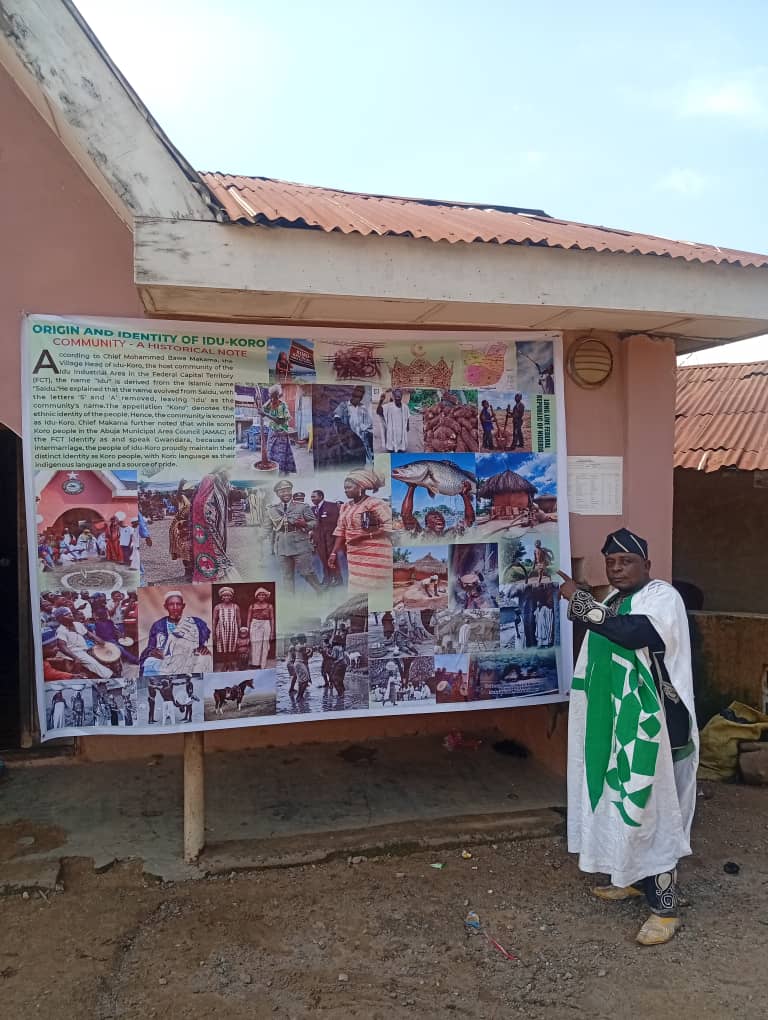
Chief Mohammed Bawa Makama, the traditional ruler and Village Head (Asugeri) of Idu-Koro, a host community of the Idu Industrial Area in the Federal Capital Territory (FCT), has highlighted the community’s historical traditions, cultural identity and the importance of preserving its heritage for future generations.
According to Makama, the name “Idu” is traditionally associated with the Islamic name, “Saidu,” after the removal of the the letters “S” and “A” and While this account reflects the community’s understanding of its historical origins, further historical documentation would be necessary to establish the etymological connection conclusively.
Beyond the origin of its name, Idu-Koro possesses a distinct community identity rooted in its traditions, ancestral history, language and customary practices.
These elements remain important to understanding the community’s place within the wider cultural landscape of the FCT.
The community’s history and identity underscore the importance of documenting oral traditions, preserving indigenous language and customs, and encouraging younger generations to learn about their ancestral roots.
As development and urbanization continue to transform communities across the FCT, preserving the historical narratives and cultural practices of places such as Idu-Koro is increasingly important. Such efforts can help ensure that economic growth and modernization do not overshadow the heritage and identity of indigenous communities.
The preservation of Idu-Koro’s heritage would benefit from the active participation of traditional institutions, elders, historians, cultural organisations and young people. Recording oral accounts, maintaining historical records and organising cultural activities could provide practical ways of safeguarding the community’s collective memory.
Makama’s account therefore serves as a contribution to the ongoing documentation of Idu-Koro’s history and identity, while highlighting the need for continued efforts to establish, preserve and transmit its cultural heritage to future generations.