










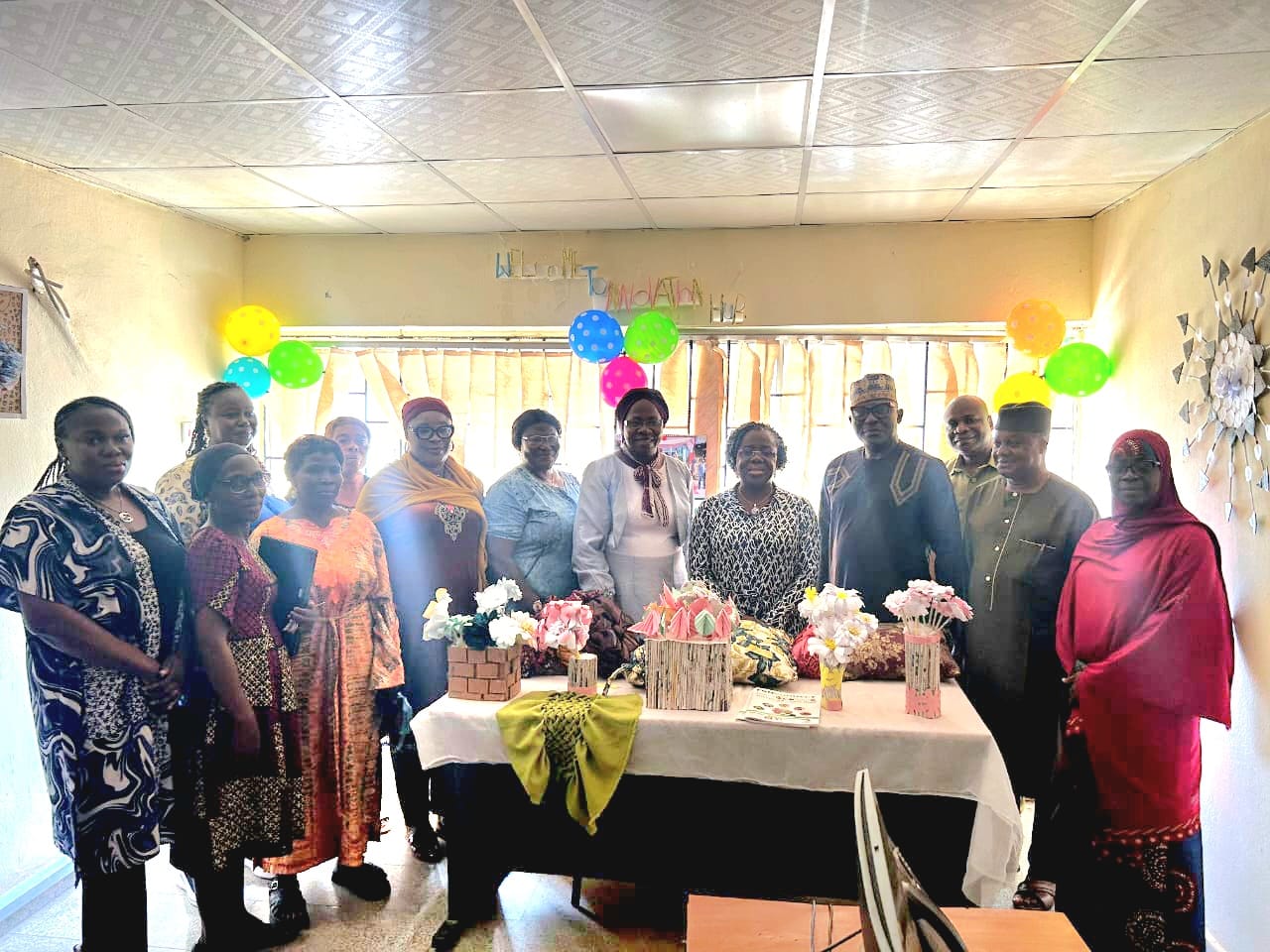
The Ministry of Interior is betting on creativity as a tool for reform. With the commissioning of its new Innovation Hub, Permanent Secretary Dr. Magdalene Ajani says the Ministry will turn staff ingenuity, recyclable waste, and institutional systems into productivity, skills, and revenue. It is a shift from paper-based bureaucracy to practical, sustainable problem-solving, Abba -Eku Onyeka assesses the development.
Dr. Ajani described the Innovation Hub as a strategic platform to harness staff creativity and resourcefulness. The goal is to transform discarded materials into economically valuable products.
The hub is already producing results using paper and textile remnants. Staff are creating decorative items, handcrafted artworks, and functional office accessories, showing how waste can become wealth.
The Permanent Secretary called the project a practical demonstration of the “waste-to-wealth” concept. It aligns environmental sustainability with efficiency in the public service.
Beyond recycling, the hub gives staff opportunities to develop entrepreneurial skills. By creating value from discarded materials, civil servants are learning to think and earn like innovators.
To secure sustainability, Dr. Ajani directed the Director of Reform Coordination and Service Improvement, Mrs. Vera G. Azoro, to establish a structured financial framework. A dedicated revolving fund will support reinvestment and expansion.
The Permanent Secretary urged staff to sustain the culture of reform beyond any single leader. “Institutional growth must be driven by systems rather than personalities,” she said.
Dr. Ajani highlighted the role of Reform Coordination and Service Improvement Units in driving efficiency across MDAs. She called on officers to be proactive and committed to the Federal Government’s public service reform agenda.
“The true measure of this initiative is not in its commissioning but in its continuity,” Ajani stated. She challenged staff to strengthen the hub and ensure it outlives individual tenures.
Staff were encouraged to use the hub as a collaborative space for creativity, knowledge sharing, and skills development. High standards of maintenance and operations are expected.
The commissioning is framed as a milestone in the Ministry’s reform agenda. It supports the Federal Government’s vision of a more innovative, productive, efficient, and service-oriented public service.
By combining environmental responsibility with enterprise, the hub offers a dual benefit: reducing waste and raising output. It models how MDAs can do more with less. If sustained, the Innovation Hub could become a template for other ministries. For now, the Interior Ministry’s message is clear: reform will be measured not by events, but by systems, skills, and results that endure.