



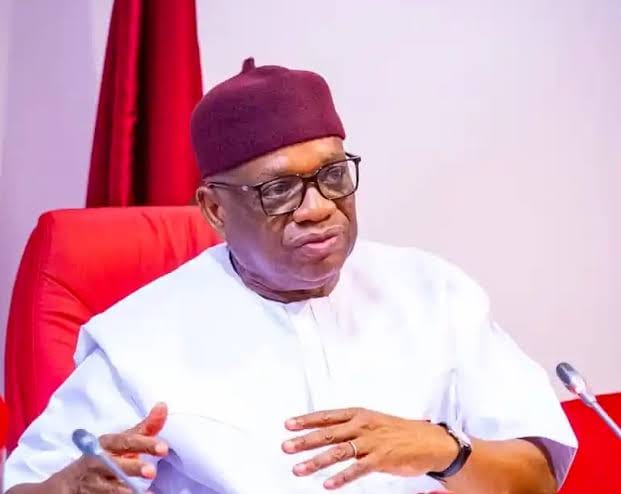
On Channels Television’s Politics Today on Wednesday night, Ekuson Nw’Ogbunka, Our Managing Editor in this article says that, Senator Orji Uzor Kalu did what he has always done best: speak plainly, even when the truth is uncomfortable. The Abia North Senator and former Chief Whip did not deny hardship. He did not attack the Church. He did not pretend the road ahead is easy. Instead, he made the case that President Bola Ahmed Tinubu has stabilised Nigeria’s macro economy, respects dissenting voices, and remains the man to beat in 2027. In a political season of blame and noise, Kalu chose context, courage, and clarity.
Unlike many defenders of government, Kalu started with admission. “As a businessman, I manufacture goods and I know the microeconomy is not doing well. President Tinubu himself knows Nigerians are suffering.” That honesty disarmed critics. It told Nigerians: this is not a man in denial.
Kalu then widened the lens. The Russia-Ukraine war, Middle East tensions, and disrupted shipping routes, he argued, have squeezed economies worldwide — from the US and UK to Canada. “Nigeria is not insulated from global economic shocks,” he said. For Kalu, leadership means explaining, not hiding behind slogans.
On Ways and Means, Kalu was blunt. Yes, money was printed under the last APC government. But he reminded viewers that the National Assembly warned against it. More importantly, he said President Tinubu has ended the practice. That, to Kalu, is leadership: acknowledge mistakes and correct them.
The senator listed what he sees as proof of progress: a stabilising exchange rate, stabilising fuel prices, and foreign direct investment slowly returning. “Confidence is gradually returning,” he noted. In Kalu’s view, these are the early dividends of tough reforms.
Kalu connected the dots many avoid. Food is expensive because farmers cannot access their farms due to banditry and insurgency. The administration’s security operations, he argued, are therefore economic policy. Restore the farms, food prices will fall. “Reform is not a Christmas party,” he said. “It takes time before the benefits trickle down.”
At the height of tension between the Presidency and the Catholic Bishops, Kalu chose reconciliation. “The Catholic Bishops were right. If they had said anything less, they would no longer be the conscience of this country.” By praising the bishops, he protected the moral authority of the Church.
“The Villa is not President Tinubu,” Kalu said, drawing on his experience as a former governor. He urged Nigerians not to hold the President responsible for every comment by aides. To underline his point, he made a personal pledge: “If President Tinubu ever disrespects the Catholic Church, I will resign from the APC.”
Kalu described the bishops as voices “with no political interests to protect.” What politicians cannot tell the President, he said, the bishops will. That, he argued, is how a responsible government stays grounded.
Looking ahead, Kalu was confident. He rated the administration at 65 per cent and projected 70 per cent by October. His reason: significant work has been done in infrastructure, security and economic reform, “we simply have not marketed those achievements well.” Kalu’s calculation is simple: a President delivering foundational reforms, a party that will “campaign until he wins,” and an opposition that “is not united.” “If they were united, there might be some concern, but they are not,” he stated.
Even in Abia, where Governor Alex Otti enjoys popularity, Kalu believes Tinubu can carry the presidential vote. He called Otti a personal friend but insisted national elections follow a different logic. For Kalu, the APC’s message will resonate once properly communicated.
On protests, Kalu stood firmly on the side of citizens. Protest, he said, is part of democracy. But he also cautioned against misinformation and AI-generated content on social media that distorts public discourse.
Few senators can speak to both policy and production. Kalu runs factories. He feels the cost of diesel and raw materials. That dual identity gives his defence of Tinubu weight, he is not speaking from theory, but from experience.
Throughout the interview, Kalu avoided insults. He praised critics, acknowledged failures, and credited institutions. In a polity known for hostility, his tone was deliberate, measured, and unifying. “The government is doing well, but we have not yet reached where we want to be,” Kalu admitted. His argument is that Nigerians must judge Tinubu not just by today’s hardship, but by the foundation being laid for tomorrow.
Kalu’s support for Tinubu does not mean blind loyalty. He criticised past policies, praised the Church, and admitted shortcomings. That independence makes his endorsement more credible to voters tired of sycophancy. For Kalu, 2027 is about continuity. If reforms are allowed to mature, he believes Nigerians will see the payoff in jobs, food prices, and security. And he is willing to stake his political reputation on it.
Senator Orji Uzor Kalu left the studio that night as he entered it: a straight talker. He did not sugarcoat hardship. He did not demonise critics. He defended his President, defended the Church, and defended the right of Nigerians to speak out. In doing so, he made the most compelling case yet for why, in his view, Bola Ahmed Tinubu remains “unbeatable in 2027.”