








By Ekuson Nw’Ogbunka
Our Managing Editor.
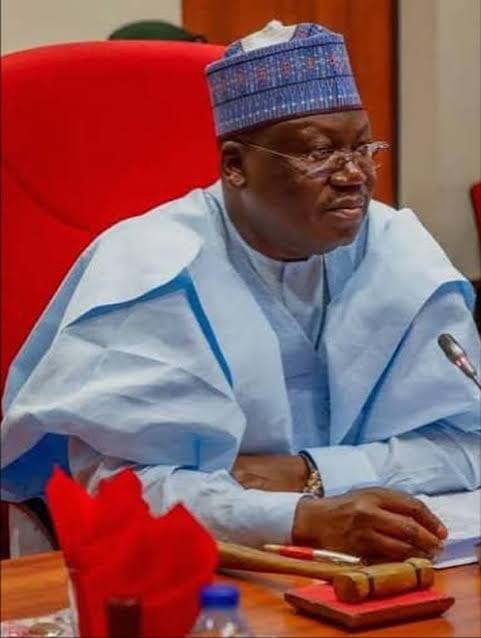
When Senate Committee on Defence Chairman, Senator Ahmad Ibrahim Lawan, rose to commend President Bola Tinubu for expanding the Nigerian Army and recruiting 28,000 youths, he framed it as a masterstroke against insecurity. The praise was effusive. But beyond the commendation lies a deeper national conversation: Is more troops and more divisions the silver bullet Nigeria needs, or is this another expensive structural expansion without fixing the rot within?
Senator Lawan, in a statement released to the press, applauded President Tinubu for approving the expansion of the Nigerian Army to 12 Divisions and the recruitment of 28,000 young Nigerians into the force.
According to Lawan, the decision “couldn’t have come at a better time” given the asymmetric nature of modern warfare confronting the nation. He argued that contemporary conflicts require not just superior firepower, but “superior manpower, strategic spread, and operational agility.”
The former Senate President maintained that the creation of additional divisions will shorten response time to threats in ungoverned spaces across the country.
5. In his view, a more robust order of battle translates to a “faster and more decisive end to the remnants of insurgency that have troubled our peace.”
Lawan also described the recruitment of 28,000 youths as a “double-edged sword of progress.” He said the move strengthens national defense while simultaneously providing “dignified employment” and shielding young people from crime and extremism.
The commendation directly ties the military expansion to the Renewed Hope Agenda of the APC administration. Lawan assured that security reforms will “continue sustainably until our dear country is secured.”
On paper, the logic is sound. Nigeria’s security architecture has been stretched thin by banditry, insurgency, kidnapping and communal clashes.
However, critics will ask if expansion alone addresses the fundamental problems: poor welfare, inadequate equipment, poor intelligence, and inter-agency rivalry.
The Nigerian Army has undergone several expansions in the last decade, yet insecurity persists, partly due to funding gaps and corruption in procurement.
The promise of jobs for 28,000 youths is welcome, but questions of training quality, barracks accommodation, and career progression must be answered.
Without concurrent investment in technology, drones, surveillance, and community policing, more boots on the ground risk becoming more targets.
Lawan’s intervention is significant because it signals legislative backing for the Commander-in-Chief’s security doctrine.
Ultimately, the success of this expansion will not be measured by the number of divisions created, but by whether Nigerians in Zamfara, Borno, Benue and Kaduna can sleep with both eyes closed. May God bless the Armed Forces and the Federal Republic of Nigeria, as Lawan prayed.