






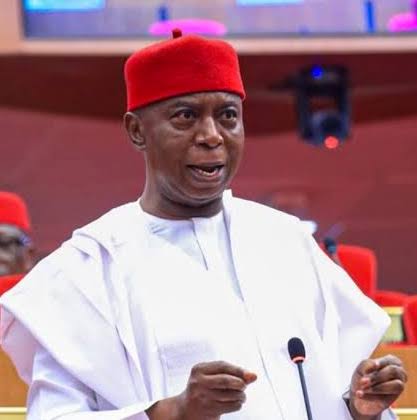
From youth enterprise to state creation, the Delta North lawmaker’s legislative agenda targets security, welfare, education, and constitutional reform.
In the 10th Senate, few lawmakers have matched the legislative volume of Senator Ned Nwoko, representing Delta North. With 31 bills at various stages, first reading, second reading, committee scrutiny, and harmonization, his agenda cuts across security, education, health, economic reform, and constitutional restructuring. Colleagues point to his appointment as Delta State’s sole representative on the Senate Committee on the Review of the 1999 Constitution as evidence of his reach beyond district lines. Together, the bills sketch a blueprint for what Nwoko calls “responsive, inclusive, and future-forward laws,” reports Abba -Eku Onyeka. Excerpts.
Youth and Economic Opportunity
The Nigerian Youth Entrepreneurship Grant Program Bill proposes a dedicated agency to fund startups and offer business support, aiming to convert Nigeria’s youth bulge into an economic advantage. Complementing it is the National Talent Rehabilitation and Integration Agency Bill which targets the reintegration of socially displaced talents, including former cultists, addicts, and ex-convicts, into productive roles.
Health and Environment
Public health features heavily. The Waste Management and Malaria Eradication Agency Bill, seeks a national body to coordinate sanitation and anti-malaria efforts in vulnerable communities. The National Centre for Substance Abuse Management Bill, proposes a specialized facility in Ndemili, Delta State, for prevention, rehabilitation, and research. For trauma care, the Orthopedic Hospital, Onicha-Ugbo Bill would establish a new specialist center affiliated with DELSUTH.
Housing and Consumer Protection
The One-Month Rent Limitation and Landlord Registry Act caps advance rent at one month and creates a national landlord database to enforce tenant rights. In finance, the Compulsory Professional Indemnity Act would mandate insurance for doctors, lawyers, engineers, and other professionals to protect clients from malpractice.
Transparency and Anti-Corruption
The Cashless Asset Acquisition Act, bans cash purchases of high-value assets, forcing transactions through traceable channels. The Central Bank Act Amendment goes further, prohibiting salaries or fees in foreign currency within Nigeria to bolster the naira. Mining reforms also appear in the Nigerian Minerals and Mining Act Amendment which bars foreign ownership of licenses and seeks to formalize artisanal sites.
Security Architecture
Nwoko’s security bills span conventional and community frameworks. The Self-Defense and Firearm Ownership Regulation Act proposes tightly regulated civilian gun ownership for qualified individuals. The National Vigilante Group Bill would formalize community corps to support police and military. The Private Security Licensing and Regulation Bill creates standards for security firms, while the Mandatory Military Service for Youths Bill_ calls for structured post-school service to instill discipline and unity.
On elections, the Electoral Courts Establishment and Jurisdiction Act, pushes for specialized courts to speed up dispute resolution. The Diaspora Voting Bill, would enfranchise Nigerians abroad. Most sweeping is the Parliamentary Governance System Act, which lays groundwork for shifting Nigeria from a presidential to a parliamentary system to curb executive dominance.
Regional Representation
The ECOWAS Parliament Elections Law Bill sets rules for electing Nigeria’s regional lawmakers, while the Immigration Act Amendment grants visa-free entry to AU passport holders to deepen African integration.
Education and Human Capital
Delta State is central to Nwoko’s education bills. The Ogwashi-Uku Polytechnic Upgrade to Federal University of Technology Act and Federal University of Technology Asaba Bill_ aim to expand STEM access. New institutions include the _Federal College of Education, Akwukwu-Igbo and Federal College of Agriculture, Idumuje-Ugboko_ for teacher training and agronomic research.
Defense and Public Service
The Nigerian Defence Academy Amendment Bill_ seeks an additional NDA campus in Delta State. For the civil service, the Public Service Retirement Age Alteration Bill proposes raising retirement ages to retain expertise and slow brain drain.
Social Protection and Emergency Response
A flagship proposal, the National Social Security Agency Bill would replace the Ministry of Humanitarian Affairs with a data-driven welfare body guaranteeing minimum livelihood for the vulnerable. The First Aid, CPR, AED, and Good Samaritan Law mandates emergency response training and legal protections for rescuers.
Justice and Forensics
The Coroners System Repeal and Re-Enactment Bill modernizes inquests into unexplained deaths, aiming to strengthen forensic investigation standards nationwide.
Agriculture and Land Use
To address farmer-herder clashes, the Ranching Development and Open Grazing Prohibition Bill mandates ranches in all LGAs and the FCT, promoting modern livestock systems and food security.
Infrastructure and Safety
The Federal Road Safety Act Amendment seeks daytime restrictions on heavy-duty vehicles to cut highway fatalities and congestion.
State Creation and Identity
Perhaps the most politically significant is the Constitutional Alteration for the Creation of Anioma State from Delta State, framed as a push for equitable representation and identity preservation for Anioma people.
Status and Outlook
Senate records show Nwoko’s bills are at different stages some have scaled first and second readings, others await committee reports or harmonization with the House. The scope reflects his dual focus: national reform and Delta North development. His role on the Constitution Review Committee underscores that ambition. Whether all 31 proposals become law remains to be seen, but the filings signal an unusually broad legislative drive for a first-term senator.