









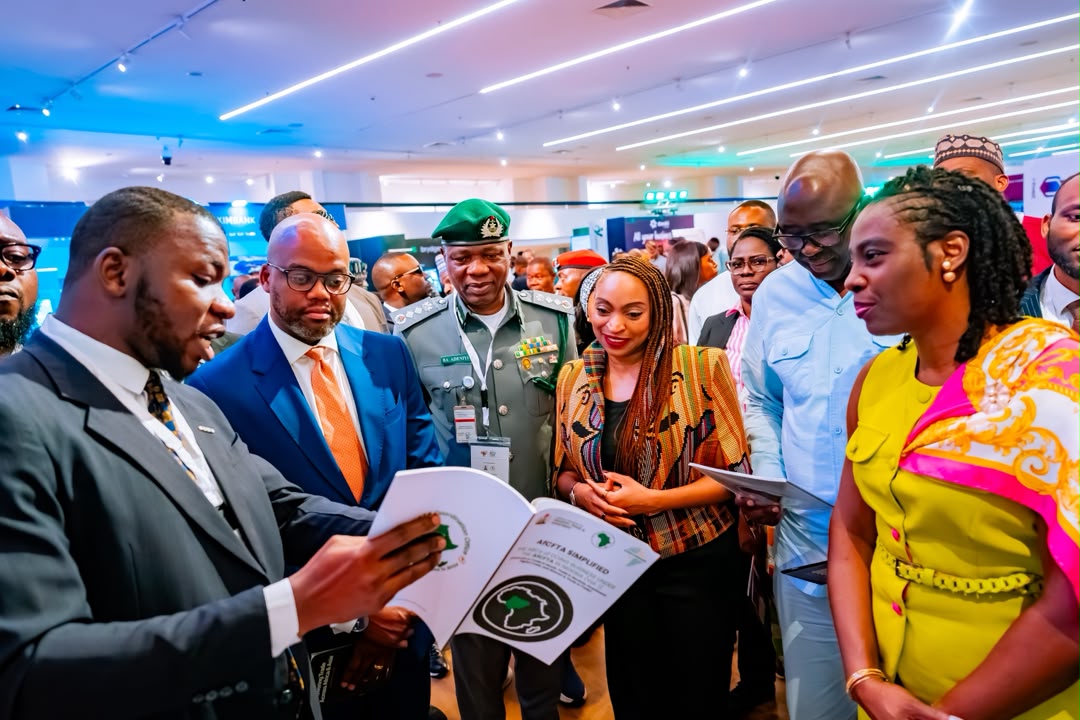
Nigeria is positioning itself at the forefront of Africa’s economic future as digital commerce takes center stage in continental integration. Speaking at the 2nd AfCFTA Digital Trade Forum in Lagos, the Honourable Minister of Industry, Trade and Investment, Dr. Jumoke Oduwole, declared that digital trade will be the engine for inclusive growth, cross-border business expansion, and transformation under the African Continental Free Trade Area. With policy leadership, private sector collaboration, and a market of over 1.4 billion people, Nigeria says the time to build an integrated African Digital Single Market is now, reports Ekuson Nw’Ogbunka Our Consulting Editor in Abuja on Thursday.
The declaration was made on behalf of President Bola Ahmed Tinubu, GCFR, at the 2nd AfCFTA Digital Trade Forum held recently at the National Theatre, Lagos, according to a press release from Obilor-Duru Augustina Okechi, Head, Press and PR, FMITI.
Welcoming AfCFTA Ministers of Trade, policymakers, business leaders, and development partners from across Africa, Dr. Oduwole described the forum as a critical platform for translating the AfCFTA Digital Trade Protocol into real opportunities for entrepreneurs on the continent.
Speaking on the theme, “Digital Trade for a Connected African Market,” the Minister noted that while AfCFTA has created a market of over 1.4 billion people with a combined GDP exceeding US$3 trillion, success will be measured by how easily African businesses can scale across borders through digital commerce.
“Digital trade is redefining commerce,” she said. “It enables entrepreneurs, innovators and service providers to access regional markets without the traditional barriers of physical presence. Africa already has the talent. Our task now is to create the conditions for that talent to serve a continental market.”
Nigeria’s leadership in this space is clear. Dr. Oduwole highlighted Nigeria’s role as Co-Champion of the AfCFTA Protocol on Digital Trade alongside Kenya and South Africa, and disclosed that Nigeria is the first country to secure parliamentary approval for the Protocol.
She said this leadership reflects Nigeria’s status as Africa’s largest digital and fintech ecosystem and its commitment to building an integrated African Digital Single Market that works for startups, MSMEs, and large enterprises alike.
Under President Tinubu’s Renewed Hope Agenda, the Federal Government has rolled out reforms to support this vision. These include improvements in macroeconomic stability, exchange rate reforms, stronger investor confidence, and capital importation exceeding US$20 billion in 2025.
The Minister also pointed to business-friendly legislation: the Tax Reform Acts, the Investment and Securities Act 2025, and strengthened intellectual property protections, all designed to encourage innovation, protect creators, and attract investment into digital services.
In a continental first, the Federal Ministry of Industry, Trade and Investment has completed a comprehensive mapping of Nigeria’s digital services ecosystem. The result: Africa’s first directory of digital services firms and a clear list of priority expansion markets including Egypt, Ghana, Kenya, Rwanda, and South Africa.
To reduce friction for businesses, Nigeria is leading the Digital Trade Regulators’ Working Group. The group is developing Guidelines on Market Entry and Investment for African Digital Service Firms to simplify licensing, improve transparency, and lower the cost of expanding across Africa.
The opportunity is massive. Dr. Oduwole observed that only five per cent of Africa’s digitally delivered services are currently traded within the continent. Harmonized regulations, digital infrastructure, and cross-border payment systems can unlock the rest.
AfCFTA Secretary-General, H.E. Wamkele Mene, commended Nigeria for hosting the forum and for driving implementation of the Digital Trade Protocol. He called it the continent’s foremost platform for awareness, collaboration, and practical action on digital trade.
Mene said Africa’s digital economy, valued at approximately US$180 billion today, is projected to reach US$712 billion by 2050. The drivers: expanding mobile connectivity, fintech innovation, artificial intelligence, and a youthful, tech-savvy population.
He urged governments to accelerate the ratification and domestication of the Digital Trade Protocol, strengthen digital infrastructure, harmonize regulations, promote digital inclusion, and support women, youth, and MSMEs to participate fully in cross-border commerce.
Lagos State, the host, is fully in. Commissioner for Commerce, Cooperatives, Trade and Investment, Mrs. Folashade Bada Ambrose-Medebem, described Lagos as Africa’s commercial and innovation hub and affirmed the state’s readiness to partner with governments, businesses, and investors to build a seamless continental digital marketplace.
The private sector echoed the call to action. Yele Oyekola, Co-Founder and CEO of Duplo, said the next phase of AfCFTA will be determined not by negotiations, but by whether African businesses can “seamlessly pay, trade, comply and scale” across borders.
Using a Lagos-to-Nairobi supplier payment as an example, Oyekola noted that many transactions still route through correspondent banks outside Africa, raising costs and delays. He urged harmonized standards, interoperable infrastructure, and integrated solutions for invoicing, compliance, reconciliation, and payments. Platforms like PAPSS are a foundation, but businesses need end-to-end tools to trade frictionlessly.
The two-day forum closed with a clear message: with Nigeria’s policy leadership, Lagos’ commercial power, and private sector innovation, AfCFTA’s digital future is moving from policy to practice. For African businesses ready to scale, the digital single market is opening now.
For partnership, market entry, and investment opportunities in Nigeria’s digital trade ecosystem, contact the FMITI.