






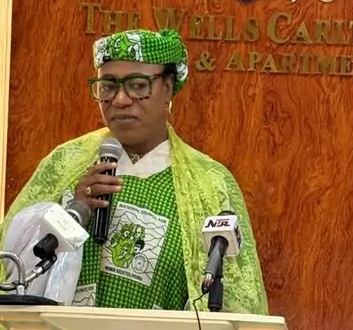
Ekuson Nw’Ogbunka, Our Managing Editor, writes from Abuja, the Centre of Unity, that Nigerian women gather to celebrate their power, yet at election time that power disappears. This is the self-deceit: praising unity on stage while practising division at the ballot box.
The article opens with an accusation that has followed Nigerian women since independence, that they do not support their own when a woman contests. The accusation is painful because it is not entirely false, but it is also a convenient self-deceit. It allows everyone to blame women voters while ignoring the men who control parties, money and tickets.
The 1983/84 example is used as the classic proof, when women delegates in the ruling party failed to vote for a woman presidential aspirant. It is a powerful story, but it is incomplete. Delegates do not vote in a vacuum. They vote under pressure from godfathers, money, ethnicity, and fear of backing a candidate the party leadership had already written off.
The article rightly asks for numbers, not noise. Count the women in the Senate, House of Representatives, as ministers, governors, commissioners, speakers and local government chairmen. The numbers are shamefully low. If women truly supported women, those numbers would have changed long ago, no matter what men did.
The 35% Affirmative Action Benchmark from Beijing 1995 and Nigeria’s 2006 Policy exposes the deceit even more. For 30 years, Nigeria has promised 35% and delivered a fraction of it. The policy has become a slogan for conferences, not a rule for elections. Both government and women’s groups have learned to celebrate the promise without demanding its fulfilment.
Women are very prudent in management. This was proved by Late Madam Tinubu, Late Mrs Wuraola Esan, Late Mrs Margaret Ekpo, Late Mrs Janet Muokelu, Late Mrs Fumilayo Ransome-Kuti, Dr Ngozi Okonjo-Iweala, Late Professor Dora Akunyili, Dr. Oby Ezekwesili, Dr Rachael Adewumi, the woman leader, FCT woman traders, among others, within and outside Nigeria.
Into this history comes the NCWS summit, with its reaffirmation of commitment to women’s leadership, peace and inclusive governance. The commitment sounds strong, but Nigerians have heard it before. The real question is whether this summit is a turning point or just another well-dressed gathering.
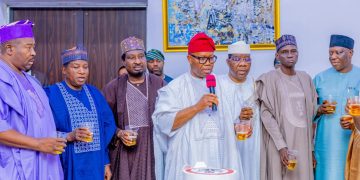
Over 3,000 women leaders, policymakers, diplomats and partners gathered at the Bola Ahmed Tinubu International Conference Centre in Abuja. The size proves NCWS can mobilise. But mobilisation for a summit is easy. Mobilisation for a female candidate in a hostile primary, where insults, money and violence are involved, is the true test, and that is where women often disappear.
NCWS President Edna D.D. Azura said women must move from being beneficiaries of democracy to active participants. This is the most honest line in the whole article. For too long, many women have been content to be beneficiaries, to receive wrappers, appointments and applause from male politicians, rather than fight to become the politicians themselves.
She also said the summit built common ground across political, ethnic, religious and generational divides. That is the language of self-deceit. In reality, a woman from one party will still work against a woman from another party. A Christian woman may still distrust a Muslim woman candidate, and vice versa. One summit cannot erase those loyalties.
The unveiling of the prototype of the NCWS Multi-Purpose Legacy Complex is presented as a major highlight. A building is good for visibility and permanence, but it is also a classic Nigerian distraction. A complex does not win elections. Training, funding and protection for female aspirants win elections.
The Minister of Women Affairs, Imaan Sulaiman-Ibrahim, emphasised the role of women in peacebuilding and national security, and restated government commitment under the Renewed Hope Agenda. Her words were correct, but they were also familiar. Every government since 1999 has promised to empower women, yet women’s representation has barely moved.
The Minister noted that sustainable peace and development are impossible without women’s representation. This is true. Women carry the burden of bad governance in their homes and communities. But representation cannot be decorative. Putting women in a few “soft” ministries while men keep finance, defence and petroleum is not inclusion, it is tokenism.
The Nigeria Women for Peace and Democracy Awards honoured individuals and institutions for their contributions. Awards inspire, but they also expose another layer of self-deceit. Nigeria loves to award successful women on stage, while refusing to vote for struggling women on the ballot. Celebration is easier than support.
The Council then called on government, parties, traditional institutions and partners to deepen commitment to women’s participation. The call is right, but it is vague. It does not demand reserved tickets, direct funding for female aspirants, or punishment for parties that ignore the 35% benchmark. Without specifics, it is a call that everyone can applaud and no one needs to obey.
In the end, the article shows two different Nigerias. The Nigeria of the summit, where women are catalysts for peace and democracy, and the Nigeria of the election, where women are still spectators. Until the applause in Abuja becomes votes, money and courage in the wards in 2027, the self-deceit will continue, and women will keep asking why they are not in power while refusing to put themselves there.