










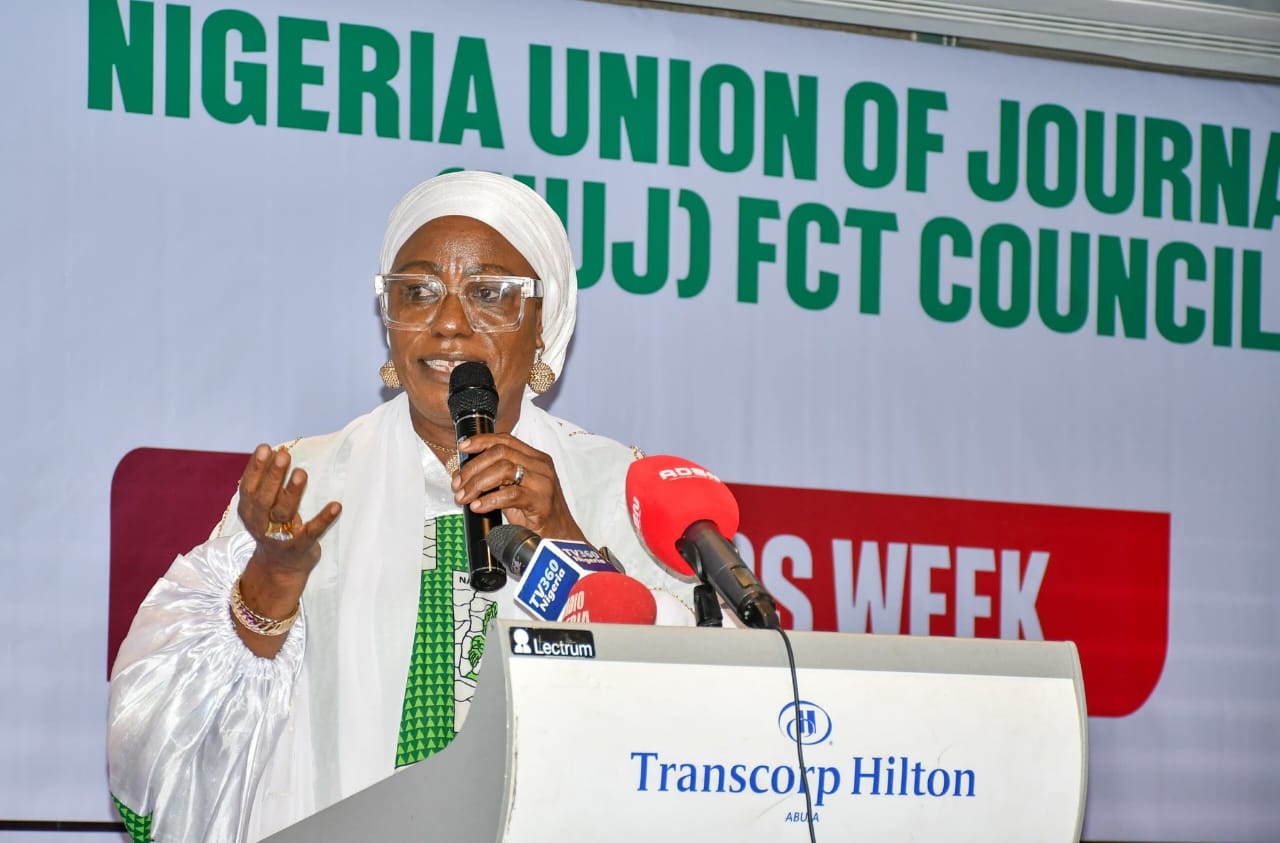
NCWS demands urgent action to protect millions of girls, but closing the gap between legislation and implementation will require funding, stronger institutions, poverty reduction and measurable accountability
Nigeria’s campaign against child marriage has reached a critical point: the country has legal commitments, established child protection frameworks and a growing body of evidence highlighting the dangers of early marriage, yet the National Council of Women’s Societies (NCWS) continues to warn that millions of girls remain vulnerable, writes Ekuson Nw’Ogbunka Our Managing Editor.
The renewed warning from Princess Edna Azura, the council’s National President, on October 11, 2026, raises a question that goes beyond the annual celebration of the International Day of the Girl Child: why has the existence of laws and policy commitments not been sufficient to eliminate a practice that threatens children’s health, education and economic prospects?
In a statement issued in Abuja under the theme, “End Child Marriage and Invest in Girls’ Rights,” Azura called on the federal, state and local governments to strengthen enforcement, support vulnerable families, protect girls’ access to education and fund the national action plan aimed at ending child marriage by 2030.
Her appeal reflects the urgency of the problem. It also highlights the limitations of an approach that relies on legislation and public declarations without consistently demonstrating implementation results.
The Scale of the Challenge
The figures cited by the NCWS are troubling. According to UNICEF estimates referenced in the council’s statement, more than 24 million Nigerian women and girls alive today were married before turning 18.
The statement also cited the 2023–2024 Nigeria Demographic and Health Survey, as reported by UNICEF in 2025, which indicated that approximately 33.4 per cent of women aged 20–24 were married before their 18th birthday. Prevalence approaches 50 per cent in the North-East and North-West, according to the figures referenced by the council.
These figures suggest that child marriage cannot be treated as an isolated social problem. Its consequences extend into public health, education, poverty reduction, gender equality and the country’s capacity to develop its human resources.
However, the statistics also demand careful interpretation. National averages can conceal substantial differences between states, communities and household circumstances. Effective policies must therefore be informed by reliable local data rather than a uniform approach that assumes every community faces identical challenges.
The NCWS is right to insist that child marriage is a national development issue. The challenge is to translate that recognition into policies capable of responding to different local conditions.
The Law-Implementation Gap
One of the most significant aspects of the NCWS statement is its focus on enforcement.
Section 21 of the Child Rights Act 2003 establishes 18 as the minimum age of marriage under the Act. The council notes that all 36 states have adopted the legislation, yet implementation remains inadequate.
This raises difficult questions about institutional performance.
Are law enforcement agencies adequately trained? Are child protection institutions sufficiently funded? Can vulnerable children obtain legal assistance? Are cases investigated promptly? Do relevant institutions have clear responsibilities for preventing unlawful marriages involving children?
The NCWS has called for training for police officers, prosecutors, judges and customary and Sharia court officials. It has also advocated functional family courts, improved access to justice and stronger accountability.
These proposals address important institutional needs. Nevertheless, training and new structures will not necessarily produce results unless they are accompanied by adequate budgets, effective supervision and transparent reporting.
Government should publish information showing how many cases involving suspected unlawful child marriages are reported, investigated and resolved, while protecting the privacy and safety of affected children.
It should also explain the practical obstacles that prevent enforcement and identify the institutions responsible for correcting them.
Without such evidence, it will be difficult to determine whether the country is making meaningful progress.
Constitutional Questions Require Careful Examination
The NCWS has urged the National Assembly to review Section 29(4)(b) of the Constitution, which contains a provision deeming a married woman to be of full age for the purposes of that section.
The council argues that the provision may contribute to conflicting interpretations that undermine child protection efforts.
This is a significant legal question, but it requires careful constitutional analysis.
Lawmakers should examine the precise scope of the provision, its relationship with the Child Rights Act and other applicable legislation, and the extent to which it creates genuine legal uncertainty in the protection of children.
Any proposed amendment should be supported by clear legal reasoning and drafted to eliminate ambiguity rather than create new disputes.
The broader objective should be consistency across the legal framework so that the protection of children does not depend on conflicting interpretations or gaps between statutory and other applicable legal systems.
Poverty cannot be ignored
Although legal enforcement is essential, it cannot independently address the economic pressures that contribute to early marriage.
The NCWS identifies poverty, inadequate access to services and weak protection mechanisms as factors sustaining the practice.
For families struggling to meet basic needs, keeping a daughter in school may involve costs they cannot readily afford. In some households, early marriage may be perceived as a means of reducing financial pressure or securing the child’s future.
These circumstances do not justify depriving a child of her rights, but they help explain why enforcement must be accompanied by economic support.
The council has recommended conditional cash transfers, school feeding, skills acquisition, livelihood programmes and targeted assistance for vulnerable households.
The effectiveness of these measures will depend on their design and delivery.
Cash transfers must reach eligible families. School feeding programmes must be reliable. Skills training must lead to meaningful economic opportunities. Social protection programmes must be monitored to prevent exclusion, corruption and waste.
Government must also consider the long-term affordability of its interventions.If the objective is to keep girls in school, programmes should address the direct and indirect costs of education and the practical circumstances that cause girls to leave classrooms.
Education: Necessary but Not Sufficient
The NCWS statement cited estimates of approximately 7.6 million out-of-school girls in Nigeria.
It also referenced UNICEF figures indicating that women without formal education marry at a median age of 16.6 years, compared with 21.7 years among women who complete secondary education.
These figures reinforce the importance of education, but the relationship must not be oversimplified.
Schooling can expand girls’ knowledge, opportunities and independence. Yet enrolment alone cannot protect a girl if her school is unsafe, her family cannot afford associated expenses or community pressures force her to leave.
Education policies must therefore be integrated with child protection, economic assistance and efforts to change harmful social expectations.
The NCWS has called for more female teachers, school security, menstrual hygiene support and opportunities for married girls and young mothers to return to school.
These measures recognise that the right to education must remain accessible even when a girl has experienced circumstances that interrupted her schooling.
The council also cited a 2025 study involving UNICEF and the Federal Ministry of Women Affairs, which estimated that investing US$114 million in out-of-school girls in two northern states could generate benefits worth US$2.5 billion.
While the projected economic return illustrates the potential value of investment, policymakers should examine the assumptions, timeframe and scope of the estimate before applying it to other states or treating it as a guaranteed outcome.
The case for girls’ education should rest on both its potential developmental benefits and the fundamental importance of protecting children’s rights.
Health Risks Demand Coordinated Intervention
The health implications of early marriage add another dimension to the crisis.
The World Health Organization has warned that adolescent pregnancies carry increased risks of complications, including eclampsia and serious infections. Babies born to adolescent mothers face greater risks of prematurity and low birth weight.
The NCWS also highlights obstetric fistula, a serious childbirth injury associated with prolonged or obstructed labour.
These concerns demonstrate why efforts to prevent child marriage must be linked with accessible healthcare, adolescent-friendly services and maternal health interventions.
However, healthcare cannot substitute for prevention. Providing treatment to girls who experience complications is essential, but it does not remove the need to address the conditions that expose them to early marriage and pregnancy.
A coordinated response should combine prevention, education, protection, healthcare and support for girls who have already experienced early marriage.
Eight Priorities, but Where Is the Money?
The NCWS has outlined eight priorities, including stronger enforcement, constitutional review, birth and marriage registration, secondary education, poverty reduction, child protection services, community engagement and funding for the national action plan.
The recommendations are broad and address several of the major drivers of child marriage.
Yet the most consequential demand may be the call for adequate funding and annual public reports. A policy without an implementation budget risks remaining an expression of intent. A budget without clear responsibilities may fail to produce results. A programme without monitoring may continue even when it is ineffective.
The federal and state governments should therefore identify specific allocations for ending child marriage, disclose the institutions responsible for implementation and publish measurable indicators of progress.
The relevant questions include how many girls have been supported to remain in school, how many vulnerable households have received assistance, whether child protection services are functional and what has been achieved through community engagement.
Public reporting should also identify implementation failures and explain how they will be addressed.
Accountability must extend beyond the annual release of statements and the announcement of fresh commitments.
The Role of Families and Community Leaders
The NCWS has urged traditional rulers, imams, pastors and other community leaders to promote later marriage and protect girls’ rights. Their participation is important because community expectations influence family decisions.
However, community engagement should be based on evidence, respect and practical support rather than stigmatisation. Blaming entire regions or religious communities can alienate the very people whose cooperation is needed.
The council has acknowledged that poverty and concerns about girls’ safety sometimes influence family decisions. Government and civil society organisations must therefore engage parents while providing alternatives that make education and child protection feasible.
Journalists also have a responsibility to scrutinise public policy, investigate implementation gaps and report the experiences of affected children responsibly.
Their work should not expose girls to further harm or reduce complex social problems to sensational headlines.
What Should Success by 2030 Look Like?
The NCWS has warned that Nigeria cannot meet its 2030 commitment without adequately funded interventions, effective enforcement and sustained community engagement.
The target provides a deadline, but deadlines alone do not guarantee results.
To demonstrate progress, governments need reliable baseline data, annual indicators, clear institutional responsibilities and publicly accessible implementation reports.
They should also assess whether interventions are reaching the communities and households most at risk.
The objective should not merely be to count laws adopted, meetings held or awareness campaigns conducted. It should be to measure whether fewer girls are entering marriage before 18, more girls are completing secondary education and vulnerable children can obtain protection and justice.
The NCWS has pledged to work through its state chapters and affiliated organisations, engage communities and collaborate with the Federal Ministry of Women Affairs and state governments to monitor implementation.
That commitment can contribute to progress, but civil society organisations will also need access to information and opportunities to scrutinise government performance.
Conclusion: Commitments Must Produce Results
Nigeria’s child marriage challenge cannot be resolved through legislation alone, nor can it be overcome solely by changing community attitudes.
It requires coordinated action involving enforcement, education, healthcare, poverty reduction, social protection and institutional accountability. The NCWS has presented a broad set of proposals, but their value will ultimately be determined by implementation.
Government must explain how the national action plan will be funded, which institutions will deliver its programmes and how progress will be measured. Lawmakers should examine the constitutional questions raised by the council, while state authorities must address practical enforcement challenges within their jurisdictions.
Families and community leaders must help protect girls, while the media should continue to scrutinise policy implementation. Princess Edna Azura’s declaration that “A girl’s childhood is not ours to give away” captures the principle at the heart of the campaign.
The test of Nigeria’s commitment to ending child marriage by 2030 will be whether that principle is reflected in the lives of girls whose education, health and future remain at risk.
The question is no longer simply whether Nigeria recognises the problem. It is whether the country is prepared to commit the resources, enforce the laws and demonstrate the results required to protect its girls.