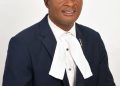

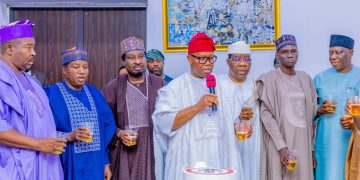
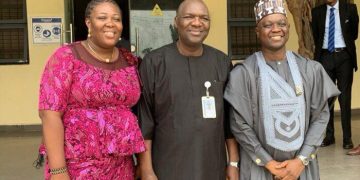
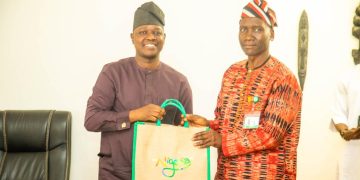




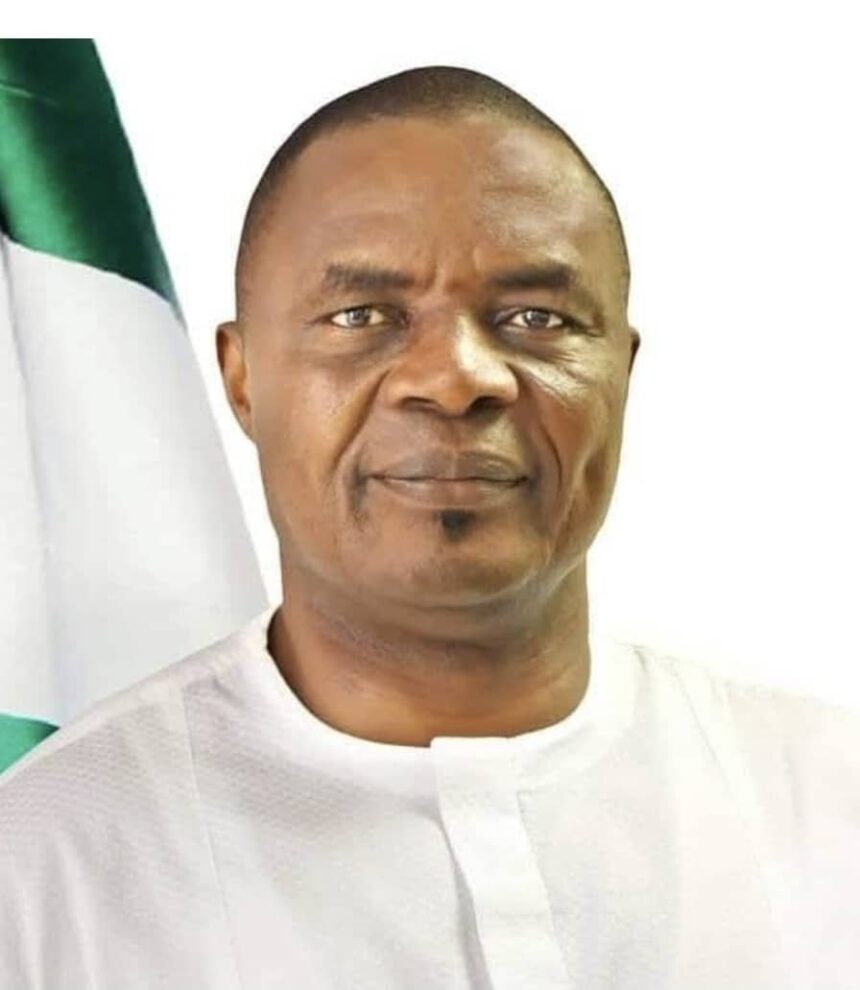
In the shadow of Lion Building, where Enugu’s political battles are fought and won, a quiet technocrat is asking voters a different question. Sir Chinyeaka Ohaa, retired Federal Permanent Secretary and former Accountant-General of Enugu State, is positioning himself as a major opposition challenger in the upcoming governorship election under the newly registered Nigeria Democratic Party (NDC). His campaign is not built on slogans, but on spreadsheets, systems, and a career spent fixing Nigeria’s public finances. Like most states in Nigeria, for a state tired of promises, the question is whether competence can defeat convention.
Born on February 4, 1961, in Obuoffia, Nkanu West Local Government Area, Sir Ohaa grew up in the family of Chief Ohaa Owo. From his early years he was known for academic discipline, a trait that would define his decades in public service.
His academic path was deliberate. After GCE in 1979 and WASC Division 1 in 1980, he earned a Higher National Diploma in Finance in 1985, a Postgraduate Diploma in Accountancy and Finance in 1990, and an MBA in Banking and Finance in 1992. Those qualifications were the foundation for a career in control and accountability.
Professional recognition followed. He became a Fellow of the National Accountant of Nigeria in 2010 and a member of the Chartered Institute of Taxation of Nigeria in 2012. For Ohaa, titles were less important than the tools they gave him to manage public money.
His service began during NYSC at Cooperative & Commerce Bank of Nigeria Ltd between 1985 and 1986. Banking taught him early lessons in audit trails, risk management, and the cost of financial indiscipline.
Returning to Enugu, he moved through the state bureaucracy with speed and precision. From Senior Bursar at the Enugu State Education Commission to Company Accountant at Vanguard Industries Ltd, he built a reputation as an administrator who could balance books when others could not.
The breakthrough came in 1999 when he was appointed Accountant-General of Enugu State. For seven years he managed the state treasury through periods of economic uncertainty, earning a reputation for fiscal order.
His performance led to a brief stint as Commissioner for Agriculture from 2006 to 2007 under Dr. Chimaroke Nnamani. Even in a sector often driven by politics, colleagues recall his insistence on data, planning, and measurable outcomes.
In 2007, Ohaa transferred to the Federal Civil Service. As Deputy Director, Accounts, at the Federal Ministry of Labour and Productivity, and later Head of Internal Audit at the Ministry of Defence, he was tasked with finding leakages in some of Nigeria’s most sensitive budgets.
By 2012, he was Director of Finance and Accounts at the Federal Ministry of Transport, later repeating the role at the Ministry of Water Resources. The assignment was consistent: strengthen controls, enforce compliance, and protect public funds.
The pinnacle of his career arrived in November 2015 when he was appointed Permanent Secretary of the Federal Republic of Nigeria. He served in critical ministries including the Federal Capital Territory Administration and the Ministry of Power, overseeing national budgets and reforms.
That federal exposure now anchors his political vision. Promoted largely by groups like Concerned Enugu People, CEP, his movement argues that Enugu’s problems are not lack of resources but lack of systems. His pitch is institutional reform, infrastructure delivery, and economic growth driven by bureaucratic discipline.
Ohaa’s governorship ambition is not new. In 2023, he contested the PDP ticket but conceded mid-race to support Dr. Peter Mbah. Supporters describe the move as strategic patience; critics saw it as deference to party hierarchy.
In February 2026, he resigned as Pro-Chancellor and Chairman of the Governing Council of Enugu State University of Science and Technology, ESUT. The resignation, he said, was to consult stakeholders. Observers read it as the official launch of his 2027 bid.
Finding PDP’s internal politics “irredeemable,” he aligned with the NDC to pursue the governorship. The defection has energized a section of the electorate that believes a technocrat can disrupt the state’s traditional power blocs.
Political commentators report that he is already rallying support across key zones, including the Nsukka bloc. His outreach leans heavily on grassroots engagement, youth empowerment initiatives, and advocacy for workers and retirees.
What sets Sir Ohaa apart is his administrative pedigree. Decades at the top of Nigeria’s bureaucracy gave him firsthand knowledge of how federal allocations work, where state governments lose money, and how to enforce accountability in procurement and payroll.
Supporters argue that Enugu needs exactly that skill set. They point to his record in fraud prevention and financial control as evidence that he can redirect waste into roads, primary healthcare, and school rehabilitation without new borrowing.
Skeptics raise a different concern. Can a career civil servant mobilize the political structures needed to win and govern? State politics, they note, requires managing party stakeholders, traditional rulers, and community expectations, not just budgets.
Ohaa’s answer is to promise a different style of governance. He speaks of 100-day and one-year performance benchmarks, monthly stakeholder briefings, and deliberate empowerment of women and youth. For him, leadership is measured in outcomes, not optics.
Whether voters accept that argument will define 2027. Enugu has tried career politicians and technocrats before. This time, the mood appears to be shifting toward demand for competence, transparency, and measurable service delivery at the grassroots.
If the NDC, his political party gives him a ticket, the decision for him to become a governor in the state belong to the electorate, writes Our Consulting Editor, Abba -Eku Onyeka in Abuja.