





By Ekuson Nw’Ogbunka in Abuja
As Chibuike Echem’s campaign unveils a four-pillar agenda centred on jobs, industry, infrastructure and accountability. There was a time when Orumba was spoken of with particular pride across old Anambra, a land of scholars, entrepreneurs, farmers and traders whose sons and daughters travelled far beyond their communities in search of opportunities, only to return home to invest in their people.
Today, the political conversation in Orumba North and South is increasingly turning to a different question: how can the constituency convert its considerable human and economic potential into sustained local development?
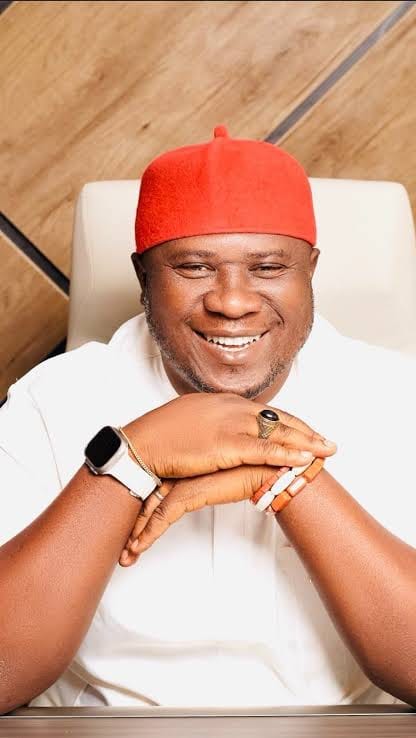
That question sits at the heart of the Orumba Rebirth Project, the campaign platform being promoted by the Labour Party’s candidate for the federal constituency, Dr. Prince Chibuike Echem.
Echem and his supporters describe the project not simply as an election slogan, but as a proposed development framework built around economic opportunity, human capital, infrastructure and accountable representation.
The campaign’s proposition is straightforward: rather than measuring federal representation principally by periodic distribution of relief materials or short-term empowerment packages, representation should be judged by its ability to attract investment, create jobs, facilitate infrastructure and maintain an active relationship with constituents.
It is a proposition that comes at a time when the 2027 contest for Orumba North and South is taking shape around competing candidates and different visions of representation. Publicly available candidate listings identify Echem among those contesting the federal seat under the Labour Party.
From consumption to production
At the centre of the Rebirth Project is the campaign’s economic argument. According to the proponents, Orumba cannot build a sustainable economy by relying predominantly on trading and consumption. The constituency, they argue, must increasingly become a centre of production, processing and small-scale manufacturing.
The campaign points to the possibility of water production, tissue manufacturing, poultry, agro-processing and other small and medium-scale enterprises as examples of businesses capable of creating employment locally.
Its proposed solution is an Orumba Industrial Layout, where small businesses could operate within an organised ecosystem and potentially access financing and institutional support from agencies such as the Bank of Industry and Bank of Agriculture.
The idea is ambitious, but its success would depend on factors extending beyond the powers of a single federal lawmaker, including access to finance, electricity, roads, markets, land, regulatory support and partnerships with government agencies and private investors.
That distinction is important because a member of the House of Representatives cannot unilaterally establish an industrial zone or compel banks to finance businesses. What a federal legislator can do is advocate legislation, facilitate federal intervention, lobby relevant ministries and agencies, influence constituency projects within available statutory frameworks and build partnerships.
That is therefore where the Rebirth Project faces one of its most important tests: turning a broad development vision into projects that are institutionally and financially achievable.
The youth question
For the campaign, economic rebirth cannot be separated from the future of young people and women.
The argument is that empowerment should move beyond one-off cash distributions to skills acquisition, equipment, access to finance and connection to markets.
This emphasis is consistent with an agenda Echem has previously outlined publicly. Earlier reporting on his proposed representation agenda highlighted employment, investment attraction and accessibility to constituents as central themes.
The political significance of such a proposition is obvious. A constituency with a large population of young people needs opportunities that allow them to earn a living without necessarily abandoning their communities.
But again, the challenge lies in execution.
Training without equipment may produce certificates without jobs. Equipment without finance may remain unused. Finance without markets may create indebtedness rather than sustainable enterprises.
The more demanding version of the Rebirth Project would therefore have to connect skills, capital, production and markets into one chain.
Roads as economic infrastructure
Infrastructure forms the third pillar of the proposal. The campaign specifically identifies roads linking Nanka, Ogbunka and Umunze, as well as the Ajali, Ufuma and Ndikelionwu axis, among routes it wants to see receive stronger federal attention.
The argument is not simply that roads make transportation easier. Roads determine whether farmers can move produce to markets, whether businesses can move goods, whether communities can attract investment and whether young people can access educational and employment opportunities.
For a rural constituency, that makes road advocacy a central component of economic development.
Yet securing such projects requires more than campaign promises. Federal budgeting, appropriation, procurement, project prioritisation and implementation all involve institutions beyond the National Assembly member.
A successful representative would therefore need sustained engagement with relevant ministries, departments and agencies, as well as cooperation across political and administrative lines.
The accountability question
Perhaps the most politically consequential element of the Rebirth Project is its emphasis on accessibility.
The campaign proposes quarterly town-hall meetings, an open constituency account, youth participation in project monitoring and a functioning constituency office in Orumba.
Echem has previously spoken publicly about keeping his offices and himself accessible to constituents, while his campaign has presented accountability as a central component of his proposed representation.
Such measures could provide constituents with clearer channels for asking questions about projects, legislative activities and constituency interventions.
But transparency ultimately requires more than meetings. It requires documentation: published projects, costs, locations, implementing agencies, timelines and evidence of completion. That is where the proposed social contract could become measurable.
A crowded political field
The Orumba North and South race is not occurring in a political vacuum. The constituency has attracted candidates from several parties, with publicly available listings showing representatives of APC, APGA, Labour Party, NDC, PDP and other parties in the contest.
The APGA ticket, for instance, has been associated with Dr. Odiraa Nwankwor, whose campaign has highlighted healthcare, education, infrastructure and responsive representation. The presence of competing agendas means the Orumba debate is likely to be shaped not only by personalities and party structures, but also by the credibility, specificity and feasibility of what each candidate offers.
Beyond the slogan
The phrase “Orumba Rebirth” is powerful as a political message. The more difficult task is translating it into measurable outcomes. Factories require investors. Roads require appropriations and implementation. Youth empowerment requires sustainable funding and markets. Accountability requires disclosure and continuous engagement.
Echem’s supporters believe the Labour Party candidate has the vision and commitment to pursue that agenda. His campaign has presented him as a candidate seeking to replace short-term political empowerment with a productivity-driven model of representation.
Whether that proposition can command broad support in 2027 will ultimately be determined by the electorate. For now, however, the Orumba Rebirth Project has placed a significant question at the centre of the constituency’s political conversation: Should representation be measured by what is distributed today, or by what is built to create opportunities tomorrow?
That is the question Echem’s campaign is asking. And it is a question that the people of Orumba North and South will have the opportunity to answer at the ballot box in 2027.