




Twelve years after 276 Chibok girls were abducted and the Safe Schools Initiative was born, Nigerian students are still being kidnapped in classrooms. That grim reality forced the Senate this week to admit what critics have long said: you cannot fix school security by auditing one programme alone. By expanding its Ad-hoc Committee’s mandate to cover TETFund, NELFUND, UBEC, t
he Ministry of Humanitarian Affairs and NSIPA, and granting a three-week extension, the Senate has moved from a narrow audit to a systems-wide accountability test. The question now is whether the wider net will catch the leaks, or simply spread the blame, Ekuson Nw’Ogbunka Our Managing Editor takes a look at the whole thing. Excerpts.
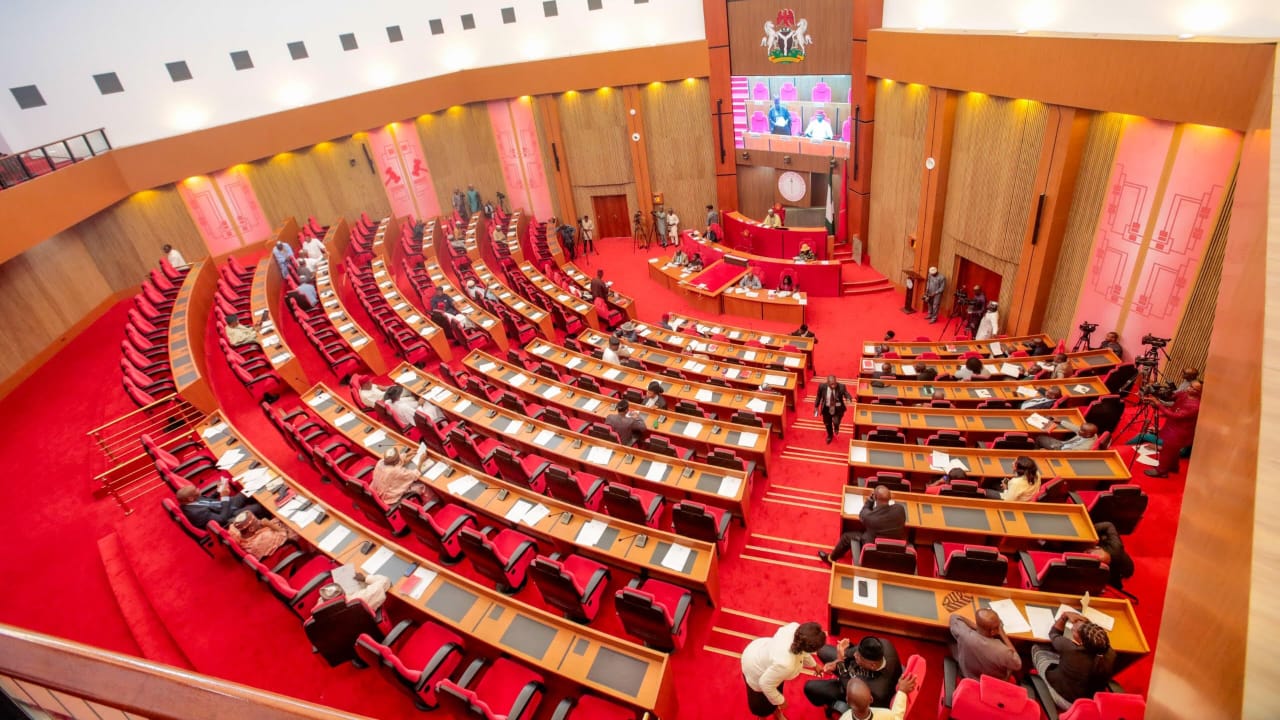
The resolution came on Tuesday via a motion by Committee Chairman, Senator Orji Uzor Kalu (APC Abia North), under Orders 41 and 51 of the Senate Standing Orders, 2026. The request was simple: more time, and a bigger brief.
Kalu’s argument was pragmatic, not political. Preliminary findings, he said, showed “significant intersections” between SSI funding and the operations of other agencies responsible for education, welfare and humanitarian support.
That admission is important. For years, SSI was treated as a standalone security project. In reality, school safety is funded through multiple budget lines, infrastructure from TETFund, basic education from UBEC, student loans from NELFUND, feeding and relief from Humanitarian Affairs and NSIPA.
To investigate SSI in isolation, as Kalu noted, would be “fragmented legislative oversight.” A fence built by SSI means little if UBEC classrooms have no doors, if TETFund hostels lack lighting, or if NELFUND delays leave students vulnerable while commuting.
The expanded mandate therefore makes institutional sense. The committee will now trace financial flows, operational bottlenecks and accountability structures across all five additional bodies.
Specifically, it will audit TETFund’s security and infrastructure projects in tertiary institutions. This is where billions go yearly, yet many campuses still rely on private guards and porous gates.
It will also assess NELFUND’s disbursement processes. Student loans are meant to reduce dropout and exposure to risk. But if access frameworks are weak, the fund becomes another bureaucratic layer rather than a safety net.
UBEC’s role in basic education will come under scrutiny too. Most attacks occur in primary and secondary schools in rural areas — exactly UBEC’s domain. The audit should reveal whether UBEC funds are translating into perimeter fencing, safe classrooms, and early warning systems.
The committee will further review social safety net allocations for school feeding, emergency relief for displaced students, and rehabilitation programmes under the Ministry of Humanitarian Affairs and NSIPA. In conflict zones, hunger and displacement are as dangerous as bandits.
This broadening is also an admission of past gaps. The probe, inaugurated in December 2024, was triggered by fresh attacks including the abduction of 25 girls in Kebbi where the Vice Principal was killed. SSI alone clearly did not prevent it.
The numbers already raise questions. Of the ₦15 billion released in 2023, ₦6.225 billion went to the Nigeria Police, ₦3.362 billion to NSCDC, ₦2.250 billion to Defence HQ, and ₦519 million to Education. The DSS allocation was not even disclosed.
The committee has also queried consultancy expenditures and asked the Safe Schools Financing Office for a full reconciliation, including contractor names and CBN Trust Fund documentation. That points to classic procurement opacity.
Donor money complicates the picture further. According to National Coordinator Hajia Halima Iliya, partners have contributed $10m from FG, $10m from business leaders, $1m from AfDB, €2m from Germany, $4m from Norway via UNICEF, plus USAID and Qatar Foundation funds. Tracking that mosaic requires more than SSI’s books.
Time was the other reason for the extension. Kalu told the Senate that “four key areas were not done” due to scheduling conflicts and the need for field visits. A three-week extension is modest, but it signals the Senate wants a report, not an indefinite probe.
The risk, however, is diffusion. A wider mandate can become an excuse for delays, or for agencies to pass responsibility to one another. The committee must avoid a report that lists problems without assigning responsibility.
What Nigerians need is actionable output: which agency failed to deliver fences, which state did not match funds, which contractor abandoned projects, and which security deployment was never made. Vague recommendations will waste this opportunity.
If done well, this expanded probe could become a template for how the National Assembly oversees cross-cutting programmes. Education, security and social welfare are not silos. The Senate’s move recognizes that.
Ultimately, the test is not the number of agencies listed. It is whether, after this report, a child in Ogidi, Maga, or Chibok can go to school without fear. SSI was created to guarantee that. Twelve years later, the Senate is finally asking if the whole system, not just one initiative, is delivering on that promise.