


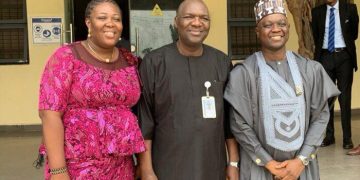
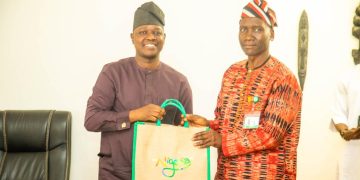







On World Environment Day 2026, Ivy League Leadership Academy, Abuja hosted a sobering lecture that refused to let the Niger Delta’s pain stay out of sight. Mr. Chigozie John Asonye, Vice President of the Network for Sustainable Development Ltd/GTE, delivered “Reclaiming Our Commons: From Ecological Ruin to Sustainable Renewal in the Niger Delta.” His message was blunt: the region’s land, water and air have been sacrificed for decades of oil wealth, and the cost of national silence is measured in poisoned farms, shortened lives and lost futures. Yet Asonye also mapped a five-point agenda for young Nigerians to lead restoration, arguing that development without sustainability is self-destruction, writes Ekunkonye Junior, our Correspondent. Excerpts.
Distinguished faculty of Ivy League Leadership Academy, esteemed students, fellow environmental advocates, ladies and gentlemen, Asonye began. It is a profound honor to stand before Nigeria’s future leaders on World Environment Day 2026.
He stressed that today is not just about marking a UN date. We gather to confront a truth that has shaped our nation’s ecology, economy and soul for over 60 years. That truth lives in the creeks of Bayelsa, the farmlands of Ogoniland, and the lungs of children in Rivers State.
Introducing himself, Asonye said he is not from the Niger Delta, but a Nigerian. “The wound in the Delta is a wound in the body of our federation,” he declared, framing the crisis as a national, not regional, burden.
On why World Environment Day 2026 matters here and now, he noted the UN theme: land restoration, desertification and drought resilience. In Nigeria, no place suffers land degradation more violently and systematically than the Niger Delta.
For an Abuja audience surrounded by hills, planned greenery and a master plan, he warned against distance. “Abuja breathes because the Delta bleeds,” he said. Over 80% of Nigeria’s foreign exchange comes from Delta oil, tying the capital’s prosperity to poisoned waters. To celebrate Environment Day without speaking of the Delta, he said, would be ecological hypocrisy.
Turning to data, Asonye laid out the scale with facts, not folklore. Since 2006, over 13,000 oil spills have been reported. UNEP estimates 9-13 million barrels spilled in 50 years, the equivalent of 40 Exxon Valdez disasters.
Gas flaring remains relentless. Nigeria still flares about seven billion cubic meters yearly, with 70% in the Delta, placing the country among the World Bank’s top seven gas flaring nations globally.
Land loss is staggering. UNEP says 1,020 square kilometre. of Ogoniland is contaminated, with cleanup projected to take 25-30 years. That is roughly the size of Lagos Mainland lost to pollution.
The human cost is measurable. Studies show life expectancy in Bayelsa and Rivers oil communities is 10 years lower than the national average, a toll WHO links to hydrocarbon pollution in air, water and food.
Mangrove forests, which sequester four times more carbon than rainforests, have been decimated. Over 50% of Delta mangroves are degraded and Nigeria has lost 75% since the 1980s.
Asonye called this ecological violence, not just degradation. The land cannot farm, the water cannot be drunk, and the air cannot be trusted.
He gave the crisis a human face. In Goi, Ogoniland, he met Mama Blessing whose cassava tubers grow black on toxic soil, while her son suffers chronic asthma from 24/7 gas flares that turn night into orange glare.
In Bille, Rivers State, fishermen now paddle four hours to find fish, a journey that once took 20 minutes. The creeks are coated with crude so thick that rainwater catches fire.
This, he said, is environmental injustice. The people who benefit least from oil extraction suffer most from its consequences. The Delta produces the wealth but consumes the poison.
Asonye identified “The Three Layers of Silence” that allow degradation to persist. First, corporate silence: decades of double standards where international oil companies applied lower environmental standards in Nigeria than in Europe or America.
Second, regulatory silence. Nigeria has laws and agencies like NOSDRA, but enforcement is weak, penalties are negligible, and regulatory capture is real. A spill fine often costs less than repairing a pipeline.
Third, citizen silence. Many in Lagos, Abuja and Kano see the Delta as “their problem,” enjoying petrol while outsourcing pollution. “Silence, young leaders, is a political position,” he warned.
On cleanup, he separated progress from pretense. UNEP’s 2011 Ogoniland assessment birthed HYPREP, which has awarded over 50 remediation contracts and trained 5,000 youths under the Clean Niger Delta Initiative.
Yet as of June 2026, only 11% of contaminated sites are certified clean, and potable water projects reach less than 40% of impacted communities. Re-pollution continues as new spills hit “cleaned” land. “We cannot mop the floor while the tap is still running,” he said.
Beyond oil, the Delta faces compound threats. Coastal erosion is swallowing communities like Koluama as sea levels rise and canals alter currents. Climate change is not future tense here, it is present loss.
Water hyacinth chokes waterways, thriving in polluted water and destroying fishing and transport. Illegal logging and “kpo-fire” artisanal refining destroy mangroves, while plastic from the Niger and Benue turns creeks into landfills.
Asonye invoked both law and tradition. Section 20 of the 1999 Constitution mandates environmental protection, and the African Charter guarantees a right to a satisfactory environment. But he went further, citing Igbo and Ijaw beliefs that the earth is a living entity to be respected.
To the students, he made the issue personal. Law students will litigate climate cases, tech students can build drones and AI to detect spills, business students must grapple with ESG and climate risk. “Leadership is about solving problems, not inheriting comfort,” he said.
He then charted a Five-Point Youth-Driven Restoration Agenda. First, educate and agitate through programs like NSD’s “Delta Watch.” Second, innovate for remediation with campus hackathons for low-cost oil sensors.
Third, demand corporate accountability by questioning ESG policies and bank financing. Fourth, practice ecological citizenship by auditing Abuja’s own waste and deforestation. Fifth, re-imagine the Delta’s economy around blue economy, mangrove carbon credits, eco-tourism and aquaculture.
Closing with a story, Asonye recalled a 21-year-old in Bodo who, as a boy, planted mangrove seedlings after a spill destroyed his community’s forest. “He did not cause the spill. But he is planting the future,” Asonye said.
He concluded that the Niger Delta has been called the goose that lays the golden egg, but Nigeria has slaughtered the goose. The task now is not mourning, but healing the land so new life can hatch.
World Environment Day, he said, asks us to be a generation of restoration. For Nigeria, restoration begins in the Delta, and it begins when silence ends.
“Students of Ivy League Leadership Academy, the land is waiting. The creeks are waiting. History is waiting. What will you do?” Asonye asked.