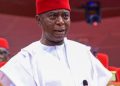





Wale Edun, minister of finance and coordinating minister of the economy has attributed the poor release of capital funds under the 2025 budget partly to the federal government’s decision to halt what he described as unsustainable fiscal practices, including the reliance on ways and means financing to cover deficit.
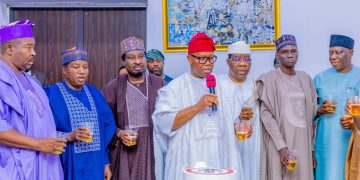
Edun spoke when he appeared before the House of Representatives Committee on Appropriations alongside members of President Bola Tinubu’s economic team to defend the administration’s 2025 budget and proposals for the 2026 budget.
The committee queried the economic team over the poor performance of the 2025 budget, particularly the reported zero implementation of capital expenditure despite legislative approvals and improved revenue.
Edun said the administration had taken deliberate steps to dismantle what he termed structurally damaging fiscal arrangements inherited from previous years.
He explained that before the current administration, the government relied heavily on “ways and means” financing advances from the Central Bank of Nigeria to cover large fiscal deficits. At the same time, the Nigerian National Petroleum Company (NNPC) funded the petrol subsidy regime through an underecovery arrangement.
That approach, he argued, proved unsustainable.
Edun said President Tinubu had halted the “unchecked” “ways and means” financing, which had accumulated to around N30tn in order to correct the major distortions and replace them with market-based solutions.
Ending the practice, he said, was essential to restoring macroeconomic stability, curbing inflationary pressures and rebuilding investor confidence. However, he acknowledged that the policy shift created a funding gap.
The minister added that detailed explanations regarding the zero performance would be provided by the minister of State for Finance.
Abubakar Bichi, chairman of the committee, earlier noted that total revenue in 2025 rose to about N28tn, surpassing the N25tn target approved in the budget.
He further recalled that the National Assembly had approved an executive request for N1.15tn to fund parts of the 2025 capital budget, questioning why implementation remained at zero despite legislative backing.
He said the interface was convened to examine the weak performance of the 2025 budget and to scrutinise proposals for the 2026 fiscal year.
Atiku Bagudu, minister of Budget and National Planning, told lawmakers that discussions with the National Assembly had resulted in an agreement to move 70 percent of the 2025 capital allocation into the 2026 fiscal framework.
On funding prospects for 2026, Bagudu said steps were being taken to improve execution rates.