









By News Maker
The G-100 opposition summit in Abuja was meant to signal unity ahead of 2027. Instead, it ended with a framework for cooperation but no name on the ballot. With Atiku Abubakar and Peter Obi absent, the meeting exposed both the ambition and the fracture lines within Nigeria’s opposition.
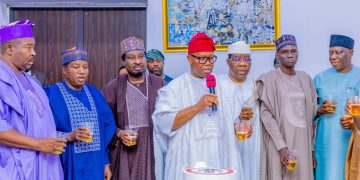
Held at the Shehu Musa Yar’Adua Centre, the summit brought together six parties: ADC, APM, NDC, PDP, PRP and SDP. The turnout showed willingness to talk, but the empty seats of two former presidential candidates spoke louder.
Organisers were quick to manage expectations. The G-100 said the goal was not to pick a candidate yet, but to build structures for coordination and a possible alliance. In political terms, that is code for “we are not ready to compromise.”
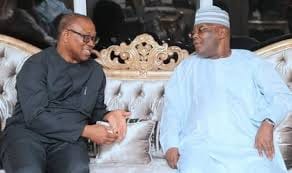
The absence of Atiku and Obi is significant because both command large followings and party structures. Their non-attendance suggests that any merger will have to be negotiated at the level of personalities, not just parties.
This reflects the opposition’s core dilemma. There is broad agreement that the APC should be challenged collectively, but little agreement on who should lead that challenge. Kwankwaso, Atiku, Obi and others each retain presidential ambitions and different political bases.
The G-100’s proposal of a “Government of National Competence” with a single four-year transition term is an attempt to lower the stakes. By promising only one term, proponents hope to make the ticket more attractive to rival leaders.
But a transition government does not solve the succession question. It only postpones it. The harder conversation, who stands as candidate, who becomes running mate, and how power will be shared, is still ahead.
Without a unifying figure, the opposition risks repeating 2023, when split votes across PDP and Labour Party helped the APC. A fragmented opposition in 2027 would again play to the advantage of the incumbent.
The summit’s value, therefore, lies not in a candidate but in keeping dialogue alive. If the six parties can build trust and a joint structure, they may yet present a consolidated front. If not, the framework will remain paper.
For voters, the takeaway is clear: the opposition wants to unite, but has not decided how. Whether negotiations can tame ego and ambition will determine if 2027 produces a real contest, or another walkover.