




President says painful reforms have corrected Nigeria’s economic course as he promises lower living costs, jobs and shared prosperity, but the real measure, ultimately, will be whether ordinary Nigerians feel the difference
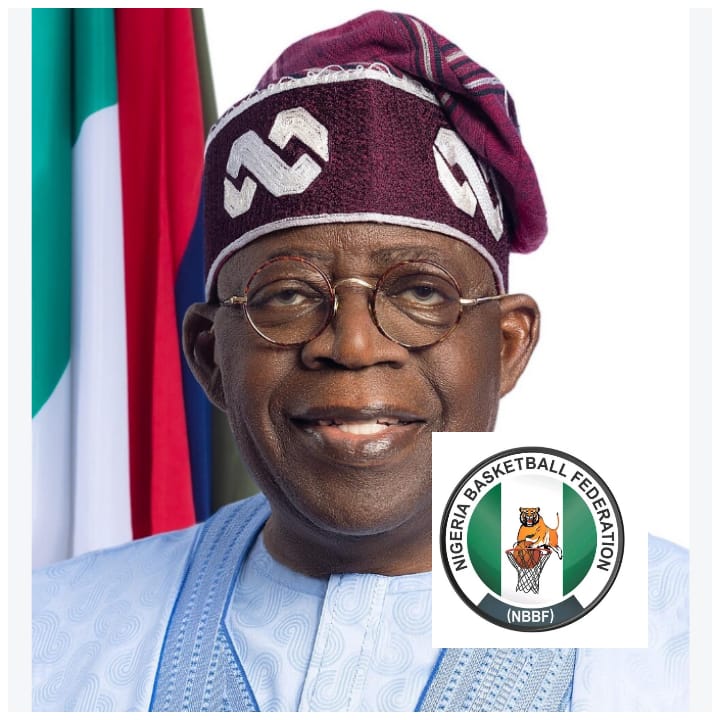
Sixty-six years after Nigeria raised its flag as a sovereign nation, President Bola Ahmed Tinubu has presented the country’s economic journey under his administration as one of difficult but necessary reform, arguing that the nation has moved beyond emergency economic stabilisation and entered a new phase focused on widespread prosperity.
In his Independence Day address, Tinubu acknowledged that Nigeria’s journey since October 1, 1960 has been marked by war, military rule, economic crises, insecurity and political upheaval. Yet he said the country has survived because of the resilience of its people and their continuing faith in the possibility of a better Nigeria.
The President’s central argument was that Nigeria’s current economic difficulties cannot be properly understood without considering structural weaknesses that accumulated over decades. He likened the situation inherited by his administration in 2023 to a cancer requiring painful treatment rather than temporary relief.
That analogy captures the administration’s defence of its economic reform programme, particularly its decision to remove longstanding subsidies and undertake major changes in the foreign exchange and fiscal environment.
According to Tinubu, previous governments postponed difficult decisions while sustaining arrangements that were becoming increasingly expensive and inefficient. His administration, he said, deliberately chose what he described as the difficult medicine of reform.
The President, however, acknowledged that the medicine has produced painful side effects. This is one of the most important areas requiring careful examination. While the administration points to improving macroeconomic indicators as evidence that the reforms are working, the experience of many households has been dominated by the cost of food, transportation, housing, electricity, healthcare and education.
The critical question therefore is not simply whether selected economic indicators have improved, but whether such improvements are translating into measurable improvements in household welfare.
Tinubu argues that they will
He cited economic growth of more than four per cent, declining inflation from its peak, increased foreign reserves, greater stability in the foreign exchange market, reduced oil theft and record non-oil export earnings exceeding $6 billion in 2025.
These indicators, in the President’s assessment, demonstrate that Nigeria’s economy has acquired greater stability and resilience.
But economic growth and improved macroeconomic indicators do not automatically mean that prosperity is broadly shared. The administration therefore faces the more difficult task of converting economic stability into productive employment, affordable food, stronger purchasing power and better public services.
This is the point at which Tinubu’s Independence Day message shifts from defence of past reforms to a declaration of a new economic objective.
“Shared and widespread prosperity,” he said, is now the central purpose.
The President’s proposed route is based largely on production.
His administration intends to reduce the cost of living by lowering the cost of producing and transporting goods. Agriculture occupies an important position in this strategy, with emphasis on mechanised irrigation, dry-season farming, improved access to seeds and fertiliser, mechanisation, storage and transportation.
The logic is straightforward: increased agricultural productivity should improve food supply, reduce waste and eventually moderate prices.
The same principle is applied to industry. Reliable electricity, improved infrastructure, access to credit and better connectivity, according to the President, should reduce production costs and make Nigerian businesses more competitive.
The challenge is implementation.
Nigeria has announced ambitious agricultural, industrial and infrastructure programmes under successive administrations. The difficulty has often been less about identifying what needs to be done than about delivering projects efficiently, maintaining infrastructure, ensuring policy consistency and preventing public resources from being diverted from their intended purposes.
The President’s promise of jobs is similarly significant.
Nigeria’s youthful population can become either an economic advantage or a source of increasing social pressure, depending on whether the economy creates enough productive opportunities. Tinubu therefore wants greater industrial production, expanded use of gas for power and industry, digital connectivity, skills development and stronger support for Nigerian enterprises.
His vision is of a Nigeria that produces more of what it consumes and sells more Nigerian-made goods to the world.
But this objective requires more than government declarations. It requires a business environment in which manufacturers can obtain reasonably priced power, finance and infrastructure, while businesses operate under predictable regulations and consumers have sufficient purchasing power to buy what Nigerian industries produce.
The President also addressed poverty and social protection
He admitted that millions of Nigerians cannot wait for the benefits of future economic growth. Families still face difficulties meeting basic needs, including food, school fees, medical expenses and transportation costs.
His administration has therefore pointed to direct support for vulnerable households, the National Social Register, the Nigerian Education Loan Fund, consumer credit through CREDICORP, pension reforms and support for primary healthcare and basic education.
These measures represent an important recognition that economic reform and social protection must proceed together.
However, social intervention programmes also require transparency, accurate beneficiary identification, effective monitoring and sustained funding if they are to reach the people for whom they are intended.
The President’s assertion that salaries and pensions have been paid on time and in full since 2023 also reflects the importance of fiscal stability to households dependent on government income.
Yet the larger issue remains poverty itself
Tinubu insists that the objective is not merely to manage poverty but to defeat it.
That ambition will require sustained economic expansion, rising productivity, millions of productive jobs and stronger human capital.
At 66, Nigeria’s Independence story therefore remains unfinished
The country has enormous natural resources, a large domestic market, a youthful population, agricultural potential, an expanding technology ecosystem and a strategic position in Africa. Yet these advantages have repeatedly been constrained by insecurity, infrastructure deficits, weak institutions, unemployment, inflationary pressures and inconsistent policy implementation.
Tinubu’s Independence Day message effectively asks Nigerians to judge the administration not only by the pain of reforms already implemented but by what those reforms ultimately produce.
That is a reasonable test for any economic programme.
The President says Nigeria has passed through its “Red Sea” and should not look back. But for millions of Nigerians, the journey ahead will be judged by very practical questions: Can they afford food? Can farmers produce safely and profitably? Can young people find decent work? Can businesses obtain affordable power and credit? Can families afford education and healthcare? Can infrastructure support production? Can insecurity be reduced sufficiently for economic activity to flourish?
Those questions will determine whether the promised transition from an “age of reform” to an “age of prosperity” becomes more than a compelling Independence Day declaration.
Sixty-six years after independence, the aspiration remains remarkably simple: a Nigeria in which citizenship brings opportunity, hard work produces dignity, and national wealth translates into a better quality of life.
The President has declared that Nigeria’s direction has been corrected
The next chapter will be about proving that correction through results that Nigerians can see, feel and sustain.
The promise of independence, ultimately, is not merely the survival of the nation. It is the improvement of the lives of the people who make up the nation.