










•A landmark cultural gesture that places ideas and memory above politics
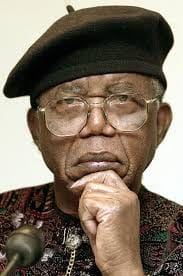
Anambra State Governor, Professor Charles Chukwuma Soludo, has been commended for unveiling a statue of the late literary icon, Professor Chinua Achebe, in Ogidi. Leadership scholar and President of The Ivy League Leadership Academy, Professor Chijioke Ikokwu, described the act as “historic and visionary,” saying it reaffirms the value of culture in nation-building. Speaking in Abuja on Monday, at a press conference he organized to that effect, Ikokwu argued that the monument is more than art, it is a statement about what Africa chooses to remember, writes Ekuson Nw’Ogbunka Our Managing Editor.
“Everything is not politics,” Prof. Ikokwu told an international press briefing. “This gesture transcends party lines. It is a deliberate effort to preserve a legacy that is central to African identity and global literary history.”
The statue, erected at Ugwu Nwasike in Ogidi, Achebe’s hometown, has drawn national and international attention since its unveiling. For Ikokwu, the location itself carries meaning.
“By placing it in Ogidi, Governor Soludo reconnects global excellence to local roots,” he said. “He is telling every child in Anambra that greatness can start here and still speak to the world.”
Ikokwu described Achebe as more than a novelist. To him, Achebe was an architect of intellectual sovereignty and moral courage who reconciled African tradition with modern realities.
The turning point, he noted, came in 1958. With Things Fall Apart, Achebe reclaimed the African story from colonial voices and placed it on the world stage on African terms.
“With one book, Achebe took back the pen for Africa,” Ikokwu stated. “He gave dignity to our stories, depth to our identity, and voice to our humanity.”
That single novel reshaped university curricula across continents. It opened the door for generations of African writers and proved that proverbs, cosmology, and community life could stand beside any world classic.
According to Ikokwu, honoring such a figure is not a luxury. It is foundational to building a knowledge-driven economy.
“At a time when many societies are dismantling monuments, Governor Soludo has chosen to erect one that inspires,” he said. “This statue is not just art. It is a permanent curriculum.”
The leadership expert argued that the monument will do three things: restore pride in young Africans, stimulate the creative industry, and position Anambra as a hub for culture and ideas.
“Statues are promises to the unborn,” Ikokwu remarked. “This one tells future generations that Nigeria chose to honor a mind, a conscience, and a voice that shaped the world.”
He stressed that leadership must be judged not only by roads and bridges, but by what a society chooses to immortalize.
Beyond commendation, Ikokwu announced concrete steps by The Ivy League Leadership Academy to sustain Achebe’s legacy.
First is the proposed Achebe Leadership Fellowship, which will train young Nigerians in narrative leadership, public ethics, and storytelling for governance.
Second are plans for a world-class library and writers’ residency in Ogidi, a living center for research, reflection, and creativity in Achebe’s hometown.
Ikokwu also urged the Federal Ministry of Education to integrate Achebe’s works into the national curriculum, not only as literature but as texts on leadership and citizenship.
Speaking to the global community, he called on media houses, universities, and cultural institutions to amplify the significance of the development.
“This is not just about a statue,” he concluded. “It is about an African society choosing memory over amnesia, and ideas over invisibility. Last week, Anambra honored a teacher. Nigeria honored a conscience. Africa honored a voice.”