

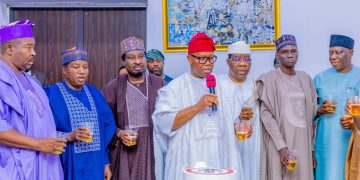
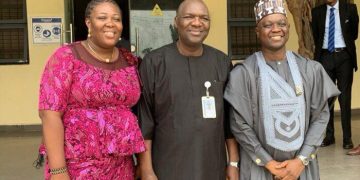
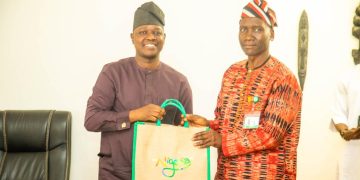







In this analysis, Our Managing Editor, Ekuson Nw’Ogbunka writes that as Anambra State prepares for another round of local government, state and federal elections, the political conversation in Orumba South is shifting from slogans to substance. With APGA fielding a team led by Hon. Shedrach Azubuike for Mayor, Hon. Stan Nnaka for State Assembly, Dr. Odiraa Nwankwor for House of Reps, and Sen. Emma Nwachukwu for Senate, the big question is: Can this lineup move Orumba South to the expected level of infrastructure, jobs, security and service delivery that voters have long demanded?
The campaign message is clear: votes are “expressions of our hopes” for better leadership, stronger communities and sustainable development. For Orumba South voters, that hope centers on roads, youth employment, healthcare, education and security.
The LGA chairmanship candidate, Hon. Shedrach Azubuike, is being positioned as the driver of grassroots development. His mandate, if elected, will be to ensure that development “reaches every corner” of the local government and that council funds translate to visible projects.
For the State House of Assembly, Hon. Stan Nnaka will be expected to legislate on issues directly affecting Orumba South. These include constituency projects, oversight of state government programs, and laws that can attract investment to the area.
At the federal level, Dr. Odiraa Nwankwor is contesting for Orumba North/South Federal Constituency. The expectation is attraction of federal projects, empowerment programs, and stronger representation in Abuja for roads, health centers and educational facilities.
Sen. Emma Nwachukwu, candidate for Anambra South Senatorial District, will be tasked with policy and appropriation. Voters will look to him for influence in the Senate to push bills and federal presence that benefit the entire Orumba zone and Anambra South.
APGA is selling “continuity, unity, progress, and sustainable development” as its brand. The party argues that a unified ticket across LGA, State, House of Reps and Senate will make it easier to lobby and deliver results for Orumba South.
The challenges are well known. Orumba South, like many rural LGAs, contends with poor road networks, youth unemployment, dilapidated schools and primary health centers, and insecurity that disrupts farming and business.
Can this team make it? The answer will depend on three things: capacity, access, and political will. Do the candidates have the track record and networks to attract resources? Will they have access to government at state and federal levels? And will they prioritize people over politics?
The campaign is urging unity and peaceful voting. “Let us stand together in unity, peace, and love for our homeland,” the call reads. In past elections, voter apathy and intra-party crisis have weakened outcomes in Orumba. A united front could change that.
Youths are a key demographic being targeted. The manifesto emphasizes “greater opportunities for our youths” — skills acquisition, SMEs, and digital jobs. If delivered, this could reduce migration and restiveness.
The elders and traditional institutions are also in focus. The promise to build “an Orumba South where our elders are respected” suggests a commitment to inclusive governance and community consultation in project execution.
Conclusion: Election day will be the test. “Every vote matters, and every lawful vote contributes to shaping the future of our beloved Orumba South,” the team says. If elected, the APGA slate will be judged not by promises but by whether Orumba South finally moves to the expected level better roads, functional healthcare, quality education, security, and real opportunities for its people. Orumba South first. The responsibility, they argue, now lies with the voters.