










In this analysis, Ekuson Nw’Ogbunka, Our Managing Editor in Abuja the Federal Capital Territory (FCT) writes that the Federal Government (FG) has validated a blueprint to reposition cashew as a value-added export. With 85% of Nigeria’s crop leaving unprocessed, the plan promises factories, jobs and higher earnings. The real test will be implementation.
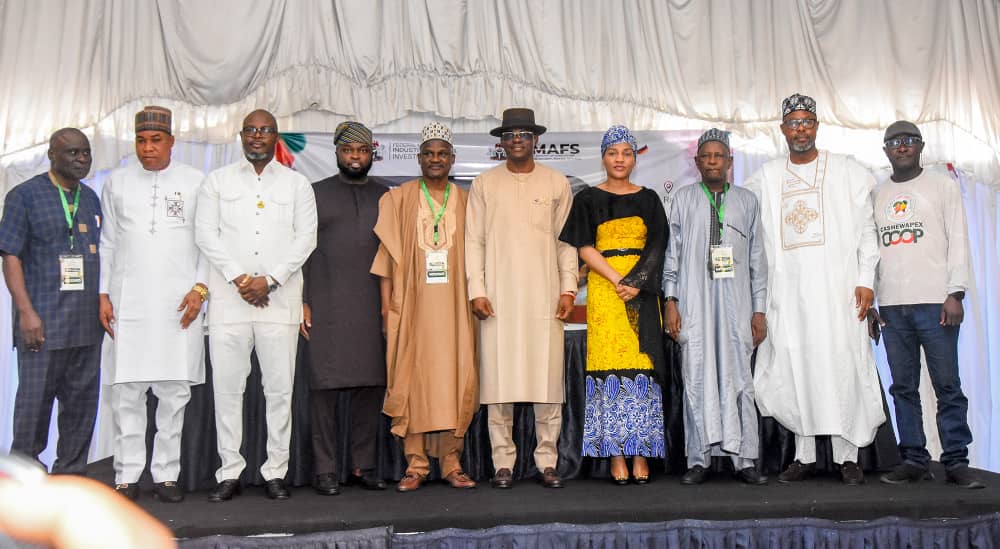
On Wednesday, July 15, 2026 in Abuja, the Federal Government reaffirmed its push to transform Nigeria’s cashew industry. At a Stakeholders’ Validation Workshop, officials unveiled the Nigeria Cashew Industry Roadmap as the strategic blueprint for the sector’s future.
Representing the Minister of State for Industry, Senator John Owan Enoh, Permanent Secretary Dr. Chris Osa Isokpunwu described the document as a plan to expand local processing, attract investment, raise farmers’ incomes, and create jobs for women and youth.
The timing is deliberate. The Roadmap aligns with President Bola Ahmed Tinubu’s Renewed Hope Agenda and the 2026 Nigeria Industrial Policy. For government, cashew is now framed as a non-oil growth engine, not just a farm crop.
The numbers explain the urgency. Nigeria produces between 300,000 and 350,000 metric tonnes of raw cashew nuts annually. Yet more than 85% is exported raw. That means factories abroad capture the value while Nigeria earns only farm-gate prices.
The Roadmap directly names the problems holding the sector back: low productivity, ageing plantations, inadequate seedlings, poor infrastructure, limited access to finance, weak quality standards, and underutilised processing capacity.
To coordinate action, government announced the establishment of a Nigerian Cashew Project Office. It will work with the Federal Ministry of Agriculture and Food Security, NCAN, GIZ and other partners to drive implementation and track results.
Success, according to Dr. Isokpunwu, will be measured in concrete terms: increased local processing, new factories, higher export earnings, better farmer livelihoods, and improved global competitiveness. No more vague targets.
The Ministry of Agriculture backed the plan. Representing Minister Abubakar Kyari, Mr. Bukar Musa called the validation “a major milestone” and reaffirmed commitment to a policy framework that drives production, processing, value addition and export competitiveness.
From the industrial side, Mr. Bala Mohammed of the Industrial Development Department urged stakeholders to adopt a Roadmap that is “inclusive and implementable” — one that can accelerate industrialisation and export diversification.
PEBEC weighed in with a business environment angle. DG Princess Zahrah Mustapha Audu said the Roadmap supports Tinubu’s $1 trillion economy vision through value addition and non-oil exports. She pledged reforms via the Business Facilitation Act and ReportGov platform.
State actors are watching closely. Osun Commissioner for Agriculture, Hon. Kola Fashoro, said the policy could position Nigeria as Africa’s leading producer and processor, unlocking huge economic potential at state level.
Industry groups were both hopeful and cautious. CAPPAN called for “consistent, investor-friendly policies” to revive processing and restore investor confidence. Without policy stability, factories will not return.
NCAN President, Mr. Ademola Adesokan, framed the Roadmap as “an urgent opportunity to reverse years of missed opportunities.” For him, Nigeria has lost ground and must reclaim it quickly in global markets.
Farmers’ voices also featured. Mr. Yinusa Gabriel of the National Apex Cooperative pushed for climate-smart production, digital farmer registration, traceability, structured markets, and local processing, to be able with farmers placed at the centre.
The Nigeria Commodity Exchange added a market layer. Represented by Dr. Khadijat Abdulaziz, NCX stressed the need to strengthen commodity markets, improve standards, expand finance, and enhance value addition across the chain.
Bottom line: Stakeholders agree the Roadmap can turn cashew into a driver of industrialization, jobs and rural growth. But Nigeria has had roadmaps before. This one will be judged not by workshops in Abuja, but by factories in Nnewi, loans in Kogi, and higher prices in Benue. Implementation is everything.