







Father’s Day 2026 arrives under the global theme “Fathers: Guiding and Building.” The focus is deliberate. As economies shift, families fracture, and mental health conversations grow louder, the world is re-examining what fathers contribute beyond income. This year’s theme positions dads not just as providers, but as anchors men whose guidance and long-term vision shape children, communities, and nations, write Ekuson Nw’Ogbunka, our anchorman.
The theme reframes fatherhood
“Guiding and Building” moves the conversation past cards and gifts. It recognizes three roles in one phrase: fathers guide through advice and values, and they build through stability, discipline, and hope. That dual mandate matters because children who have engaged fathers show higher academic performance, better emotional regulation, and lower risk of delinquency, according to multiple child development studies.
Recognition is the core purpose
Father’s Day exists first as appreciation. In Nigeria and globally, it’s a pause to thank men who work night shifts, defer personal dreams, and show up for school meetings. The day validates invisible labor: fixing what’s broken at home, mediating sibling conflicts, and carrying family anxieties quietly. Without that recognition, “provider fatigue” sets in.
A shift from provider to presence
The theme highlights a generational shift. Older models of fatherhood centered on income only. Today’s model demands presence. Modern fathers are expected at PTA meetings, in delivery rooms, and in emotional conversations. “Building” now means building emotional intelligence in sons and confidence in daughters, not just building houses.
Family stability rests on father engagement
Research consistently links active father involvement to stronger family units. When fathers guide — setting boundaries, teaching responsibility — children gain structure. When they build — investing time and resources — families gain resilience. That stability extends outward. Stable homes produce students who stay in school and citizens who respect institutions.
Fathers’ health is a public issue
The theme also nudges men to prioritize themselves. You can’t guide if you’re burnt out, and you can’t build if you’re ill. Health agencies now push Father’s Day messaging around prostate checks, mental health, and stress management. A father who neglects his health removes himself from his children’s future. Self-care is therefore not selfish; it’s stewardship.
Symbolism matters in a visual age
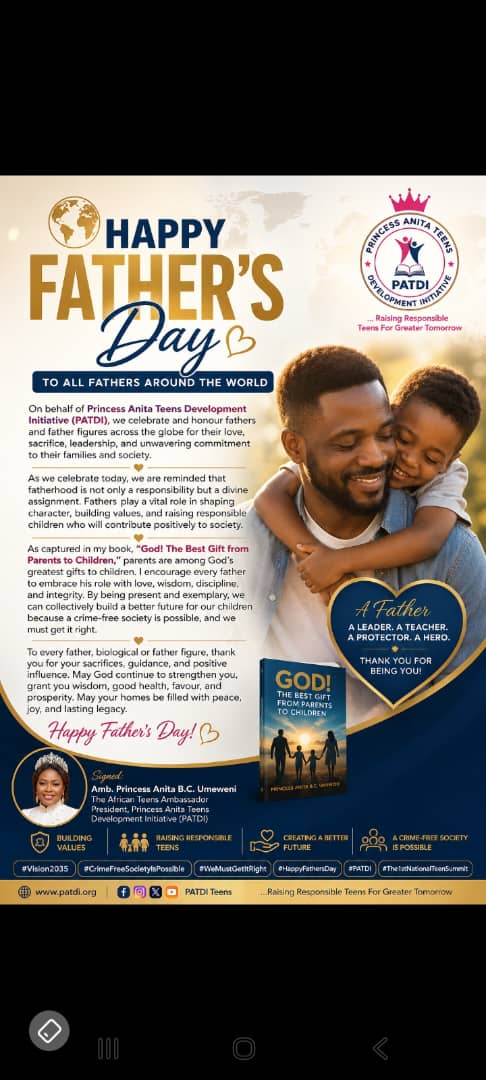
There’s no single UN-approved Father’s Day logo, but the imagery is consistent worldwide: a father carrying a child on his shoulders, hands guiding a bicycle, or two hands clasped. These visuals communicate what words often miss — strength without intimidation, protection without control. The “shoulders” image especially captures “building”: a father literally elevates the next generation.
Economic pressure makes guidance harder
Inflation, job insecurity, and migration have increased pressure on fathers in Nigeria and globally. Many men are working longer hours or multiple jobs. “Guiding” requires time that economic stress steals. That tension explains why Father’s Day messaging now includes calls for workplace flexibility and mental health support for men, not just for women.
Building goes beyond the household
Fathers also build communities. Through mentorship, coaching, and civic participation, men extend paternal values into schools, churches, and youth groups. Programs like “Manhood” curricula and mentorship initiatives show that when fathers invest outside their homes, crime rates drop and youth outcomes improve. The theme therefore has national implications.
The cultural conversation is maturing
Public discourse on fatherhood is less defensive than a decade ago. Men are more willing to discuss parenting challenges, emotional absence, and the need for healing from their own father wounds. “Guiding and Building” gives language to that healing: you guide by breaking negative cycles, and you build by creating new ones.
A call to action for 2026
Ultimately, the theme is a challenge. To fathers: be present enough to guide daily decisions, and intentional enough to build legacies that outlive you. To society: create policies, workplaces, and health systems that let men do both. Father’s Day is one day, but “guiding and building” is a lifetime assignment. Nations rise or fall on how well their fathers do it.