




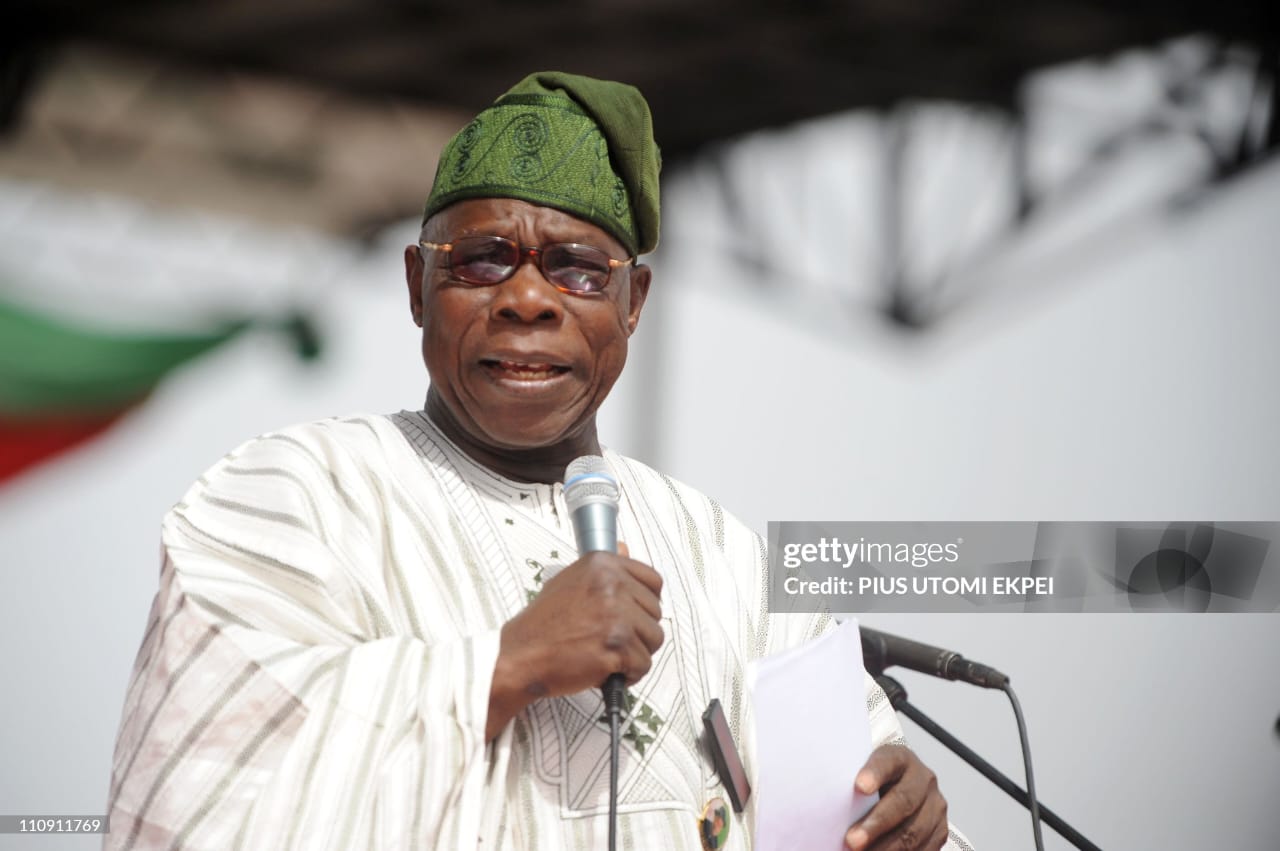
In this piece, Ekuson Nw’Ogbunka Our Managing Editor examine Former President Olusegun Obasanjo’s reported condemnation of the continued exclusion of the Southeast from Nigeria’s top leadership, with the warning that it “shows that the war has not been forgotten,” is not a provocation. It is a statesman’s reminder that a 55-year-old promise of “No Victor, No Vanquished” must be seen in real political, economic, and social terms. If Nigeria treats this moment as a turning point, we can convert a lingering grievance into a national project for equity, competence, and unity.
A Voice with Historical Weight: Obasanjo fought in the Civil War, later led Nigeria as military and civilian President, and has worked to keep the federation together. When he speaks on inclusion, he is drawing from both battlefield experience and governance experience. That is why the comment deserves sober attention, not dismissal.
The Issue Is Perception and Reality: In a federation, citizens must see themselves in the country’s leadership architecture. When a zone consistently feels absent from the presidency, vice presidency, key ministries, and apex security roles, trust in the system erodes. Naming that feeling is the first step to correcting it.
Inclusion Is Not Charity, It Is Strategy: A country of over 200 million people cannot afford to sideline any region’s talent. The Southeast has shown strength in manufacturing, trade, tech, healthcare, academia, and the diaspora. Bringing that capacity into national leadership is simply good management of national assets.
Symbolism Shapes Belonging: Children in Enugu, Owerri, Abakaliki, Awka, and Umuahia should see pathways to the highest offices. Representation tells every Nigerian that their region is not an afterthought. Symbols, combined with policy, build the sense of “this country is mine too.”
The ‘Unfinished Business’ of 1970: The war ended with a pledge of reconciliation. When citizens still speak of exclusion in 2025, it signals unfinished business. Obasanjo’s intervention asks Nigeria to finish that work, not by relitigating the past, but by redesigning the present.
Solution 1: Codify Predictable Zonal Rotation: Political parties and the legislature should adopt a transparent, time-bound rotation for top offices across the six zones. Rotation does not lower standards. It widens the field from which the most qualified candidates can emerge, while ensuring no zone is perpetually outside.
Solution 2: Merit-Plus-Geography for Appointments: For critical positions, government can shortlist on competence and then ensure the final composition reflects Nigeria’s diversity. This avoids tokenism and still guarantees that the Southeast, like other zones, has a seat at the decision table.
Solution 3: Party-Level Reform with Accountability: Parties should embed enforceable zoning in their constitutions for presidential, VP, and national chairmanship tickets. Primaries can remain competitive, but the framework guarantees that over two or three cycles, every region gets a realistic pathway.
Solution 4: Economic Inclusion Through Infrastructure: Inclusion must show up on the ground. Completing strategic road and rail links connecting the Southeast to the rest of Nigeria, improving power for industrial hubs in Aba, Nnewi, Onitsha, Enugu, and Owerri, and expanding port access will translate representation into jobs and growth.
Solution 5: Security Architecture That Reflects Nigeria: Appointing Southeast professionals to senior roles in defence, intelligence, and internal security builds confidence. A balanced security leadership signals that every region is trusted to protect the whole.
Solution 6: A National Reconciliation and Belonging Commission: Create a non-partisan body with Southeast and national membership to document concerns, celebrate contributions, and recommend symbolic and practical measures. Acknowledgment plus action heals faster than silence.
Solution 7: Build a Leadership Pipeline: Launch a “Nigeria-Southeast Leadership Fellowship” to identify, mentor, and place young professionals into public service, diplomacy, and technical agencies. Many are willing to serve. Structures must invite them in and reward performance.
What Government Should Avoid: Brushing off concerns as “politics” deepens alienation. At the same time, agitation must remain constitutional and peaceful. The antidote to grievance is visible progress, not rhetoric alone.
What Citizens and Elites Should Do: Southeast stakeholders can deepen engagement with national institutions, present policy-ready proposals, and form broad coalitions across zones. Nation-building happens when regions bring solutions, not just demands.
The National Dividend: A more inclusive leadership mix reduces tension, improves policy buy-in, and attracts investment. Diverse teams spot blind spots that homogeneous ones miss. Nigeria’s credibility at home and abroad rises when its governance mirrors its diversity.
From Warning to Blueprint: Obasanjo’s words can be the spark for a practical roadmap: legislate rotation, practice merit-plus-geography, invest in Southeast infrastructure, balance security appointments, and mentor the next generation. If we act now, the next headline will not be about exclusion, but about a Nigeria where every zone helps to lead, build, and prosper together.