




For years, Abuja’s outskirts wore the look of unfinished business. Potholes, dark corridors, and stalled projects told residents that government ended at the city centre. That narrative is changing. Under President Bola Tinubu’s Renewed Hope Agenda, the Federal Capital Territory is getting the kind of infrastructure attention long promised but rarely delivered. From rehabilitated arterial roads to new rural linkages, the administration is pushing development beyond the Three Arms Zone into area councils where most FCT residents actually live. The message is direct: every district deserves access, and every citizen should feel government where they are, writes Ekuson Nw’Ogbunka Our Managing Editor in Abuja. Excerpts.
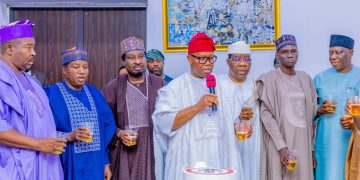
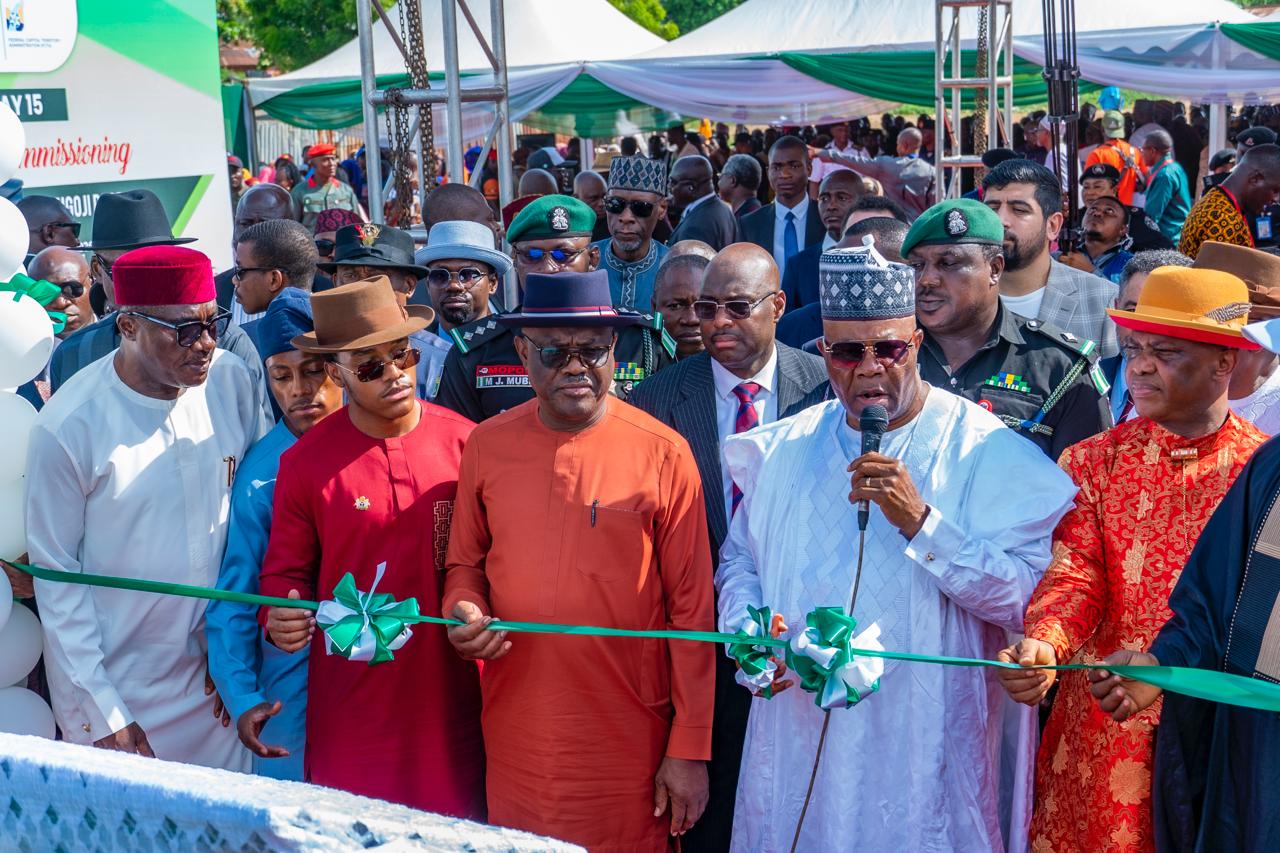
The turning point came on Thursday at the inauguration of the rehabilitated Old Keffi Road. President Tinubu, represented by Senate President Godswill Akpabio, used the moment to issue a fresh directive for the immediate construction and expansion of the Zaudna–Kaba–Kagini Road in Abuja Municipal Area Council.
The order followed a visible public appeal. As the President’s convoy moved along the corridor linking Kado Fish Market to Dei-Dei Junction through Life Camp, residents displayed banners highlighting the poor state of access roads in their communities. Tinubu responded on the spot, tying the new project to the broader goal of inclusion under Renewed Hope.
“The directive was aimed at ensuring that all communities benefit from the gains of the Renewed Hope Agenda,” Akpabio said on the President’s behalf. The announcement signalled that no community would be left out of the infrastructure rollout.
The Old Keffi Road itself became the proof of concept. The about 17-kilometre stretch from Kado Village through Life Camp to Dei-Dei Junction on the Outer Northern Expressway has been fully rehabilitated and opened to traffic. It is no longer a line item in a budget document. It is asphalt, streetlights, and drainage that serve both homes and markets.
Tinubu described the road as “a practical demonstration of the government’s commitment to improving the daily lives of residents.” He stressed that the project restores dignity to daily movement for traders, commuters, and families who rely on the corridor daily.
“We are not slowing down,” the President declared. “Across the FCT, from the city centre to the area councils, we are building for inclusion, for safety, and for growth. Every district deserves access.” That refrain has become the administration’s infrastructure compass.
The President also used the occasion to close the chapter on abandoned projects in Abuja. “When we assumed office under the Renewed Hope Agenda, we told Nigerians the era of abandoned projects in Abuja was over. Some doubted. Today, doubt has no ground to stand on.”
He pointed to a pattern already emerging: from Saburi 1 and 2 to the Old Keffi corridor, and other projects unveiled to mark the administration’s third anniversary, government is identifying problems, funding solutions, and delivering results.
The Minister of the FCT, Nyesom Wike, said the Old Keffi rehabilitation fulfilled a long-standing promise to residents and traders. Their repeated appeals gained traction after the successful completion of Saburi Road, showing how completed projects are building momentum for the next.
A few days earlier, the same message was reinforced in Kwali Area Council. On Tuesday, Tinubu inaugurated the newly completed 13-kilometre Gomani–Dafa–Yangoji Road, again represented by Akpabio. The project extends the same philosophy to rural communities.
The President commended Wike for implementing the directive to take development beyond the city centre. “He has demonstrated commitment to opening up the area councils through critical infrastructure, thereby bridging the gap between urban and rural development,” Tinubu stated.
Residents were not left out of the responsibility equation. The President urged beneficiaries to protect the asset by keeping drainage channels clear and reporting vandalism. The goal is longevity, not just commissioning.
The economic logic is clear. According to Tinubu, the Gomani–Dafa–Yangoji Road will improve access to farms, stimulate businesses, and create better opportunities for education and the future of children in the benefiting communities.
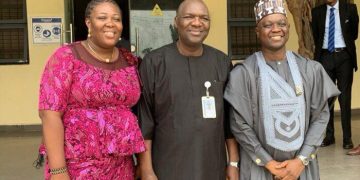
Credit for execution was also shared. The President praised the Minister of State for the FCT, Dr. Mariya Mahmoud, and the entire FCTA team. “From supervision and community engagement to quality control, you have worked as one team,” he said.
“This road is proof of what happens when a team is focused on results, not excuses,” Tinubu added. He was blunt about the new standard: “We will fund, we will finish, and we will maintain. From city expressways to rural access roads, every naira of public money must translate into value for the citizens.”
The underlying political message was trust. “When government delivers honestly, people feel it, and they respond with trust,” the President noted, before saluting Wike’s “vision and passion to deliver.”
Taken together, the road projects are doing more than easing traffic. They are giving the FCT a new face. One defined by completed works, rural inclusion, and a government that shows up where citizens live.
If the pace holds, the Zaudna–Kaba–Kagini Road will be the next chapter. For Abuja Municipal Area Council and beyond, the promise is simple and visible: roads that work, lights that stay on, and an administration determined to match words with asphalt.