








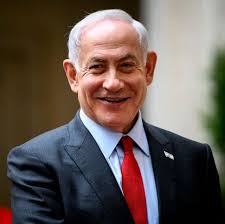
In a recent press conference, Israeli Prime Minister Benjamin Netanyahu delivered a sweeping address framing Israel’s recent military operations against Iran and its proxies as historic. Our anchorman, Ekuson Nw’Ogbunka takes a critical look at the key claims, context, and implications. Excerpts.
Core declaration: “My life’s mission”
Netanyahu opened by calling the prevention of an Iranian nuclear weapon his “life’s mission.” He vowed: “With an agreement, without an agreement – Iran will not have nuclear weapons. Not today, and not tomorrow. As long as I am Prime Minister of Israel – this will not happen.” The statement sets the tone: deterrence and prevention are non-negotiable.
Biblical framing
He quoted Jeremiah 46:27: “Fear not, O Jacob My servant, and be not dismayed, O Israel!” The biblical reference was used to reassure citizens after operations described as existential in nature, linking current security actions to national resilience.
Claim on US peace deal role
On a question about a peace deal, Netanyahu paraphrased: “The Peace deal is President Trump’s decision, Israel is not part of it.” The comment positions Israel as aligned with but not dictating US diplomatic initiatives, while emphasizing Israel’s independent security decisions.
Operation Rising Lion & Roaring Lion
Netanyahu said Israel, “together with our American friends,” launched “the largest offensive air operation in Israel’s history.” He named Operations Rising Lion and Roaring Lion as the military response to Iran’s alleged rush toward a nuclear weapon and underground missile facilities.
Alleged damage to Iran’s program
He listed achievements: neutralizing nuclear scientists, “decapitated the leaders of the terror regime,” pulverizing nuclear facilities, destroying missiles and factories, hitting military infrastructure, navy, air force, and Basij commanders. He estimated economic damage “in the hundreds of billions of dollars, and some even estimate it to be closer to a trillion.”
Existential threat argument
The PM argued Iran was “racing toward a nuclear weapon just before Operation Rising Lion.” He claimed that without the strikes, “Iran would already have atomic bombs,” putting “millions of Israeli citizens… in terrible danger of mass death.” The analysis hinges on timing and intent attributed to Iran.
“Danger fended off for years”
Netanyahu said the operations removed the threat of “elimination of Israel’s population” for years to come. He called saving Israel from “nuclear annihilation” the operation’s most important achievement.
War not over: Vigilance required
He warned citizens “the struggle is not over.” Netanyahu stressed continued vigilance against Iran and its “terror proxies,” citing operations in Gaza, Lebanon, Syria, Yemen, and Judea and Samaria refugee camps.
Claims on Hamas leadership
Netanyahu said Israel eliminated Deif, Haniyeh, and Sinwar “along with many of Hamas’s leaders,” and “returned all our hostages from Gaza, down to the very last one.” He rejected advice to stop at Rafah, saying Israel entered Rafah and Gaza City “contrary to the opinions of many.”
Hezbollah and Lebanon claims
On Hezbollah, he said Israel “exploded the pagers,” eliminated Nasrallah, prevented a Radwan Force invasion of the Galilee, and destroyed “the vast majority of the 150,000 rockets and missiles” amassed for attacks on Tel Aviv, Haifa, Jerusalem, and Be’er Sheva. He cited capture of the Beaufort position.
Security doctrine shift
Netanyahu said Israel “changed our entire security doctrine” after October 7. The new principle: “Israel will not allow terror organizations to encamp on our borders; to tunnel into our territory; to prepare for a massacre close to our citizens.” IDF fighters now stand as a “barrier” in security zones.
Security zones in Gaza, Lebanon, Syria
He stated Israel established “deep security zones” in Gaza, Lebanon, and Syria, where it “destroyed all the weaponry of the Assad army.” Netanyahu clarified: “we will remain in the security zones for as long as it is required to defend our country.”
Economic and tech investment
Looking forward, Netanyahu pledged to “ensure our own domestic armament independence” with 350 billion NIS invested as a supplement to the defense budget. He also promised new technologies and alliances, saying “alliances are made with the strong, and Israel today is a very strong country.”
Pushback against critics
Netanyahu addressed those who “want to minimize” the achievements: “there are those who want to minimize it, to dismiss our tremendous achievements. And I tell you: we are going to achieve many more great things.” The tone was defiant toward domestic and international skepticism.
Acknowledgment of citizens and military
He thanked Israeli citizens for “steadfastness” and support, and praised IDF and security forces “at sea, on land, and in the air.” The closing appealed to national unity: “Together we will continue to stand, and together we will continue to win.”
Critical context
This analysis is based solely on the transcript provided. Netanyahu’s claims about damage to Iran’s nuclear program, hostage returns, and military outcomes would require independent verification by international observers, IAEA reports, and third-party conflict monitors. The speech reflects Israel’s official narrative of deterrence, self-defense, and long-term security planning following escalations with Iran and its regional proxies. The biblical quote and “life’s mission” framing are intended to present the policy as both strategic and moral.