
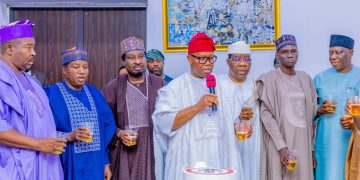



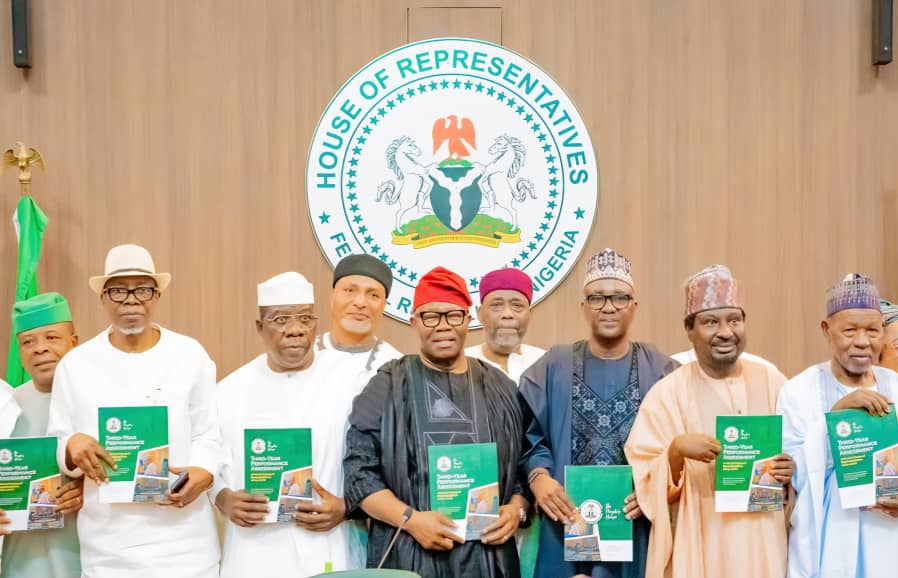
Our Managing Editor in Abuja the Federal Capital Territory (FCT) is here by writing that on 14 July 2026, under the domes of the National Assembly (NASS) in Abuja, Senate President Godswill Akpabio did something unusual for a presiding officer: he told Nigerians that the building does not belong to lawmakers. It belongs to them. With that declaration, he flagged off the 2026 National Assembly Open Week, an invitation for citizens to walk in, speak up, and own their democracy.
Akpabio began with a historical question. Before architects designed chambers, he said, they asked: where will the people stand? The answer shaped democracy. Courts act in the name of the people. The Executive acts for the people. But only Parliament, he noted, deliberates under the eyes of the people.
“Parliament is not a theatre performed for the people; it is the people’s institution,” Akpabio said, framing Open Week as ownership, not performance. He thanked Speaker Abbas Tajudeen for the invitation, calling him a patriot. He joked that too much mutual praise might make Parliament look like an admiration society.
Referencing the historic rivalry between Upper and Lower Houses, Akpabio said Nigeria is lucky: the Senate and House have both wisdom and enthusiasm.
“Parliament belongs not to those elected to sit within it, but to the millions whose hopes and votes brought it into existence,” he declared.
Open Week, he said, is an invitation to look beyond headlines and see Parliament as the bridge between people’s aspirations and government action. He argued that great nations are sustained by Parliaments where competing interests are reconciled and every citizen finds expression.
On the bicameral design, Akpabio explained the genius of Nigeria’s legislature: population-based representation in the House, and equal voice for every state in the Senate.
Openness, he said, means assuring every Nigerian that no community is too remote and no voice too small to matter.
“Public confidence is earned,” he said. Informed criticism, he added, strengthens democracy rather than weakens it, just as he surges Nigerians not just to observe but to challenge lawmakers where necessary. “A Parliament that listens becomes wiser,” he stated.
Akpabio said a Parliament is judged not by speeches but by results. Principles, he noted, only matter when they change lives, even as m he revealed that the 10th Assembly has passed over 100 bills in three years, the highest at this point in Nigeria’s democracy.
On laws with impact, the Senate President, however cited laws on security, out-of-school children, tax reform, new minimum wage, investment, and Regional Development Commissions.
On confirmations, he said the Assembly treated public office as a public trust, demanding competence, integrity and character, adding that Nigeria’s return to the IPU Executive Committee after 60 years, he said, showed renewed global confidence in the country’s democratic institutions.
Godswill Obot Akpabio affirmed constructive work with President Tinubu, but stressed: partnership is not surrender. Parliament must support, scrutinize, and correct.
Still reiterating unity between chambers, he praised the harmony between Senate and House, comparing them to “two hands of one body.”
To every Nigerian, from Abuja to a village, his message was direct: “Come closer. Question us. Challenge us. Democracy flourishes when citizens participate.” He then declared the 2026 Open Week officially open.