





Two years into the 10th National Assembly, Senator Prince Ned Munir Nwoko is mounting what constituents are calling a “quiet revolution” of project delivery across Delta North Senatorial District. From classrooms and dams to medical outreaches and solar-powered streets, the lawyer-turned-lawmaker is stacking completed and ongoing interventions that mirror the pledges he made on the campaign trail. In this piece, Abba -Eku Onyeka examines how Nwoko is translating words into water, light, roads, and livelihoods for the nine local government areas he represents. Excerpts:
From Podium to Project Site
When Ned Nwoko sought the Delta North mandate, he anchored his message on three pillars: human capital development, infrastructure renewal, and access to basic services. Today, a roll call of over 50 interventions captured in the 2024 Appropriation Bill and NDDC budget suggests a deliberate attempt to match rhetoric with visible outcomes. “We are not just legislating in Abuja. We are building in Delta North,” his Chief of Staff, Dr. Michael Nwoko, told this reporter.
Lighting Up Communities, Literally
Perhaps the most visible wins are in solar street lighting. Kwale, Idumuje-Ugboko, Idumuje-Unor, Onicha-Ugbo, and parts of Asaba have all seen installations completed. Phase 1 of a broader rollout across the district is done, with Phase 2 captured for implementation. Residents say the lights have extended trading hours and improved security along previously dark corridors, including Lander Brother Anchorage Road in Old GRA, Asaba.
Water as a Campaign Promise Kept
Access to potable water formed a major plank of Nwoko’s campaign. So far, solar-powered boreholes in Umunede, Idumuje-Ugboko, and Obomkpa are completed, with more captured under Phase 1 and Phase 2 schemes. Larger interventions include the ongoing Ogwashi-Ukwu Regional Water Supply Scheme and the completed Onicha Olona/Ezi Water Project in Aniocha North. For riverine communities, the planned Ibusa water scheme with three boreholes and reticulation is underway.
Dams, Drainage, and Erosion Control
Delta North’s topography makes water management both a blessing and a burden. Nwoko has prioritized that duality. The Aniofu Dam pre-feasibility studies are completed, while maintenance of the Ogwashi Earth Dam is done. Erosion control and channelization works are ongoing across the district, and a drainage system in Idumuje-Ugboko Phase 1 has been completed. Small and medium earth dams, plus water-smart irrigation systems, are captured to boost year-round farming.
Health: Taking Care to the Doorstep
“Health is wealth” is not just a slogan in Nwoko’s constituency playbook. Renovation and equipping of the Idumuje-Ugboko Medical Centre and Ezi Primary Health Care Centre are captured, while medical equipment has already been supplied to PHCs in Aniocha North, Oshimili South, Ndokwa West, and Ika North East. Two phases of medical outreach across the 9 LGAs are completed, bringing doctors, drugs, and diagnostics to rural residents who rarely see a hospital.
Education Gets Brick-and-Mortar Boost
At Ika Grammar School, blocks of classrooms are under construction. Beyond that, construction and renovation of classroom blocks across selected communities are captured, alongside ongoing administrative blocks for the Federal University of Agriculture, Mubi and the Federal University of Medical and Health Sciences, Kwale. To bridge the digital divide, ICT centres and the provision of computers and laptops for students have been captured in the budget.
Roads That Connect Farms to Markets
Rural access remains a barrier for Delta North’s agrarian population. A 1km access road in Idumuje-Ugboko is captured, while a 2km farm road in the same community is ongoing. More ambitious is the Coastal Road captured in the NDDC budget, traversing Asaba–Oko–Abala–Utchi–Okpai–Abalagada–Aboh–Akarai–Umoru–Adaja–Oworubia–Onyah–Asaba-Ase–Abari–Patani. Phase 1 rehabilitation of the Benin–Asaba Expressway from Alifekide to Onitsha Head Bridge is already completed through the Federal Ministry of Works.
Powering Productivity with Energy
Transformers have been procured and slated for installation across communities to stabilize supply for homes and small businesses. Markets, both open and lock-up stores, are captured for construction to give traders dignified spaces. An ultra-modern town hall in Amai is also captured, aimed at fostering civic engagement and cultural activities.
Agriculture: Tools, Training, and Technology
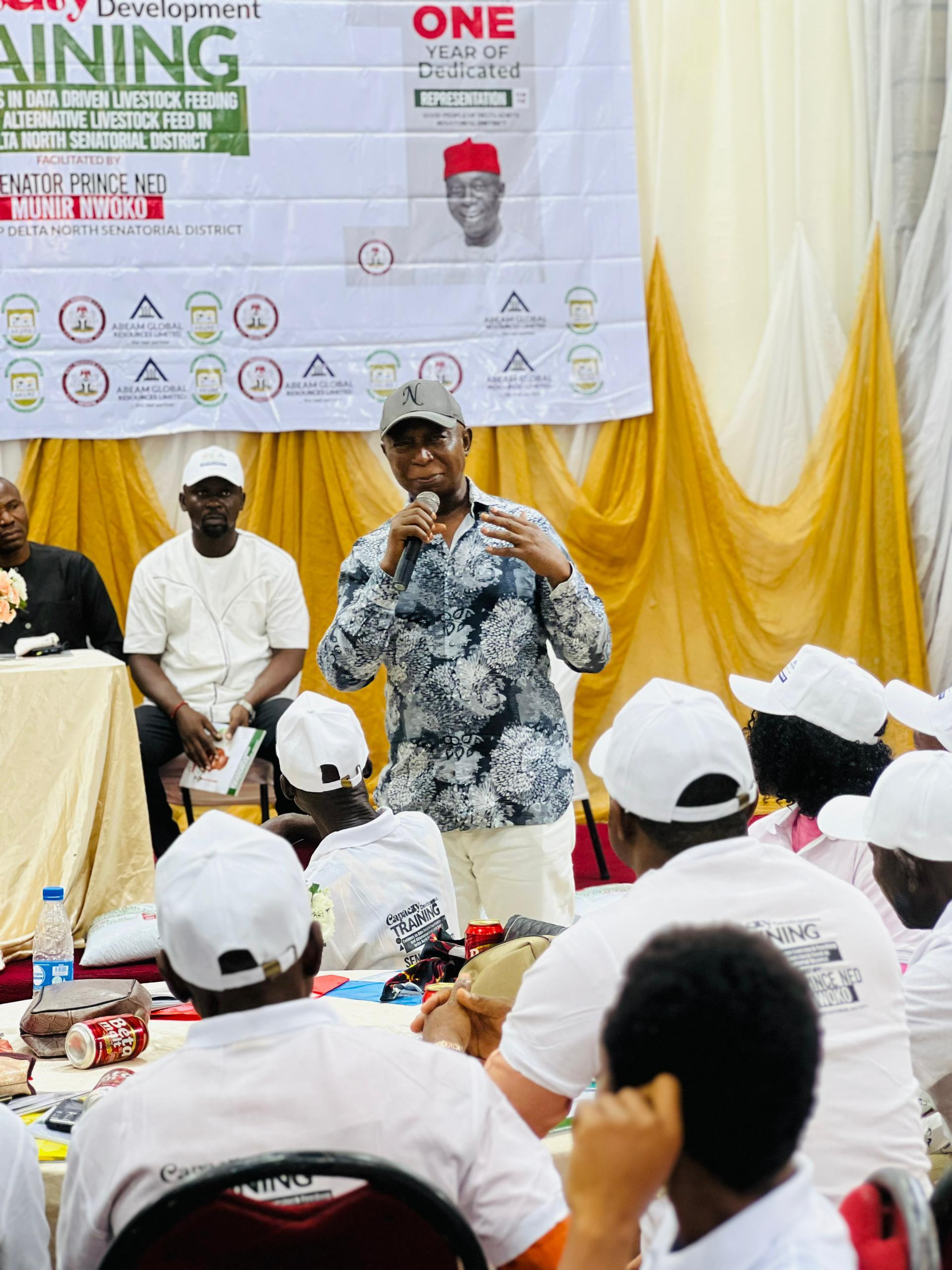
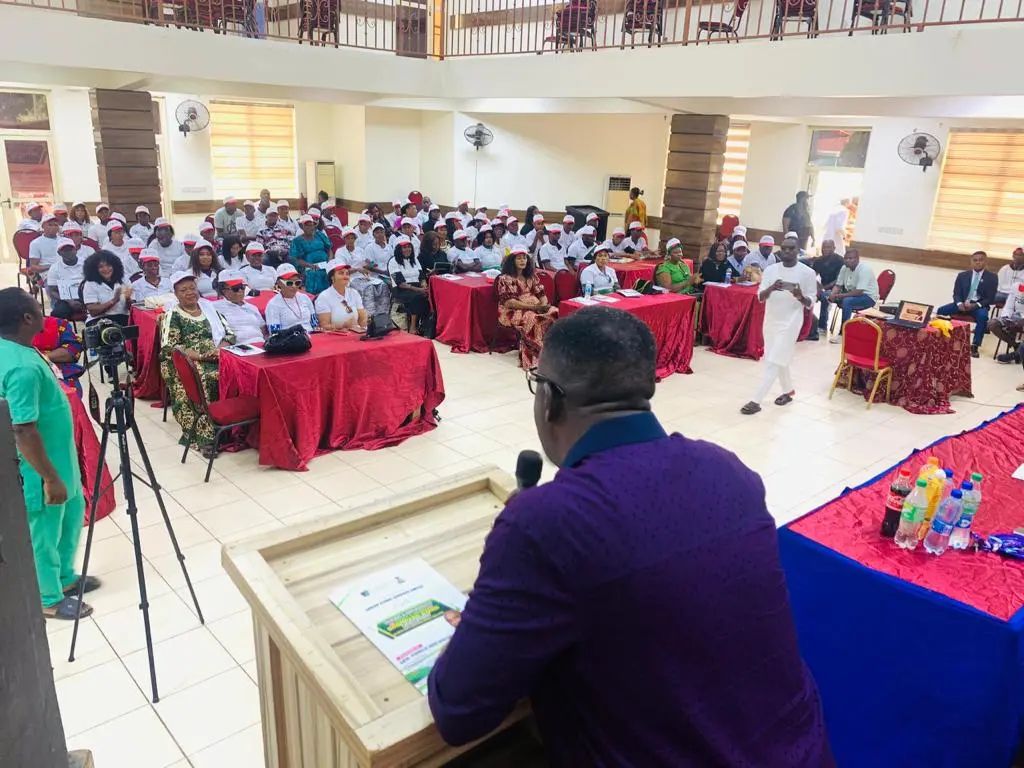
Nwoko’s food security drive covers inputs and skills. Procurement of tractors and equipment for farmers is captured, alongside water-smart irrigation and agricultural infrastructure rehabilitation. Livestock farming and training for youths is completed, while training and empowerment on cassava farming and Akwa-Ocha production for women are captured and completed respectively. Fish farms and fertilizer procurement are also captured to diversify income streams.
Human Capital: Women and Youth at the Core
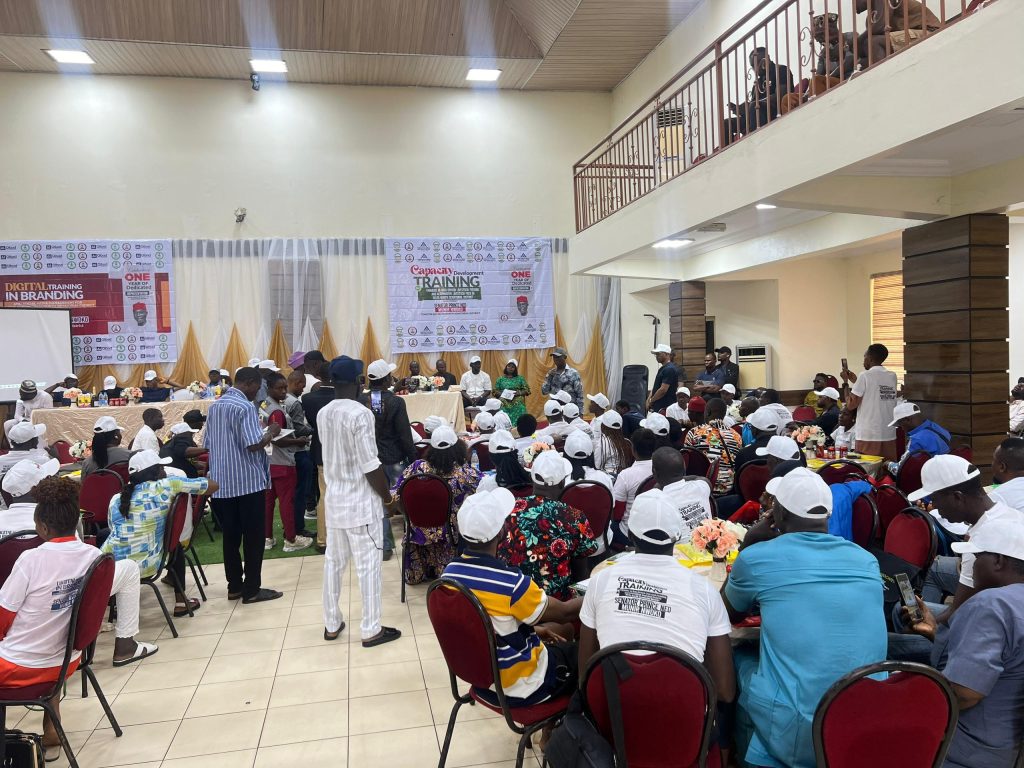
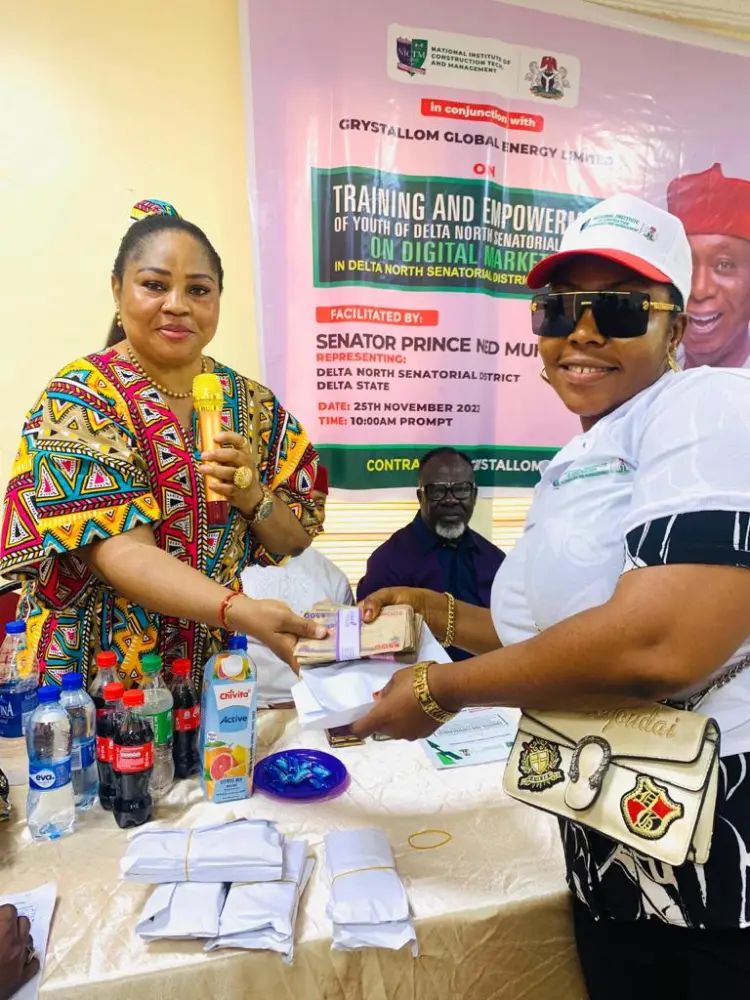
Three phases of training and empowerment for market women, youths, and farmers are either captured or completed. Capacity development training for women is captured, while youth, women, and farmers’ programmes in Phase 1 and Phase 2 are done. Security personnel have also benefited from capacity-building training and empowerment, complementing the fencing and rehabilitation of the Idumuje-Ugboko Police Station.
Sports and Social Infrastructure
A mini sports stadium for youths in Aniocha North LGA is ongoing, reflecting Nwoko’s view that recreation is part of empowerment. Combined with town halls and markets, the goal is to create community hubs where commerce, culture, and youth development intersect.
Tracking the Status: Done, Ongoing, Captured
Of the projects listed, dozens are marked “Completed” or “Done” — from street lights and boreholes to medical outreaches and police station upgrades. Others like the Ogwashi-Ukwu water scheme, classroom blocks, and farm roads are “Ongoing.” A third category, “Captured,” covers items secured in the 2024 Appropriation and NDDC budgets awaiting cash-backing and implementation, signaling a pipeline of delivery beyond the mid-term.
The Appropriation Advantage
Nwoko’s team has leveraged the 2024 Appropriation Bill and NDDC windows to domicile projects in Delta North. Items range from solar installations and water schemes to agricultural mechanization under the Renewed Hope Agenda. “Budget capture is step one. Execution is step two, and we are pressing on both,” Dr. Michael Nwoko explained, noting that oversight visits are routine to keep contractors on schedule.
Constituents React
In Idumuje-Ugboko, a community health worker said the medical outreaches reduced referrals to distant hospitals. In Umunede, traders cited the new borehole as critical during dry season. Along the Benin–Asaba corridor, commercial drivers welcomed the rehabilitated stretch but urged faster work on the remaining sections. Youths trained in livestock farming reported start-up support, though some appealed for more access to credit.
The Road Ahead: From Promises to Policy
With two legislative years left, Nwoko’s challenge is to convert “captured” projects into “completed” ones while scaling impact across all nine LGAs. His scorecard so far blends quick-win interventions with structural projects in water, roads, and health. For Delta North, the measure of representation is shifting from motions moved in Abuja to boreholes sunk in villages, lights switched on at night, and farms opened by new roads. The senator’s next test is sustainability: ensuring these giant strides outlast the project banners.