





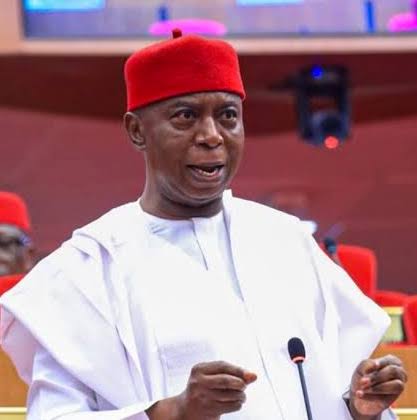
Since joining the Senate, Delta North lawmaker Ned Nwoko has tabled a wide-ranging set of motions that cut across foreign policy, national security, healthcare, the economy and social justice. The proposals reflect an attempt to address both historical grievances and present-day challenges facing Nigeria and Africa at large, reports our anchorman, Ekuson Nw’Ogbunka. Excerpts.
Historical Justice and Africa’s Global Standing
Nwoko has called on Nigeria and other African nations to demand reparations for the transatlantic slave trade and to confront the lingering structures of neocolonialism. He argues that the continent must seek redress for past injustices while pushing for greater influence in global governance. In the same vein, he has urged the international community to grant African countries veto power at the United Nations Security Council, describing it as a step toward equity and inclusivity.
Confronting Nigeria’s Internal Conflicts
At home, the senator has sought national acknowledgment and reconciliation over the 1967 Asaba massacre, advocating memorialization and healing for victims of the civil war. He has also called for an urgent national dialogue with separatist groups, insisting that peaceful engagement is the most sustainable path to unity.
Security and Environmental Concerns in the Niger Delta
A significant portion of Nwoko’s motions focuses on the Niger Delta. He has pushed for a thorough investigation into crude oil theft, seeking to expose the networks behind the crime and propose lasting countermeasures. He is also demanding stricter enforcement of anti-gas flaring regulations in Ndokwa Land and across the region, citing severe environmental damage and health risks. Another motion highlights persistent electricity supply failures in Ndokwa Land and the operational status of the Okpai Independent Power Plant.
Tackling National Security Threats
Nwoko has raised alarms over the rising wave of kidnappings in the Federal Capital Territory following the abduction of 19 people in Galadimawa, calling for stronger protection strategies and community-based intelligence. He has similarly demanded emergency action against violent incidents linked to Fulani herdsmen and other miscreants in Delta State.
Healthcare and Economic Self-Reliance
On healthcare, he is advocating an upgrade of all Federal Medical Centres to international standards and a policy requiring public servants to seek medical treatment exclusively within Nigeria. This, he says, would strengthen local health institutions and reduce capital flight. On the economic front, he has proposed a ban on the importation of non-essential and locally producible goods to revive domestic industries and conserve foreign exchange.
Governance and Digital Economy Reforms
The senator is also pushing for global social media companies to establish offices in Nigeria, arguing that local presence would boost job creation, tax revenue, and more effective content governance. In the financial sector, he has called for stricter cybersecurity standards for fintech companies amid the industry’s rapid expansion, stressing the need to protect users and maintain trust.
Immediate Relief and Policy Consistency
Other motions address urgent humanitarian needs, including emergency relief for flood victims in Delta North communities and the abolition of mandatory police reports before emergency medical treatment. He has also opposed the payment of salaries in foreign curreplncies, saying it undermines Nigeria’s monetary sovereignty, and has called for a review of the Central Bank of Nigeria’s recent termination of over 317 staff members.
Foreign Policy and Infrastructure
Nwoko has urged ECOWAS to avoid military intervention in Niger Republic, favouring diplomatic resolution instead. He has equally called for Nigeria’s diplomatic engagement and humanitarian support in the Israeli-Palestinian conflict. Domestically, he is advocating a nationwide ban on daytime movement of heavy-duty vehicles to reduce road accidents and congestion.
Taken together, the motions paint the picture of a lawmaker positioning himself as both a regional advocate for Delta North and a national voice on governance, justice, and development.