










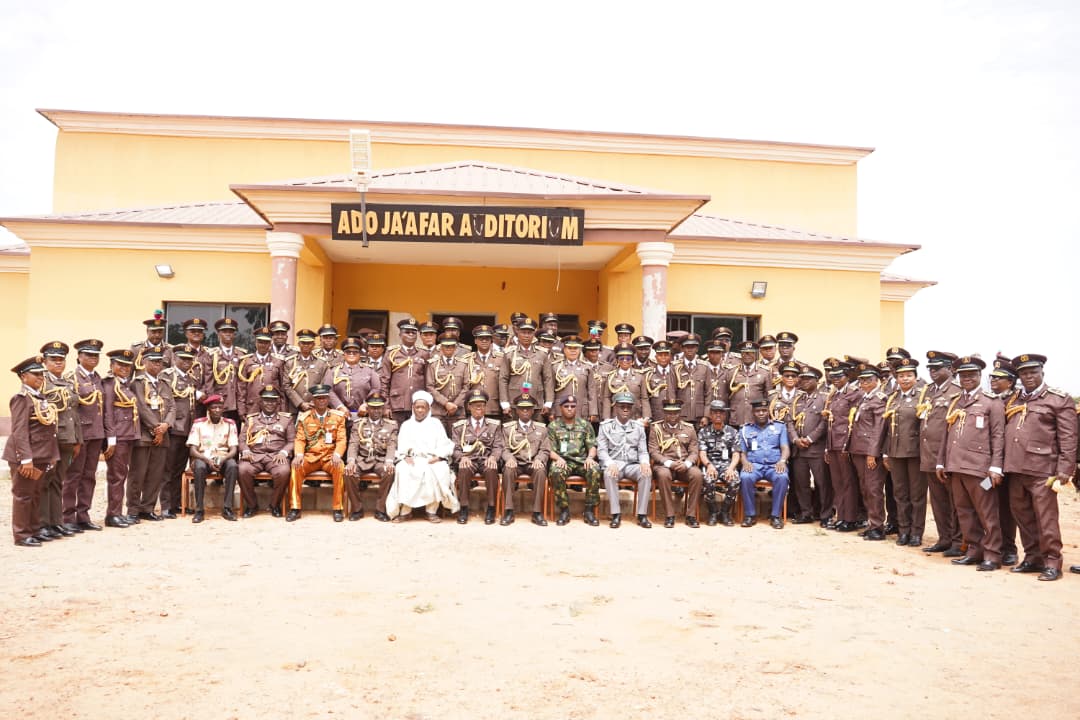
The Nigeria Immigration Service (NIS) signaled a new direction for border management on July 4, 2026, as 62 senior officers graduated from the 13th Command Course at the Immigration Command and Staff College, Sokoto. After three months of intensive training in strategic leadership, Border Security, and Migration Management, the Comptroller-General, Kemi Nanna Nandap, charged the new Pass Command Course holders to lead with integrity, innovation, and professionalism, as the Service pushes to build a more disciplined, technology-driven workforce for Nigeria’s entry and exit points, writes Ekuson Nw’Ogbunka Our Managing Editor in Abuja on Sunday. Excerpts
The Comptroller-General of Immigration, who was represented by the Assistant Comptroller-General in charge of the Directorate of Human Resource Management, ACG SU Agba, pcc, ICA, gave the charge during the graduation ceremony. She urged the 62 graduands, drawn from Commands and Formations across the Service, to uphold professionalism, integrity, and excellence upon completion of the rigorous programme.
The three-month course was designed beyond routine instruction. It focused on strategic leadership, Border Security, and Migration Management to equip officers for a security environment that is constantly evolving. The objective was to shift officers from tactical responses to systems thinking, policy insight, and technology-enabled operations.
Commandant of the College, ACG A.D. Bagari, pcc+, commended the graduands for successfully completing the training. He urged them to apply the knowledge and leadership skills acquired to improve operational effectiveness, remain responsive to the demands of public service, and continue to demonstrate vigilance in safeguarding Nigeria’s borders.
Speaking further on behalf of the CGI, ACG Agba reaffirmed the Service’s resolve to build a highly professional, disciplined, and technology-driven workforce. He encouraged the graduating officers to justify the confidence reposed in them by exhibiting accountability, innovation, and transformational leadership in the discharge of their responsibilities.
Other highlights of the ceremony included the conferment of the Pass Command Course, PCC, honour on the 62 graduates and the presentation of awards to outstanding participants. The CGI’s representative and other distinguished guests made the presentations, while the Commandant decorated Course Provosts with a Badge of Honour in recognition of their exemplary service.
The graduation ceremony attracted distinguished dignitaries, including a representative of the Sultan of Sokoto, heads and representatives of security agencies, and other invited guests. They commended the Nigeria Immigration Service for its sustained investment in leadership development and institutional excellence.
The event was documented in a press release e-signed by DCI AS Akinlabi, Service Public Relations Officer, NIS Headquarters, Abuja, on Saturday. By making the outcomes public, the Service signaled that capacity building will be measured, communicated, and tied to performance across Commands and Formations.
What emerged from Sokoto is a pattern of institutional renewal. The 13th Command Course is the latest iteration of a deliberate effort to professionalize the middle and senior ranks of the NIS. As the 62 officers return to their formations with new tools in strategy, migration management, and border governance, the Service is effectively expanding its leadership bench.
For the graduating officers, the charge is now practical. They are expected to translate classroom strategy into frontline results, strengthen inter-agency collaboration, and apply technology to detect, deter, and manage evolving migration and security threats across Nigeria’s land, air, and sea borders.
In the long view, the graduation confirms a doctrine taking shape inside the NIS: that technology, discipline, and integrity must be matched by leaders who can think, adapt, and command. If the 62 PCC holders live up to the standard set at the 13th Command Course, the Service will have converted training into capability, and capability into stronger, smarter border management for Nigeria.